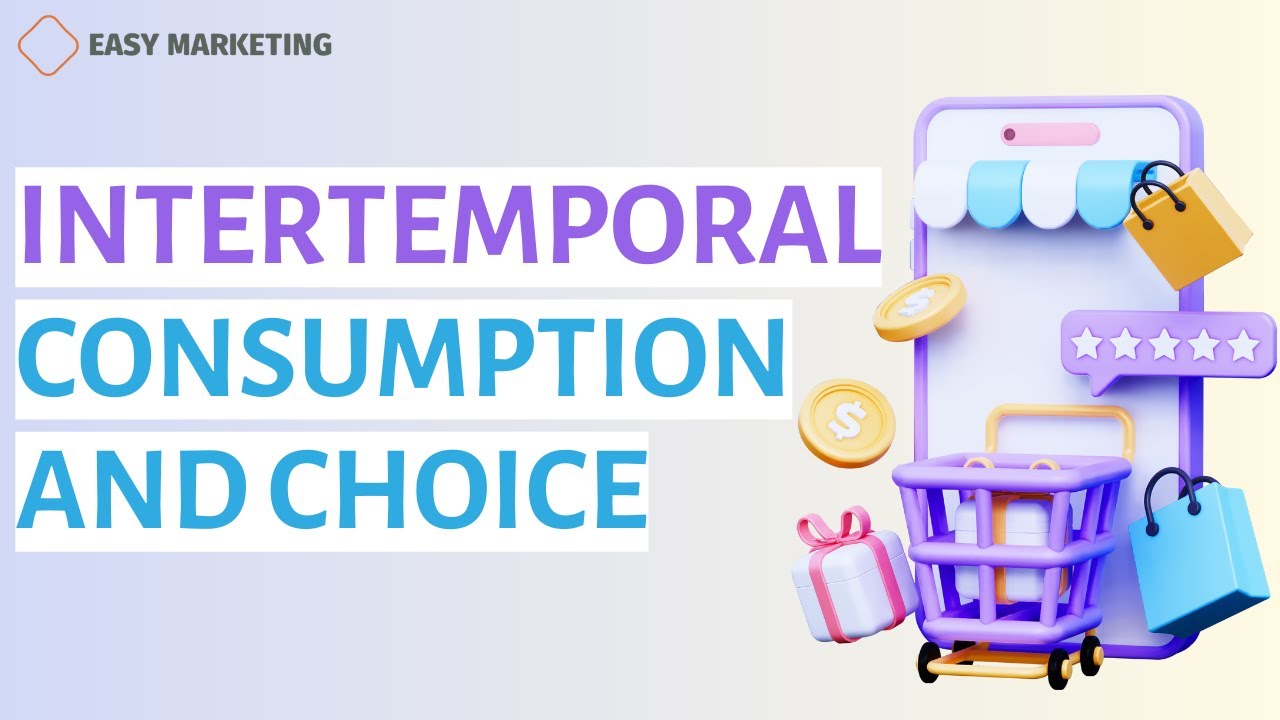
Intertemporal Consumption & Choice: Definition & Analysis
Автор: Easy Marketing School
Загружено: 2024-12-16
Просмотров: 463
Описание:
🎯 Get our Customized Marketing Course for Different Sectors
💡 Use the code "Youtube30" at checkout & get a 30% discount today!
🔗 https://easymarketingschool.org/courses/
👉 Grab one of our Marketing Trends eBooks for FREE here: https://easymarketingschool.org/?ems_...
https://easymarketingschool.org/?ems_...
https://easymarketingschool.org/?ems_...
https://easymarketingschool.org/?ems_...
https://easymarketingschool.org/?ems_...
https://easymarketingschool.org/?ems_...
https://easymarketingschool.org/?ems_...
https://easymarketingschool.org/?ems_...
https://easymarketingschool.org/?ems_...
https://easymarketingschool.org/?ems_...
https://easymarketingschool.org/?ems_...
What Is Intertemporal Choice?
Intertemporal choice is a term used in economics to talk about how decisions made now affect what choices people will have in the future. Theoretically, if people don't consume now, they might consume a lot more in the future, and vice versa.
Understanding Intertemporal Choice
Many of the decisions we make now will have effects on our lives in the future. For example, choosing how much money to spend now and how much to save can have a big effect on our quality of life now and in the future.
Intertemporal choice is used in a number of business spending decisions. For an individual, on the other hand, most short-term choices that can affect future financial opportunities have to do with saving and retiring.
When someone saves money today, they use less, so their current energy goes down. Over time, a person's savings grow, which increases the number of things they can buy and, by extension, their future utility.
Most people can't spend as much as they want because they don't have enough money. Behavioral finance theorists, on the other hand, usually find that present bias is common, which means that people prefer to spend money now, no matter how it might affect them in the future.
Intertemporal Choice Example
If a person makes a very expensive purchase, like paying for a trip around the world that costs more than their usual budget and needs extra financing, this could have a big effect on their long-term wealth. The person might take out a personal loan, max out their credit cards, or, if they can, even take money out of their savings account to pay for it.
If a person made such a choice, they would have less money to continue saving for retirement. To make up for the loss of assets, the person may have to find other ways to make money on top of their pay.
Content Creator: 📝 Aysun Ibadova, Kamran Tagiyev
Voiceover author: 🎙️ Jeremy G.
Animation author: 🎨 Nazanin Suleymanova
Sound editor: 🔊Aysun Ibadova
Project manager: 📊 Kamran Tagiyev
Повторяем попытку...
Доступные форматы для скачивания:
Скачать видео
-
Информация по загрузке: