These Ancient Stones Should Not Be This Smooth
Автор: Frontiers of Infinity
Загружено: 2026-03-18
Просмотров: 1820
Описание:
Some ancient stone surfaces behave like modern high-grit industrial polish — and when we measure what “smooth” actually means in engineering terms, the results raise a serious question.
How smooth is ancient stone — really?
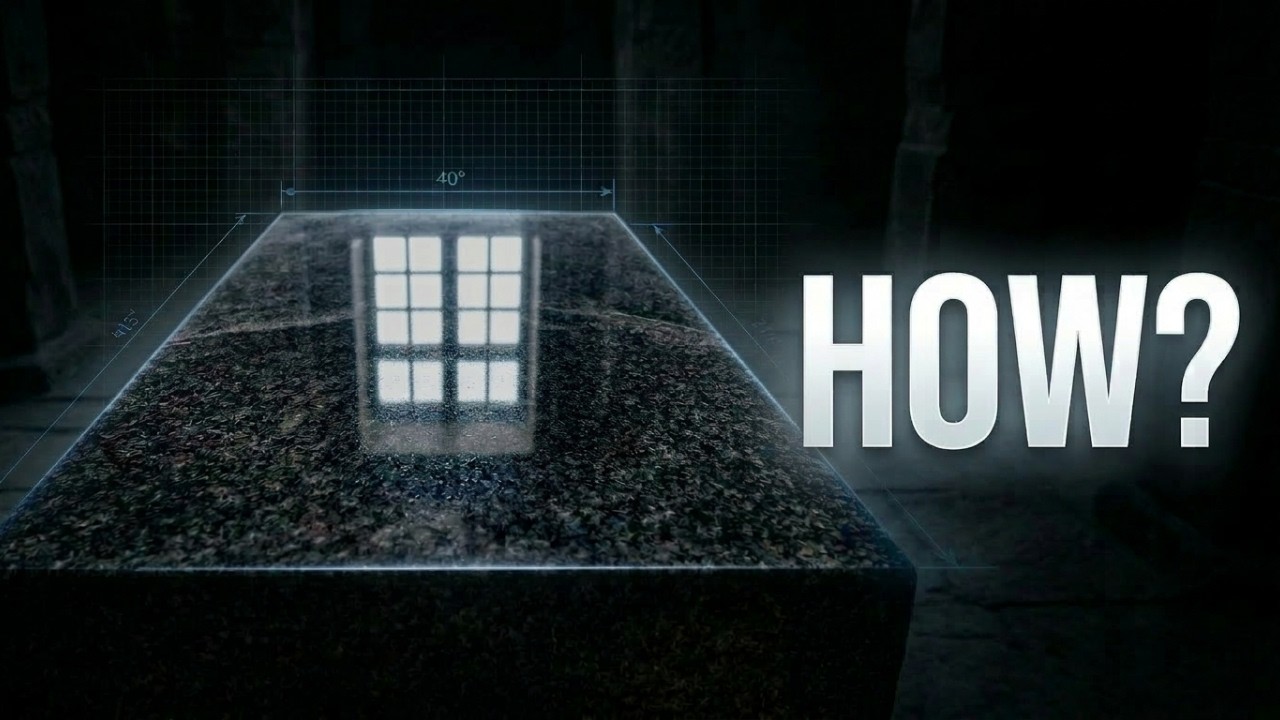
Walk through a museum gallery or stand inside an ancient granite chamber and you may notice something unusual. Light glides across certain stone surfaces in a way that feels strangely modern. Reflections appear coherent. Edges look optically true. Some artifacts — especially diorite statues, basalt pavements, and granite architectural elements — exhibit a level of surface refinement that invites a deeper engineering question.
In modern materials science, smoothness is not judged by the eye. It is measured.
Surface finish is quantified using metrics such as Ra (surface roughness), expressed in micrometers — millionths of a meter. A human hair is about seventy micrometers thick. Highly polished industrial stone surfaces can reach roughness values below one micrometer through carefully controlled polishing stages using progressively finer abrasives.
Each stage removes the microscopic scratches left by the previous one.
The result is not merely aesthetic shine. It is geometry at a microscopic scale. When surface peaks and valleys become small enough, light begins to reflect coherently rather than scatter randomly. This creates specular reflection — the mirror-like behavior we associate with polished surfaces.
But this raises a fascinating engineering puzzle.
Many ancient stone artifacts were created using tools traditionally believed to include copper chisels, stone pounding tools, and abrasive sand. These methods can certainly shape and smooth stone. However, achieving highly refined surface finishes typically requires progressive abrasion stages, careful inspection, and significant time investment.
Surface finish is therefore more than decoration.
It is a record of process.
In this documentary, we examine the measurable physics behind stone polishing. We explore how surface roughness is quantified, how reflectivity emerges from microscopic geometry, and how modern engineering evaluates polished materials. By comparing ancient stone surfaces with modern finishing standards, we can better understand what we are actually seeing when light glides across granite, basalt, or diorite.
Is the appearance of extreme smoothness simply an illusion created by lighting and color?
Or does it reflect a more systematic finishing process than is often discussed?
To answer that, we begin with measurement.
Because smoothness is not a poetic description.
In engineering, smoothness is a number.
Subscribe to Frontiers of Infinity for weekly explorations of space’s greatest secrets.
✨Subscribe now✨: / @frontiersofinfinity
Visit our channel: @FrontiersofInfinity
Watch more of our incredible space documentaries: https://bit.ly/FrontiersPlaylist
What are your thoughts on this journey? Comment below and join the conversation.
#spacedocumentary #cosmicorigins #space #universe #frontiersofinfinity #ancientmysteries #geometry #ancientscience
Повторяем попытку...
Доступные форматы для скачивания:
Скачать видео
-
Информация по загрузке: