CH - 09 || PART - 01 || THE ECONOMIC IMPACT OF BRITISH RULE || BIPAN CHANDRA ||
Автор: The Quick Chapter
Загружено: 2026-02-01
Просмотров: 12
Описание:
Economic Impact of British Rule in India | Disruption of Traditional Economy
The British conquest had a deep and lasting economic impact on India. Almost every aspect of the Indian economy was transformed—mostly for the worse—during British rule up to 1947.
Disruption of the Traditional Economy
British economic policies rapidly converted India into a colonial economy, structured entirely to serve British trade and industrial interests. Unlike earlier foreign rulers, the British did not integrate into Indian economic life. Previous conquerors changed political power but left the basic economic structure intact. The self-sufficient rural economy continued, and peasants, artisans, and traders lived much as before.
The British, however, completely disrupted this traditional system. They remained foreigners, exploiting Indian resources and draining wealth from India as tribute. As a result, the Indian economy became subordinate to British needs.
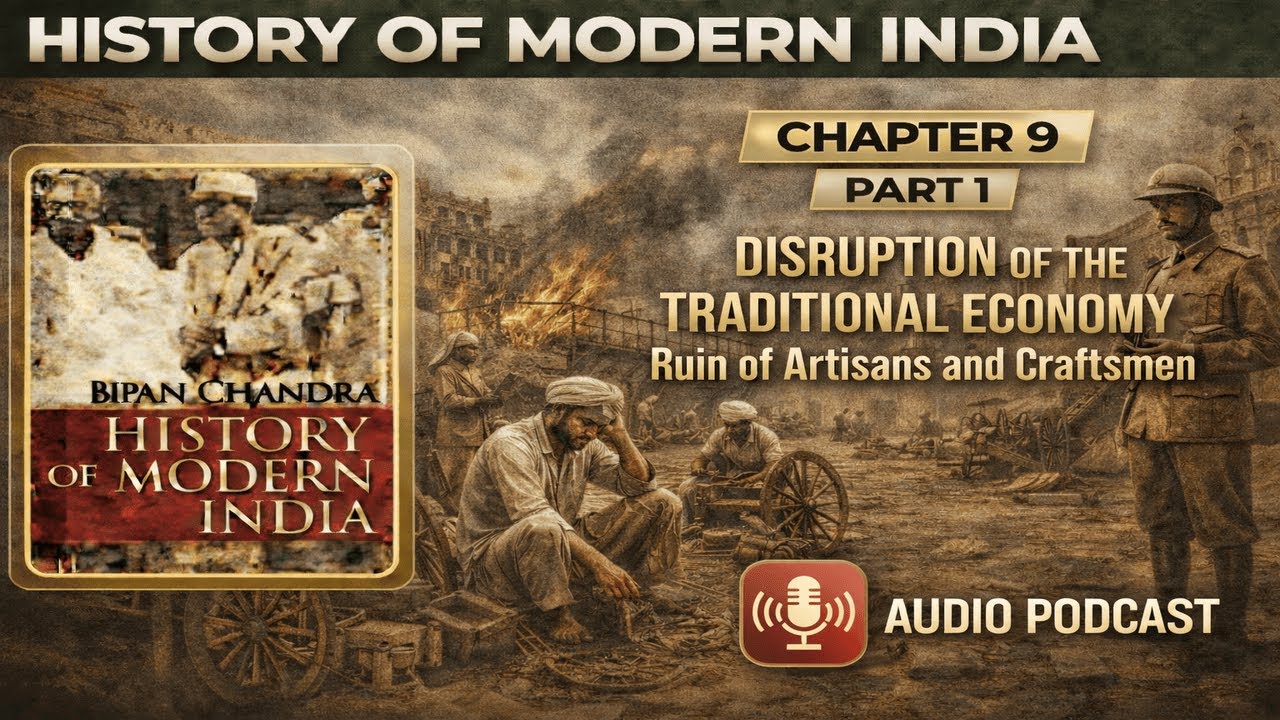
Ruin of Artisans and Craftsmen
One of the most devastating consequences was the collapse of India’s age-old handicraft industries, which had once made India famous across the world. This decline was mainly due to competition from cheap machine-made British goods.
After 1813, the British imposed a policy of one-way free trade, allowing British manufactures—especially cotton textiles—to flood Indian markets. Indian goods, produced using traditional techniques, could not compete with mass-produced items made in British factories powered by steam machines.
The expansion of railways worsened the situation. British goods reached even the remotest villages, destroying local industries. As D.H. Buchanan noted, the railways pierced the self-sufficient village economy and drained its lifeblood.
Cotton weaving and spinning suffered the most, followed by silk, wool, iron, pottery, glass, paper, metalwork, shipbuilding, oil-pressing, tanning, and dyeing industries.
British Policies and Market Loss
British officials and the East India Company often oppressed Indian craftsmen, forcing them to sell goods at very low prices and work for reduced wages. Many artisans abandoned their ancestral professions as a result.
At the same time, high import duties and restrictions in Britain and Europe blocked Indian goods from foreign markets after 1820. The decline of Indian rulers and royal courts—traditional patrons of handicrafts—further damaged these industries. British officials preferred British products, increasing costs for Indian goods and reducing their competitiveness.
Decline of Cities and Urban Life
The ruin of handicrafts led to the decline of major industrial cities like Dhaka, Surat, and Murshidabad, which became depopulated. By the end of the 19th century, urban population was barely 10% of the total population.
Governor-General William Bentinck reported in 1834–35 that the misery of cotton weavers was unparalleled, with their bones “bleaching the plains of India.”
De-industrialisation and Pressure on Agriculture
Unlike Britain, the destruction of traditional industries in India was not followed by the growth of modern industries. Displaced artisans had no alternative employment and were forced to turn to agriculture.
This broke the traditional link between agriculture and village industries, destroying the self-sufficient rural economy. Millions of artisans became agricultural labourers or small tenants, increasing pressure on land.
As a result, India experienced de-industrialisation and growing dependence on agriculture. Census data shows that between 1901 and 1941, the population dependent on agriculture rose from 63.7% to 70%. This excessive pressure on land was a major cause of widespread poverty under British rule.
India as an Agricultural Colony
India was transformed into an agricultural colony of industrial Britain, supplying raw materials and importing finished goods. The cotton textile industry clearly reflects this change—India shifted from being the world’s largest exporter of cotton textiles to an importer of British cloth and an exporter of raw cotton.
#upscpreparation #iaspreparation #UPSC
#UPSCPreparation
#UPSC2026
#UPSCPrelims
#UPSCMains
#ModernIndianHistory
#BritishRuleInIndia
#EconomicImpactOfBritishRule
#Deindustrialisation
#HistoryForUPSC
#NCERT
#GS1
#IAS
📌 Perfect for History students | UPSC | State PSC | Competitive Exams | CBSE & #NCERT revision
Повторяем попытку...
Доступные форматы для скачивания:
Скачать видео
-
Информация по загрузке: