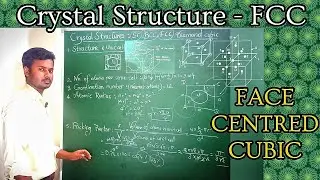
FCC, BCC, and HCP Crystal Structures: A Visual Guide |
Автор: ALZUBE Biomedical Engineering Academy
Загружено: 2023-10-21
Просмотров: 11223
Описание:
FCC, BCC, and HCP are the three most common crystal structures found in nature. They are responsible for the many different properties of materials, such as strength, hardness, and ductility. #BME210 #EME230
In this video, we will take a visual look at these three crystal structures. We will see how the atoms are arranged differently in each structure, and how this affects their properties.
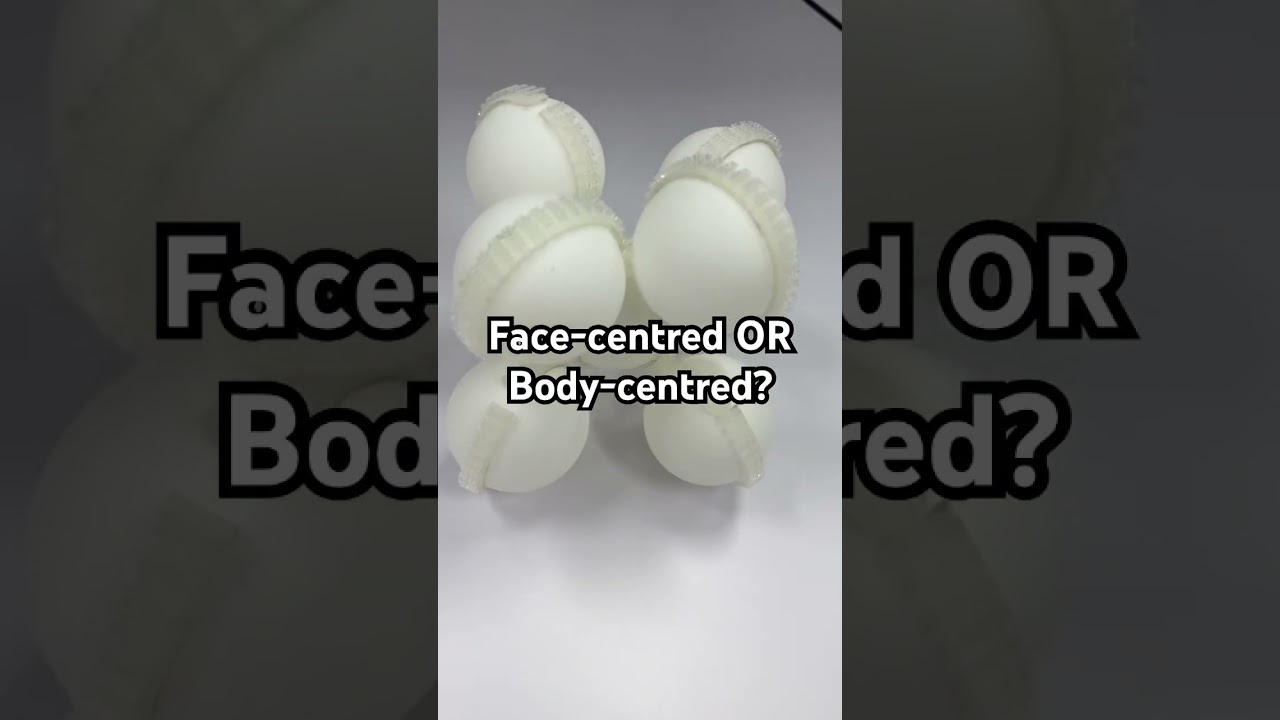
FCC stands for face-centered cubic. In an FCC crystal structure, the atoms are arranged at the corners of a cube and at the centers of each face. This gives the structure a high coordination number, which means that each atom is surrounded by many other atoms. This makes FCC materials very strong and ductile.
BCC stands for body-centered cubic. In a BCC crystal structure, the atoms are arranged at the corners of a cube and at the center of the cube. This gives the structure a lower coordination number than FCC, which makes BCC materials less strong and ductile. However, BCC materials are more ductile than HCP materials.
HCP stands for hexagonal close-packed. In an HCP crystal structure, the atoms are arranged in a layered fashion. This gives the structure a high packing density, which means that there is very little empty space between the atoms. This makes HCP materials very hard and brittle.
Keywords: fcc bcc hcp crystal structure, fcc structure, face centered cubic structure, body centered cubic structure, crystal structure materials science, FCC crystal structure, BCC crystal structure, HCP crystal structure, crystal structures, materials science, microscopy, microscopic world
Повторяем попытку...
Доступные форматы для скачивания:
Скачать видео
-
Информация по загрузке: