How Turkey and Saudi Arabia are Building a New Military Alliance
Автор: War Hour News
Загружено: 2026-02-20
Просмотров: 3214
Описание:
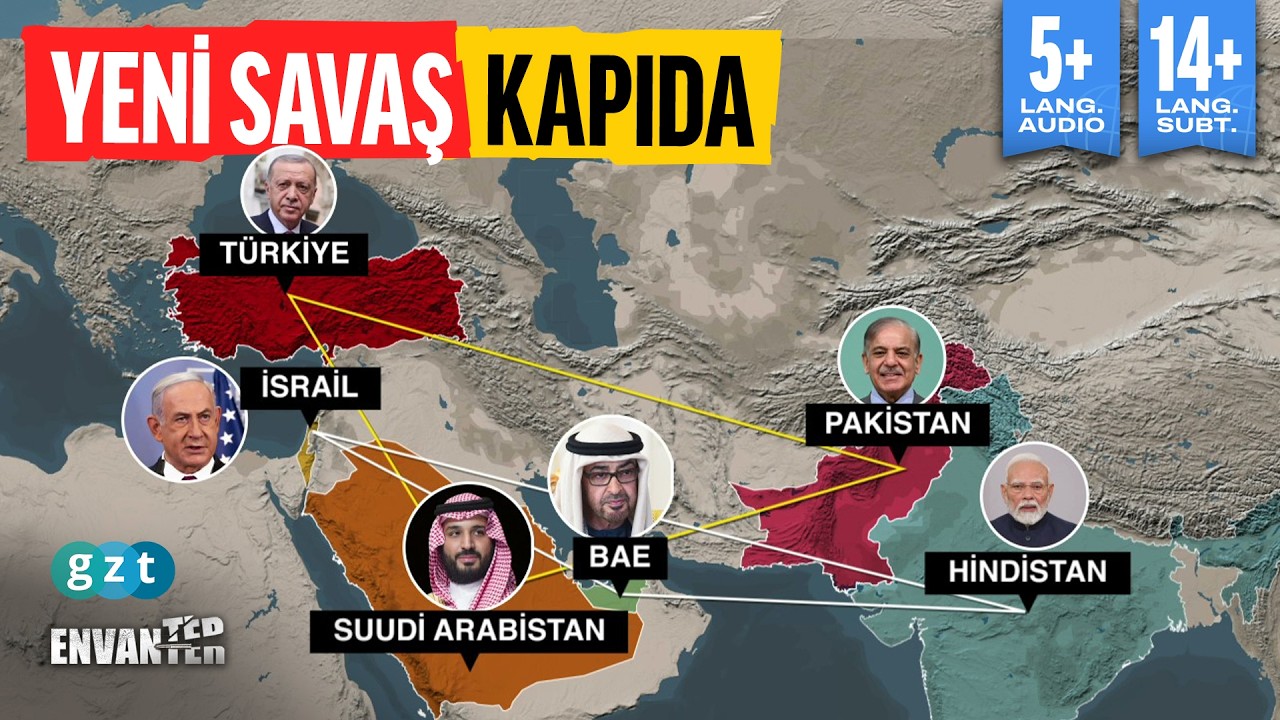
After years of rivalry and political tension, Ankara and Riyadh are quietly moving toward something far more strategic: a defense partnership that could reshape the Middle East’s power balance.
What was once a strained relationship — particularly after 2018 — has evolved into high-level diplomatic reconciliation, defense cooperation talks, and growing arms trade discussions.
1️⃣ Defense Industry Cooperation
Turkey’s defense sector has become one of the fastest-growing in NATO. Companies like Baykar and Turkish Aerospace Industries now export drones, aircraft components, and advanced systems across multiple regions.
Saudi Arabia, under Vision 2030, wants to localize 50% of its defense spending. Turkish drone technology — battle-tested and relatively cost-effective — fits that goal.
Recent agreements include:
• Co-production of armed drones
• Technology transfer frameworks
• Training and maintenance collaboration
• Potential future cooperation on fighter aircraft development
2️⃣ Strategic Convergence Against Regional Threats
Both nations share concerns over:
• Expanding Iranian regional influence
• Red Sea maritime security
• Energy infrastructure protection
• Regional instability affecting trade routes
While neither country publicly frames this as an anti-Iran alliance, increased coordination inevitably shifts deterrence calculations across the Gulf.
3️⃣ Diversifying Beyond the U.S.
Both Ankara and Riyadh are recalibrating their reliance on Washington.
Turkey has faced friction within NATO.
Saudi Arabia seeks greater autonomy in defense procurement.
A bilateral partnership gives both:
• Strategic flexibility
• Independent supply chains
• Political leverage
• Reduced overdependence on Western arms pipelines
4️⃣ Red Sea & Eastern Mediterranean Dynamics
Turkey’s growing naval footprint and Saudi Arabia’s Red Sea ambitions create overlapping maritime interests. Joint exercises or defense coordination in these waters would significantly expand their regional influence.
What This Means for the Middle East
If this cooperation deepens into a structured defense pact, it could:
• Create a powerful Sunni-aligned security axis
• Pressure Iran diplomatically and militarily
• Complicate U.S. regional strategy
• Increase competition with UAE and Egypt
• Expand Turkey’s influence into Gulf security architecture
This is not yet a formal alliance — but the building blocks are being laid: arms deals, intelligence coordination, joint ventures, and political normalization.
The Middle East’s security map is evolving — and Ankara and Riyadh may be drawing a new line across it.
Повторяем попытку...

Доступные форматы для скачивания:
Скачать видео
-
Информация по загрузке: