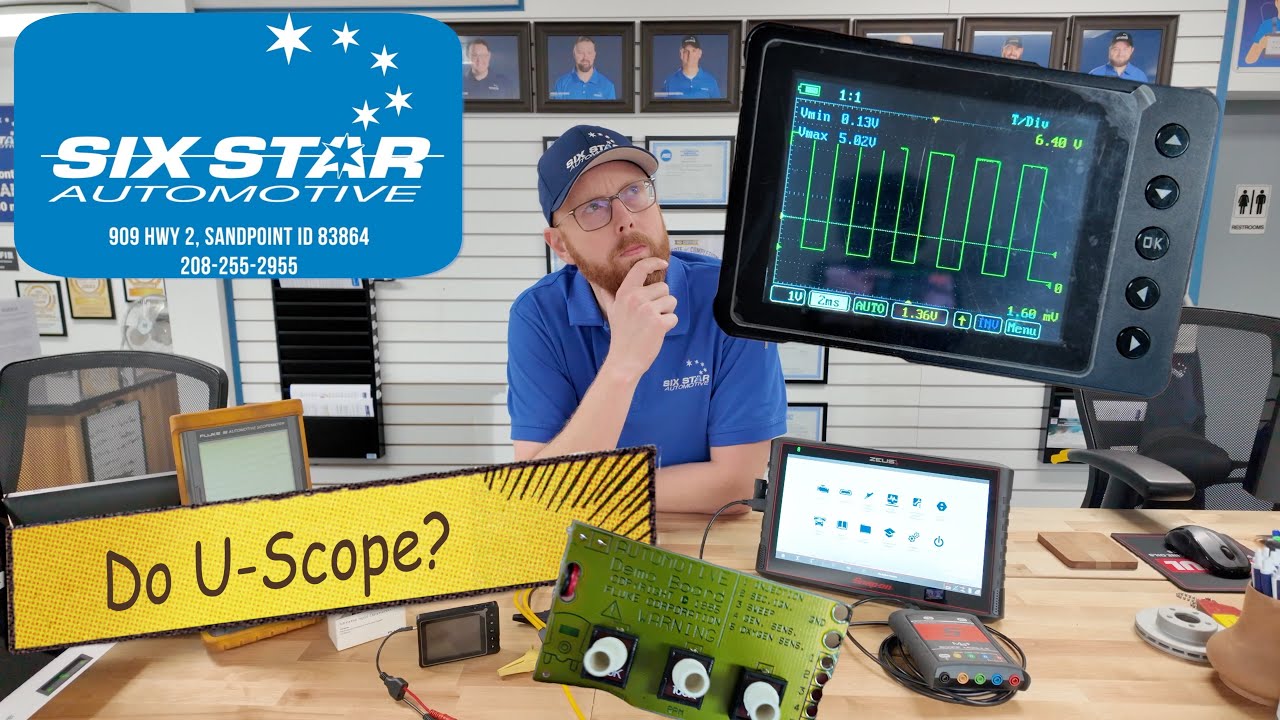
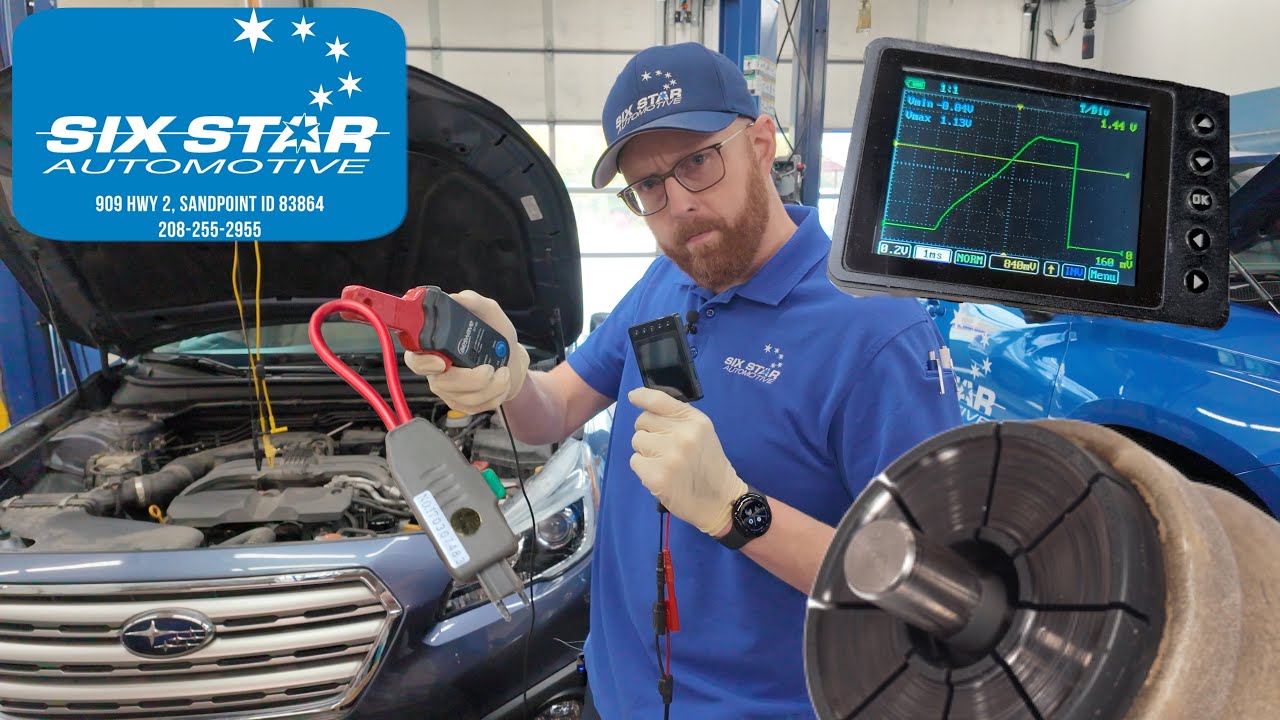
Do U-Scope? (Episode 2) Real-World Scope Tests: Coil Amp Ramps, Fuel pump test and MORE!!
Автор: Six Star Automotive
Загружено: 2025-10-18
Просмотров: 8056
Описание:
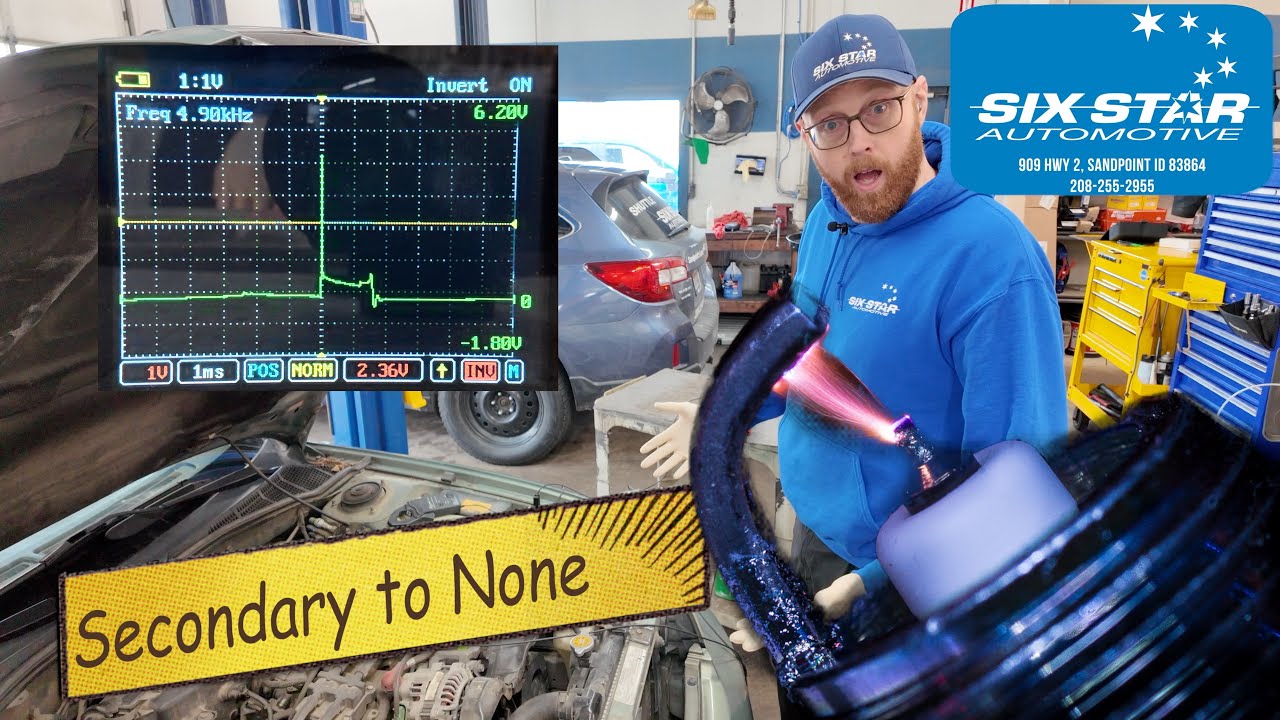
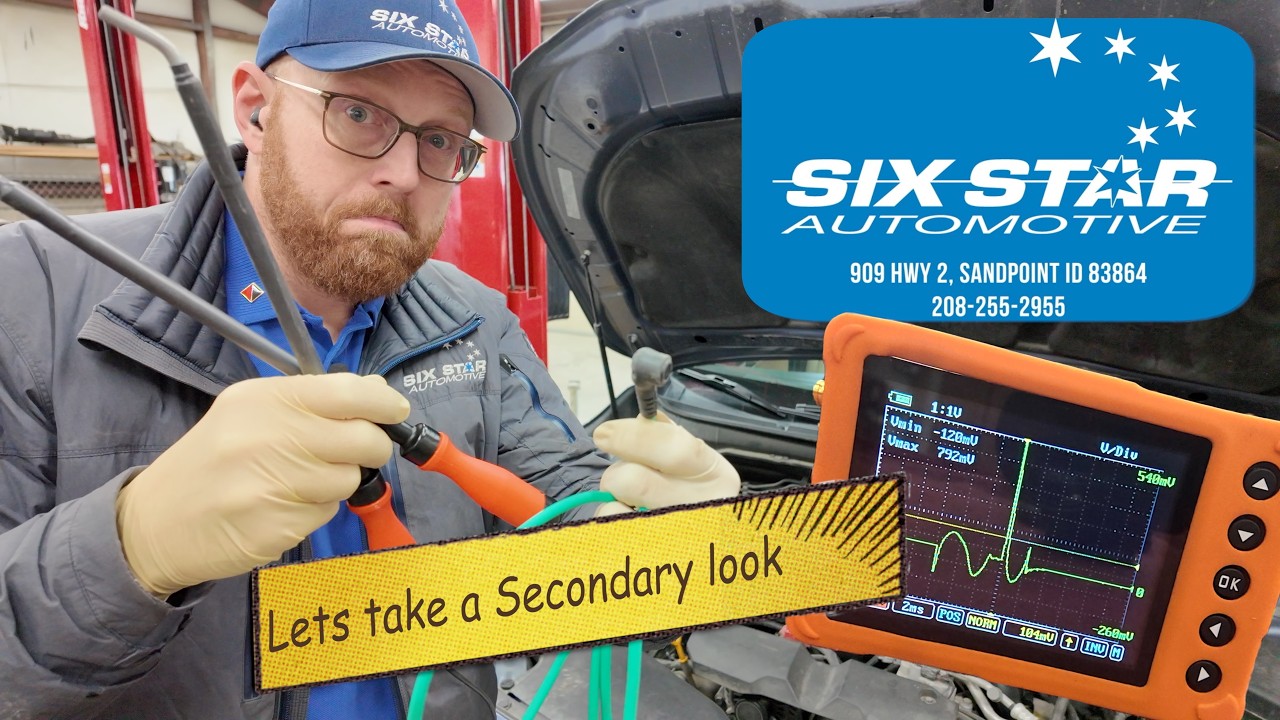
Learn practical lab-scope workflows you can use today. We reinforce the basics with real-world tests: checking primary ignition current with a low-amp probe, verifying an entire bank of coils via the common power feed, reading fuel-pump current through a fuse-loop adapter, understanding turn-on oscillations, setting up a clean crankshaft position (CKP) waveform, and using a capacitive secondary probe as a reliable cylinder-ID trigger for multi-channel captures.
What you’ll learn
How to amp-ramp a coil safely at the fuse box and what a “good” ramp looks like
Why turn-on oscillations matter (saturation, driver health, primary circuit integrity)
Fast bank-wide coil checks using the common B+ feed (no need to probe every coil one by one)
Fuel pump current signatures (brush/commutator ripple, worn pump clues, cavitation hints)
CKP waveform setup (timebase, trigger, coupling) and why missing/odd teeth look the way they do
Using a secondary capacitive probe (Wyzeprobe) for rock-solid cylinder identification across channels
Gear shown / useful links
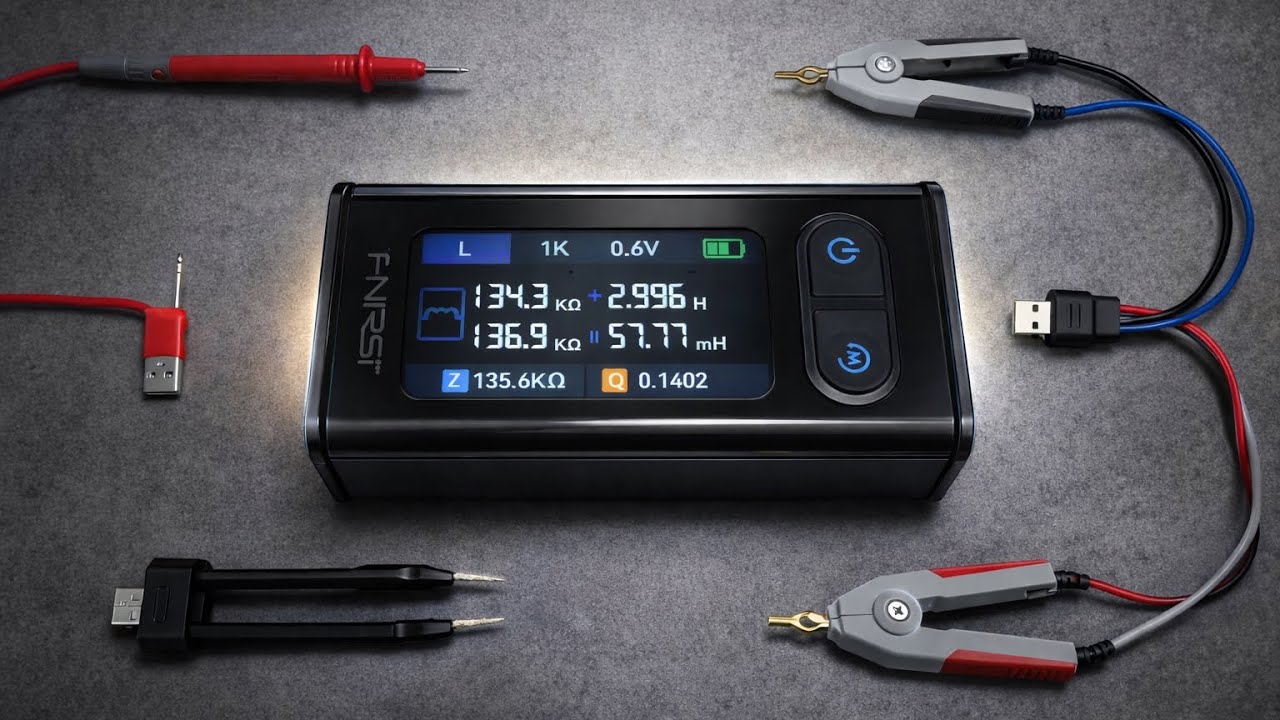
AESwave uScope handheld oscilloscope: https://www.aeswave.com
AESwave Wyzeprobe (capacitive secondary probe): https://www.aeswave.com
Fuse-loop current adapter (ATC/Mini add-a-fuse style)
Low-amp probe (20A/60A range, 10 mV/A typical)
ScannerDanner book/video resources: https://www.aeswave.com
Coil primary current via fuse loop: 20A range, 10 ms/div, DC coupling, trigger on rising current; expected ~5–10 A peak, clean linear ramp, distinct turn-on oscillations just after driver turns on
Common B+ feed (bank check): Clamp around common feed to multiple coils; watch for uniform peak height and ramp slope across events; a single “low peak” or missing event flags one coil/circuit
Fuel pump: 20A range, 50 ms/div (idle) or 100 ms/div (under load), DC coupling; look for stable average current and consistent commutator ripple spacing; irregular spacing/low amplitude = wear
CKP (VR sensor example): AC coupling, ~2–5 V scale (depends on sensor), 5 ms/div initial; center trigger; you should see uniform sine/reluctor pulses with a recognizable gap or “odd tooth” pattern
Secondary (Wyzeprobe): AC coupling, 5–20 kV eq. scale (scope volts if using attenuator), 2 ms/div; use firing line for cylinder ID timing; don’t diagnose mixture from this alone—use it to sync channels
Added tests to try (for next captures)
Coil dwell comparison at idle vs. 2,500 rpm (watch dwell control and oscillation quality)
Fuel pump loaded vs. key-on prime current comparison
CKP vs. CMP correlation (overlay to verify timing without teardown)
Relative compression using an amp clamp on the starter feed with the Wyzeprobe as cylinder sync
Safety & tips
Always place the amp loop in the fuse position feeding the circuit, not on ground returns.
Zero your clamp, orient arrow with current flow, and verify scale before cranking/run.
For VR CKP, start AC coupled to remove DC bias, then refine.
Use the secondary probe as a sync—it’s quick and reliable, but not a full secondary analysis tool.
Downloadable quick reference (copy into your shop wiki/notes)
Coil peak current target, ramp slope, and oscillation presence = health snapshot
Bank-wide coil check = instant outlier detection
Fuel pump ripple = commutator health; average draw = pump load
CKP pattern = mechanical timing & sensor health baseline
Secondary probe = fast sync for multi-channel captures
Повторяем попытку...
Доступные форматы для скачивания:
Скачать видео
-
Информация по загрузке: