#11 Unlocking Joint Mobility Mastering Ligament and Muscle Balance
Автор: Phillip Skinner
Загружено: 2025-04-15
Просмотров: 8
Описание:
To optimize the function of the ankle joint, we need to consider the role of ligaments in enclosing and facilitating movement through its normal neural pathways. Currently, we’re focusing on bladder 62 and kidney 6 points, which are crucial but can only be accessed effectively when we’re aware of the ligaments involved.
https://dennisbartram.com/
You can palpate these points locally and apply therapy localization. If you identify a specific ligament, you can implement a localized lengthening technique. This involves applying a load—using two fingers or thumbs—and simultaneously performing a manual stretch with body motion. This approach balances the fascia and ligaments, as they are similar tissue types.
Simply rubbing or stretching ligaments isn’t effective; instead, we need to repartition them. By applying a load and slightly lengthening them during a core contraction, we can signal the body to repattern itself more effectively. The goal is to restore the movement you want to achieve, whether it’s through a toe-in test or an inversion test, while addressing any inhibition.
When moving the joint passively, it’s essential to prevent the injury from being exacerbated. This requires clearing nociceptive signals, as even slight imbalances can trigger nociceptive messages. By applying pressure around the icosahedron structure of the ankle or wrist, we can guide the joint through its normal neural pathways, allowing for nerve repatterning.
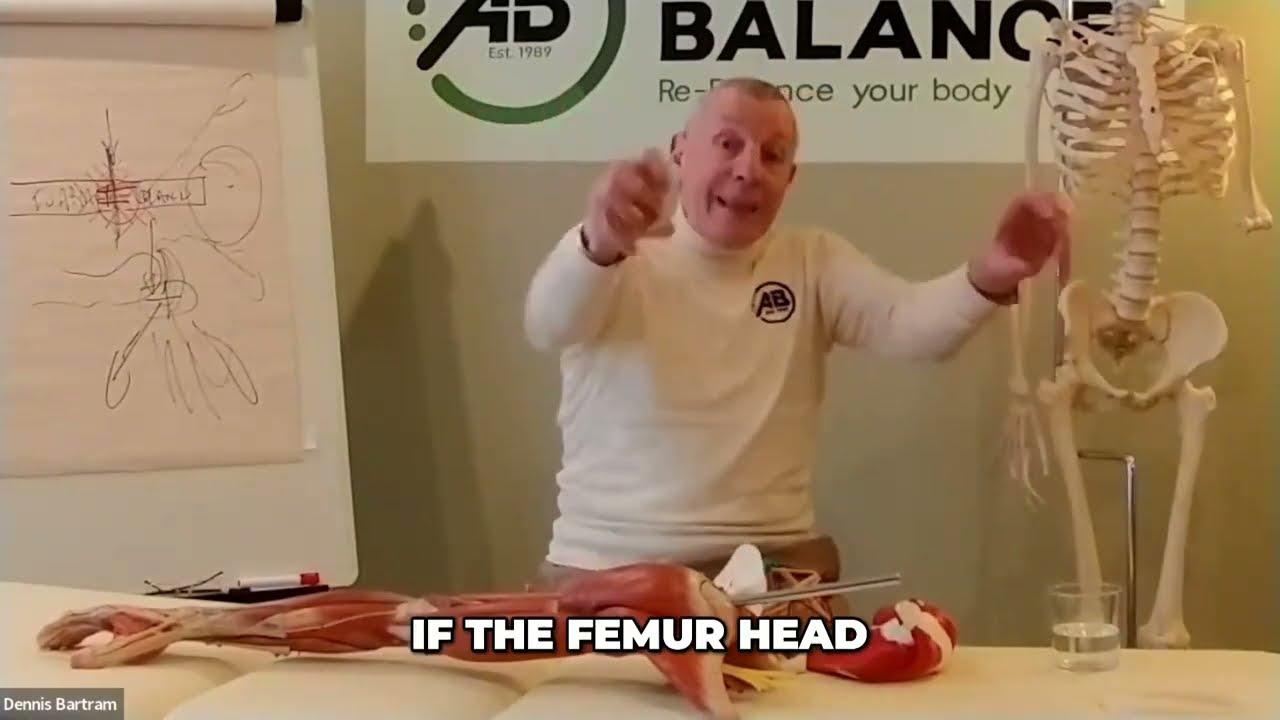
Additionally, if the towing test indicates issues, it may stem from the femur head not functioning properly. In such cases, activating and freeing the femoral ligaments can help restore proper movement patterns.
The key concept here is to assess the joint for its normal range of motion. If there’s a lack of range, it often indicates that some muscles are overly tight while others are overstretched, leading to a disequilibrium akin to the tent pole theory. Balancing the muscles is the first step before addressing the ligaments to activate the joint effectively.
Each joint must glide through its motion without restriction. If the radius can’t rotate around the humerus, it affects supination and pronation. This misalignment can lead to incorrect signals during everyday movements, such as opening a door or holding an object.
Understanding the hierarchy of ligaments is crucial. Ligaments override muscles and are always under reciprocal tension. Just like constructing an icosahedron, if the tension isn’t balanced, it can lead to asymmetry in the joints. For example, in the elbow joint, if the ligaments are too tight, they can restrict movement, preventing the joint from functioning properly.
When assessing the elbow, palpate the ligaments to identify stiffness and determine if they’re preventing proper rotation. I typically prioritize working on muscles first, followed by ligaments, as muscle function is influenced by ligament positioning.
Lastly, I want to share an article from an orthopedic surgeon discussing how menopausal changes can lead to frozen shoulders due to estrogen depletion. It’s essential to keep the shoulder moving, even in cases of frozen shoulder, and I’ll send this document for further reading.
https://dennisbartram.com/
I’ll also provide a document detailing orthopedic tests for the shoulder, as awareness of these tests can be beneficial, even if they aren’t frequently used in practice. Understanding these assessments helps in recognizing potential issues when patients seek orthopedic care.
#anklejointmovementtherapy, #ligamentactivationandbalance, #neuralpathwayrehabilitationtechniques, #fasciaandligamentconnection, #jointsrangeofmotion, #nociceptivesignalclearancemethods, #femoralligamentactivationstrategies, #muscleandligamentequilibrium, #frozenshouldertreatmentoptions, #orthopedicassessmentandtests, #proprioceptivefeedbackmechanisms,#manualtherapytechniquesapplication,
Повторяем попытку...
Доступные форматы для скачивания:
Скачать видео
-
Информация по загрузке: