Japan Shinkansen Bullet Train (700, N700 and N700A Series)
Автор: wayneg9998
Загружено: 2015-12-22
Просмотров: 738
Описание:
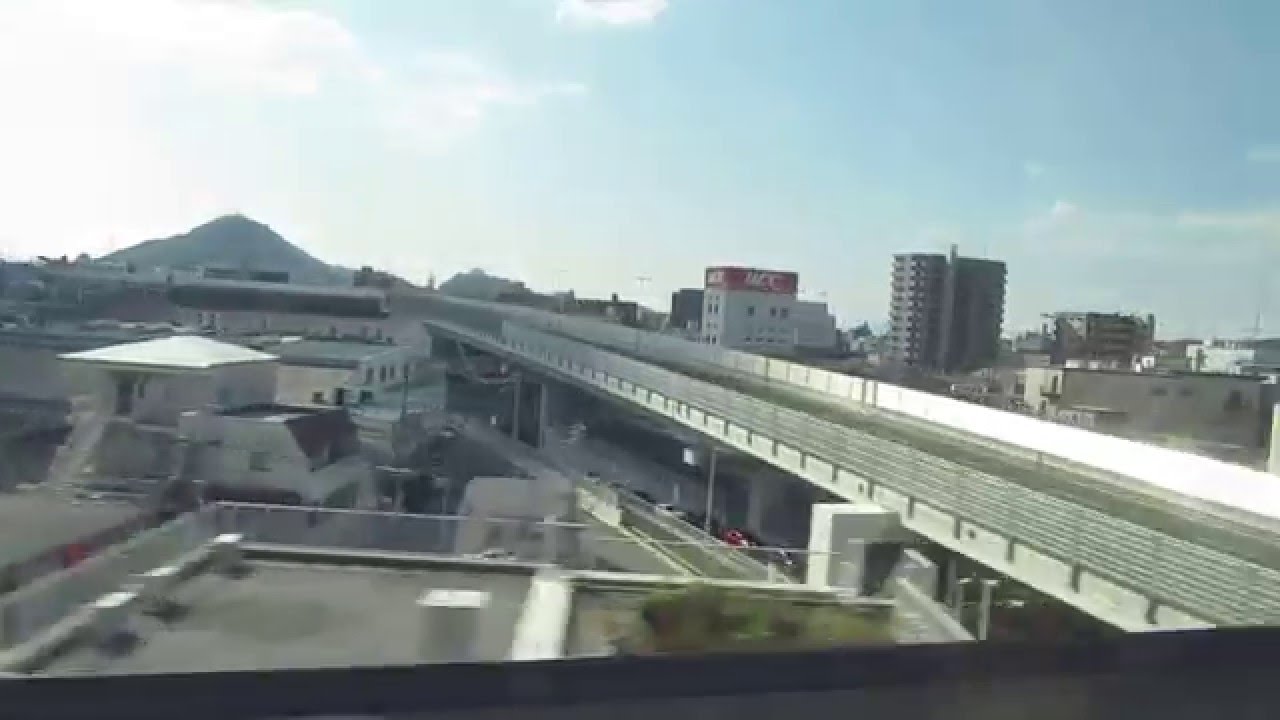
This video was taken on the JR West Rail Shinkansen, starting at SHIN-OSAKA, with stops at Shin-Kobe, Himeji, Okayama, Fukuyama, Hiroshima, Kokura, Hakata, Kumamoto, terminating at KAGOSHIMA-CHUO.
The Shinkansen (新幹線, new trunk line) is a network of high-speed railway lines in Japan operated by four Japan Railways Group companies. Starting with the Tōkaidō Shinkansen (515.4 km, 320.3 mi) in 1964, the network has expanded to currently consist of 2,615.7 km (1,625.3 mi) of lines with maximum speeds of 240–320 km/h (150–200 mph), 283.5 km (176.2 mi) of Mini-shinkansen lines with a maximum speed of 130 km/h (80 mph), and 10.3 km (6.4 mi) of spur lines with Shinkansen services. The nickname bullet train is sometimes used in English for these high-speed trains.
The maximum operating speed is 320 km/h (200 mph) (on a 387.5 km section of the Tōhoku Shinkansen). Test runs have reached 443 km/h (275 mph) for conventional rail in 1996, and up to a world record 603 km/h (375 mph) for maglev trains in April 2015.
Shinkansen literally means new trunk line, referring to the high-speed rail line network. The name Superexpress (超特急 chō-tokkyū), initially used for Hikari trains, was retired in 1972 but is still used in English-language announcements and signage.
The original Tōkaidō Shinkansen, connecting the largest cities of Tokyo and Osaka, is the world's busiest high-speed rail line. The service on the line operates much larger trains and at higher frequency than most other high speed lines in the world. At peak times, the line carries up to thirteen trains per hour in each direction with sixteen cars each (1,323-seat capacity and occasionally additional standing passengers) with a minimum headway of three minutes between trains.
Though largely a long-distance transport system, the Shinkansen also serves commuters who travel to work in metropolitan areas from outlying cities one or two stops removed from the main cities, and there are some services dedicated to this market.
Japan's Shinkansen network had the highest annual passenger ridership (a maximum of 353 million in 2007) of any high-speed rail network until 2011, when China's high-speed rail network surpassed it at 370 million passengers annually, though the total cumulative passengers, at over 10 billion, is still larger. While the network has been expanding this additional ridership is expected to be overtaken by Japan's declining population causing ridership to decline over time. The recent expansion in tourism has also boosted ridership marginally.
Повторяем попытку...
Доступные форматы для скачивания:
Скачать видео
-
Информация по загрузке: