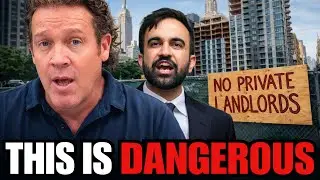
Zohran Mamdani Won — His NYC Housing Plan Could Destroy Real Estate (Full Breakdown)
Автор: David Avgi
Загружено: 2025-12-20
Просмотров: 295
Описание:
Zohran Mamdani just won — and his NYC housing plan could radically reshape real estate, development, and affordability in New York City.
In this video, I break down Zohran Mamdani’s housing policies and why they may hurt housing supply, investors, and renters long-term.
Yet Assembly member Zohran Mamdani’s real estate and housing platform pushes policies that critics argue would accelerate capital flight, reduce new housing production, and make affordability worse — not better.
This video breaks down each major housing and real estate policy he supports, how it would function in the real world, and why opponents believe these ideas would ultimately harm renters, homeowners, and the city itself.
🏢 1. Expanded Rent Control & Rent Stabilization
What’s proposed:
Expanding rent stabilization
Freezing or sharply limiting rent increases
Stronger tenant protections that restrict landlord flexibility
Critics’ concern:
Rent control sounds compassionate, but history shows it reduces supply over time.
When rent increases don’t keep pace with:
Rising property taxes
Insurance costs
Maintenance & labor costs
Interest rates
Owners stop reinvesting. Buildings deteriorate. Developers stop building rentals altogether.
➡️ Result:
Fewer new rental buildings
Aging, under-maintained housing stock
Landlords converting rentals to condos or exiting the market
Long-term tenants benefit, but future renters suffer from extreme scarcity
🏗️ 2. Opposition to Market-Rate & Luxury Development
What’s proposed:
Restricting or discouraging luxury housing
Framing high-end development as “harmful” or unnecessary
Critics’ concern:
Luxury development doesn’t exist in a vacuum — it subsidizes the entire housing ecosystem.
High-end projects:
Cross-subsidize affordable units through inclusionary housing
Pay the highest property taxes
Fund city services, schools, and transit
If you eliminate luxury development:
Capital moves to Miami, Austin, Dallas, Nashville, or overseas
Affordable housing funding shrinks
Construction jobs disappear
➡️ Result:
Less supply at all income levels and higher rents citywide, not lower.
💰 3. “Tax the Rich” & Anti-Investor Rhetoric
What’s proposed:
Higher taxes on high-income residents
Higher transfer taxes and property taxes on “wealthy” owners
Framing real estate investors as exploitative
Critics’ concern:
NYC is already one of the highest-taxed cities on Earth.
Wealthy residents are also:
The largest taxpayers
The biggest donors to cultural institutions
The buyers who keep new developments financially viable
Capital is mobile. If NYC becomes openly hostile to investment:
Investors leave
Developers stop building
Financing dries up
➡️ Result:
The tax base shrinks, city revenue declines, and the burden shifts to the middle class.
🏚️ 4. Stronger Limits on Evictions & Owner Rights
What’s proposed:
Near-total eviction moratoriums
Expanded “right to counsel” with minimal owner protections
Critics’ concern:
Housing requires predictable enforcement of contracts.
If owners cannot:
Remove non-paying tenants
Reclaim units for renovation
Enforce lease terms
Banks stop lending. Insurance companies raise premiums. Developers walk away.
➡️ Result:
Fewer loans approved
Fewer buildings renovated
Fewer units entering the market
Which ironically hurts renters the most.
🏠 5. Public Housing & “Free Housing” Expansion
What’s proposed:
Massive government-built housing
Housing framed as a universal public good
Critics’ concern:
Government does not build housing efficiently.
Public housing historically suffers from:
Cost overruns
Delays
Poor long-term maintenance
Political mismanagement
NYCHA alone already faces tens of billions in deferred repairs.
➡️ Result:
Taxpayers pay more, units take longer to deliver, and quality declines — while private housing production collapses.
📉 6. The Bigger Picture: Capital Flight & Population Loss
NYC is already losing:
High-income residents
Entrepreneurs
Developers
Family offices
Policies that attack real estate profitability accelerate:
Out-migration
Job losses
Reduced housing starts
Weaker neighborhoods
When capital leaves, cities don’t become more equal — they become poorer.
⚠️ The Core Issue: Good Intentions, Bad Economics
The desire to make housing affordable is valid.
But critics argue Mamdani’s platform ignores basic economic reality:
Housing requires capital
Capital requires returns
Returns require reasonable risk
If you remove profit, you remove supply.
If you remove supply, prices go up, not down.
🎯 Final Takeaway
Freezing rents, punishing investment, and demonizing development feels morally satisfying, but the long-term effect could be:
❌ Fewer apartments
❌ Worse buildings
❌ Higher rents
❌ Less tax revenue
❌ A weaker NYC
This video isn’t about ideology — it’s about what actually works in the real world.
Повторяем попытку...

Доступные форматы для скачивания:
Скачать видео
-
Информация по загрузке: