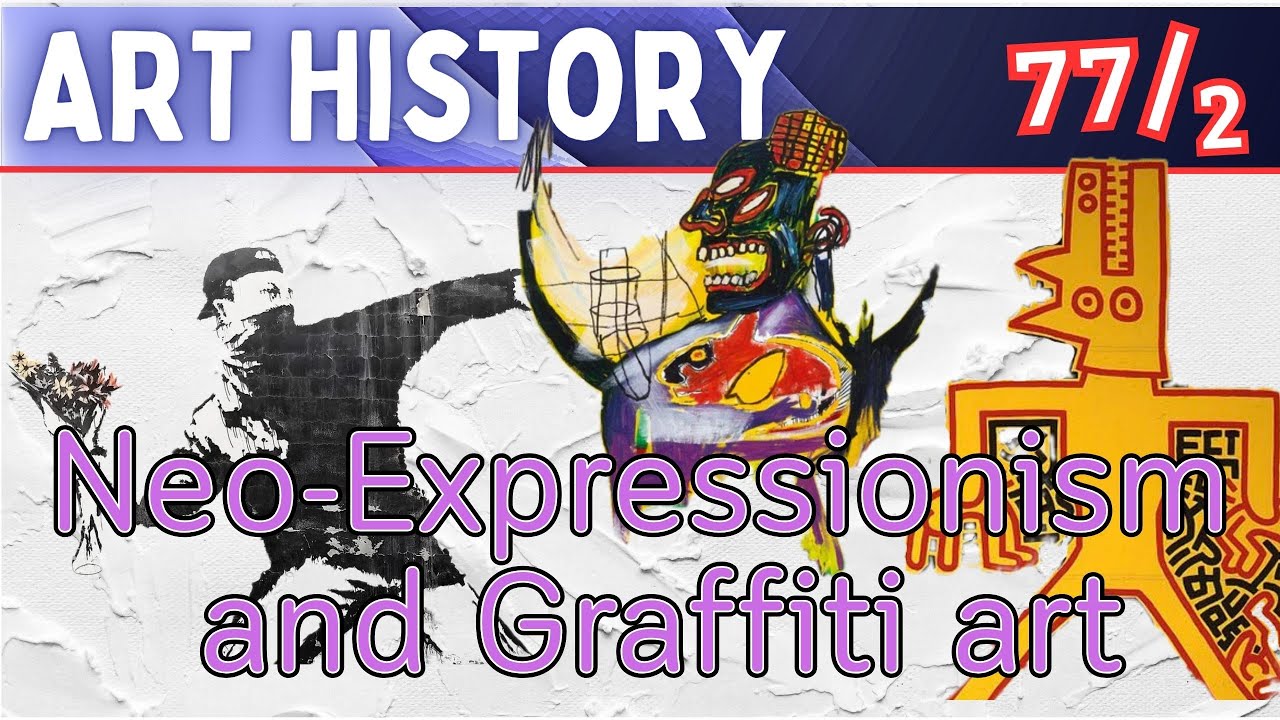
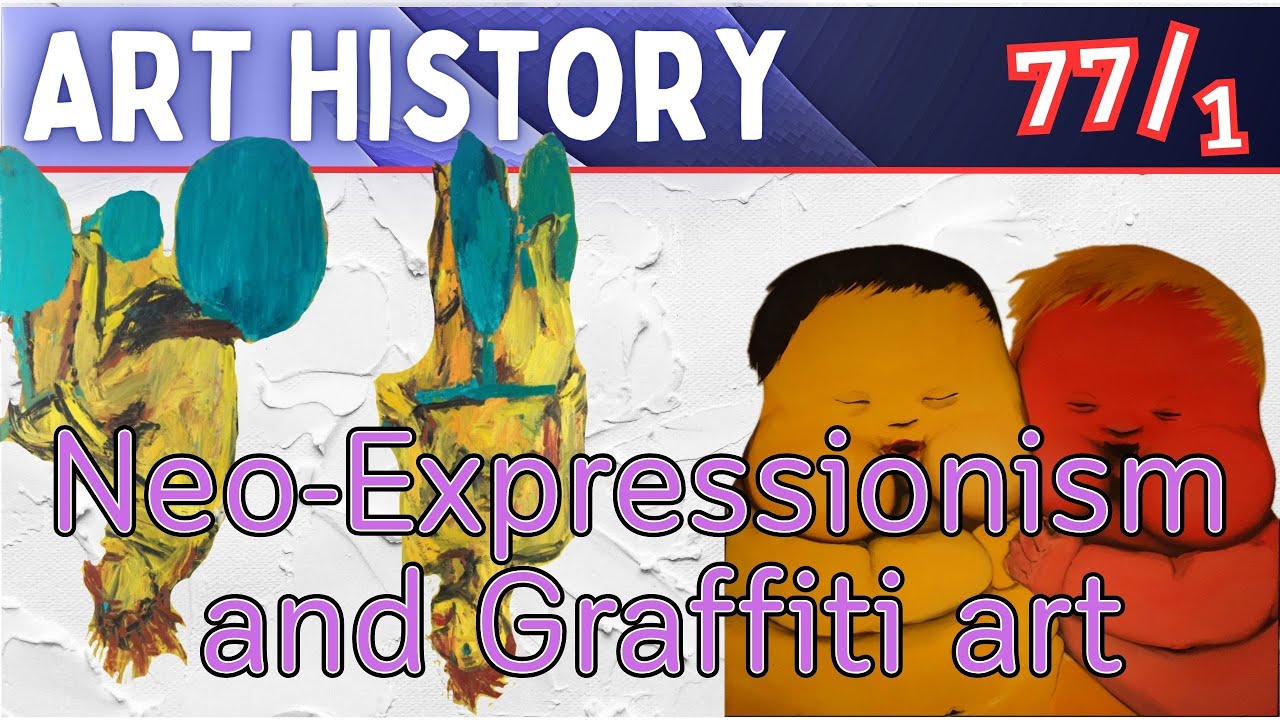
Art History ( Lesson 77/1): Neo-Expressionism and Graffiti art/Georg Baselitz,Jörg Immendorff:
Автор: Art Pencil Drawing
Загружено: 2025-08-04
Просмотров: 179
Описание:
Art History ( Lesson 77/1): Neo-Expressionism and Graffiti art/Georg Baselitz,Jörg Immendorff :
The Neo-Expressionists emerged in the 1970s in the
US, West Germany, and Italy, producing bright, figurative paintings, often using unusual techniques. In the 1970s in New York graffiti art thrived, and by the 1980s many of its exponents were exhibiting in galleries, rather than in the streets.
Origins and influences:
The Neo-Expressionists rejected the austere, cerebral work of the Minimalists and Conceptual artists of the 1960s and instead returned to figurative painting as their primary medium of expression. By the 1980s, Neo-Expressionism had become the dominant style of avante-garde artists in the West. Much of this work was of dubious quality but it helped fuel a feverish art market, especially in New York.
The Neo-Expressionists drew their inspiration from many sources - including the work of the German Expressionists of the 1910s and 1920s, the Abstract Expressionists of the late 1940s and 1950s, and the late aggressive paintings of Pablo Picasso.
Style and technique:
Neo-Expressionism was characterized by style rather than subject. The work was dramatic, with distorted subject matter and strong contrasts of colour and tone. The paint was often applied in thick impasto with aggressive brushwork, giving the appearance of spontaneous
Many Neo-Expressionists set out to shock with unconventional techniques and media. From 1969, the German Georg Baselitz began to hang his paintings upside down to emphasize the passionate brushwork rather than the subject matter. In New York in the 1970s, graffiti artists transformed the city with their colourful, spray-painted artwork. They "bombed" subway trains so their art travelled through the city.
Georg Baselitz:
Georg Baselitz's work is raw, unsettling, and uncompromising. In both his painting and his sculpture, he uses a vigorous - even violent - technique to provoke visceral emotions in the viewer.
in his early work of the late 1950s and early 1960s, Baselitz rebeiled against
the dominance of Abstract Painting,
proposing in its place a very personal and expressive figurative art. This was often brutally erotic, and apparently influenced by art produced by the mentally ill. His work was the antithesis of the detached work of the Pop Artists and Minimalists, who dominated the 1960s art world. For inspiration, Baselitz looked back to the rebels of art - the Expressionists of early 20th-century Germany and the Mannerists of 16th-century Italy. In the 1980s, he was widely acknowledged as a father figure of the Neo-Expressionist movement.
Jörg Immendorff:
The German Neo-Expressionist Jörg Immendorff sought to instigate political debate and change. "I am for a form of art," he said in 1976,
"that sees itself as one of the many means through which human society can be changed."
In the 1960s, Immendorff was inspired by the "happenings" of the conceptual artist Joseph Beuys. He developed his own form of politicized, absurdist performance art - christening it "Lidl", a nonsense word based on the sound of a baby's rattle. He formed a " Lidi Academy"- a utopian vision of a professor-free art school. In the late 1970s, Immendorff began his Café Deutschland paintings. Set in an imaginary nightclub, they ask questions of a Germany traumatized by post-Nazi guilt, dominated by consumerism and totalitarism, and threatened by nuclear destruction. In his last years, Immendorff was confined to a wheelchair and had to direct assistants to complete works following his instructions.
Повторяем попытку...
Доступные форматы для скачивания:
Скачать видео
-
Информация по загрузке: