When They Fitted a “Ray Gun” Scope onto an M1 Carbine — Japanese Couldn’t Stay Hidden at Night
Автор: 🔥 SombraFamiliar
Загружено: 2025-12-29
Просмотров: 25
Описание:
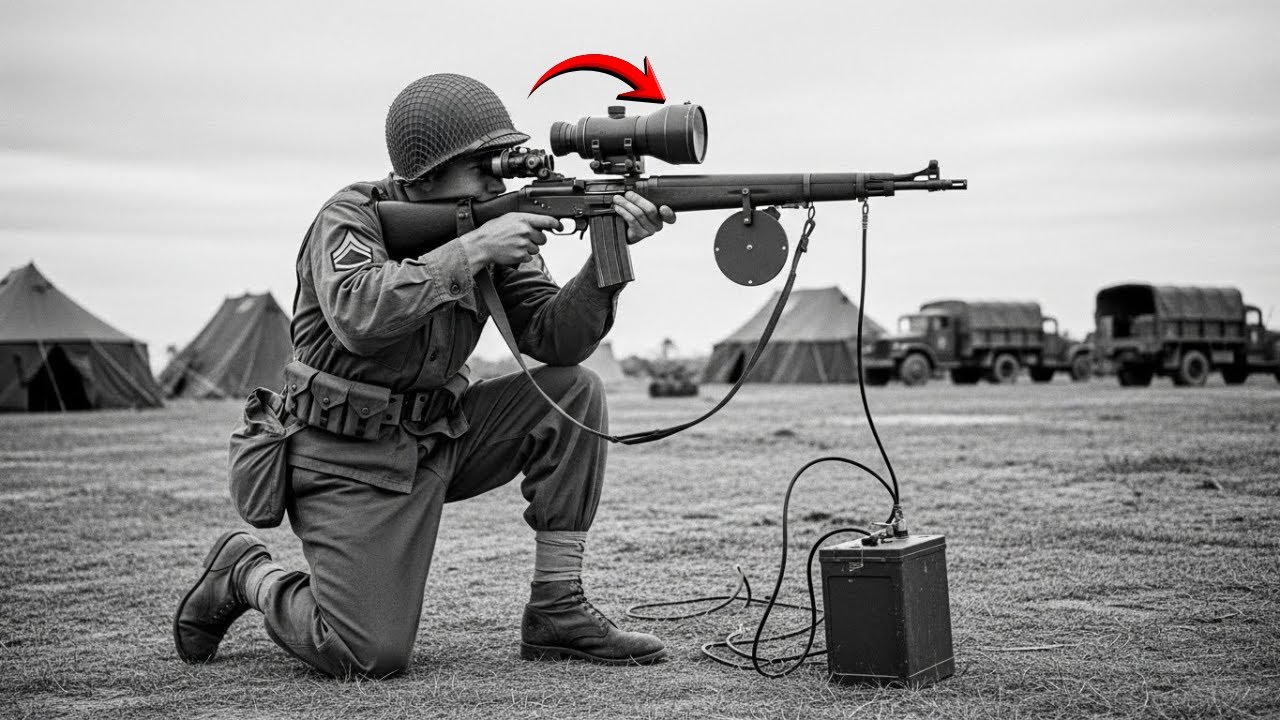
Why Intelligence and Reconnaissance Platoon operators attached infrared scopes to M1 Carbines during World War 2 — and how they realized they could spot Japanese infiltrators who believed darkness made them unseen. This WW2 history story reveals how the first battlefield night vision system transformed combat when experts insisted it couldn’t work.
April 5, 1945. Soldiers armed with modified T3 Carbines established defensive positions across southern Okinawa. Since Guadalcanal in 1942, Japanese infiltrators had plagued American lines night after night, slipping through darkness like shadows. That evening, operators activated infrared emitters and peered through scopes that displayed glowing green silhouettes of targets up to 70 yards away. Military authorities believed night vision technology was decades from frontline use. The 28-pound systems, limited to a four-hour battery life, were dismissed as too heavy, too fragile, and too impractical for combat.
They were all wrong.
What these operators uncovered during that first night on Okinawa wasn’t about experimental gadgets. It was about exposing Japanese soldiers who trusted darkness as protection, locking them into green-lit crosshairs before they could reach ammunition dumps or command centers. The infrared scopes unveiled a battlefield hidden throughout three years of brutal Pacific warfare. And the results forced Japanese commanders to question why their infiltration tactics suddenly began to fail.
This method remained classified for years, with T3 Carbine operators sworn to secrecy about technology that wouldn’t appear publicly until the 1960s. The discoveries made on Okinawa in April 1945 laid the groundwork for every modern night vision system used by today’s militaries.
🔔 Subscribe for more untold WW2 stories: / @wwii-records
👍 Like this video if you learned something new
💬 Comment below: What other WW2 tactics should we cover?
#worldwar2 #ww2history #ww2 #wwii #ww2records
⚠️ Disclaimer: This content is entertainment-based storytelling inspired by WW2 events from internet sources. While we aim for compelling narratives, some details may be inaccurate. This is not an academic source. For verified history, consult professional historians and archival materials. Watch responsibly.
Повторяем попытку...
Доступные форматы для скачивания:
Скачать видео
-
Информация по загрузке: