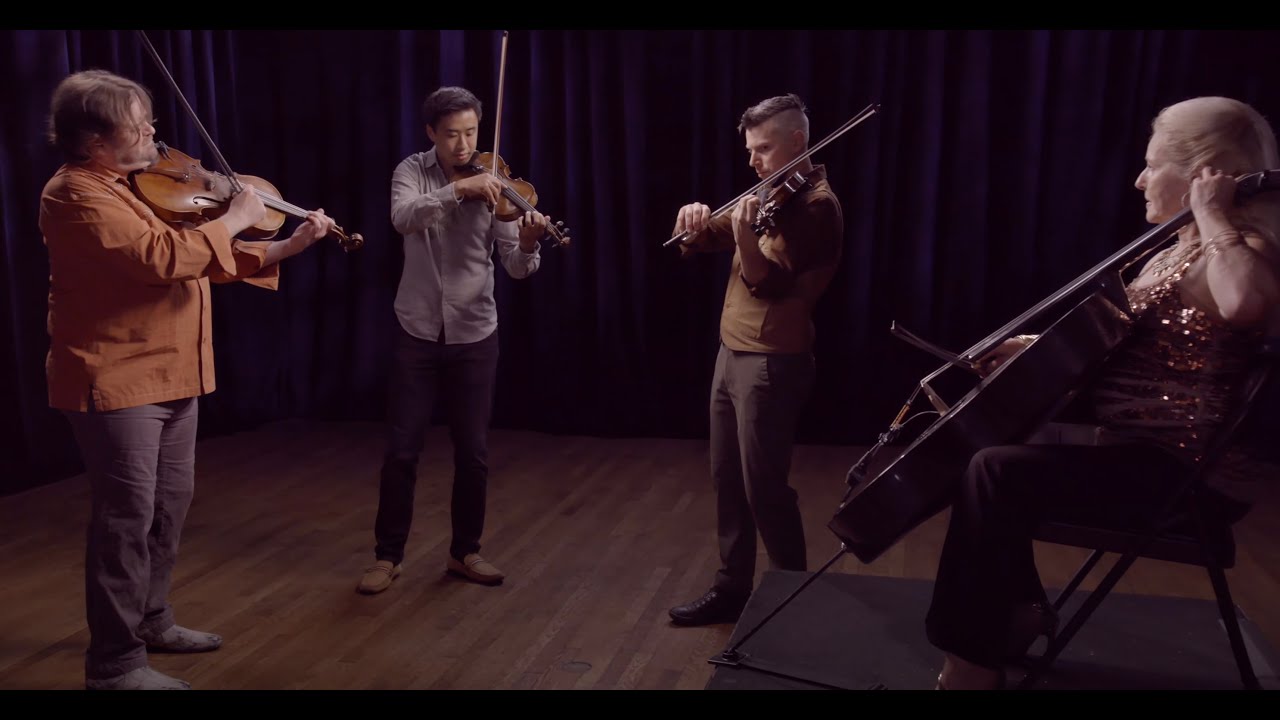
Modern Circus Music Composed for Strings
Автор: ETHEL
Загружено: 2023-10-05
Просмотров: 1852
Описание:
Breakaway - Tightrope Music
Rednosology - Show off Music
Seat 47C - Entrance Music
Moment of Truth - Finale Music / End of Show / Final Act
Circus music (also known as carnival music) is any sort of music that is played to accompany a circus, and also music written that emulates its general style. Popular music would also often get arranged for the circus band, as well as waltzes, foxtrots and other dances.
The most common type of circus music is the circus march, or screamer. It is characterized by a rapid-fire tempo – usually around 200 beats per minute – and melodies that contain showy features such as leaps, runs, and fanfares. It is difficult for "windjammers" (circus musicians) to play because of its fast tempo.
Marches served many purposes throughout the course of a circus. They were often used for grand entrances and exits, overtures and finales, acts featuring wild animals, or other daredevil-type acts. Circus marches are divided into "strains":
Exposition – first section containing two strains, often with a preceding introduction
Trio – second section; it can be composed of two different melodies that repeat, or one long melody that repeats itself
Break strain, or "dogfight" – often follow the trio and bring back some of the exposition melody.
The galop is another popular form of circus music. Like the march, it is played at a fast, lively tempo and is primarily used for daredevil acts, such as trick-riding or other wild animal performances. Any performance or act that consisted of fast-paced tricks or stunts would probably have performed to a galop. The galop is typically written in 2/4 time and has a short length, but would only end when the ringmaster signaled the end of an act. If the act went longer, the galop could be extended by playing da capo.[7] One of the best-known examples is Gustav Peter's widely popular Memory of Circus Renz, which was published in 1894 with the title Souvenir de Cirque Renz. The piece was originally written for the xylophone.
Circus music catered to the needs of the different acts. For example, a high-flying, nimble trapeze act could be characterized by a dizzying galop or a graceful waltz. An act containing ferocious wild animals, such as lions, would probably use a march.
Повторяем попытку...

Доступные форматы для скачивания:
Скачать видео
-
Информация по загрузке:





![Ravel: Bolero [Boléro]](https://imager.clipsaver.ru/_Y8DvESTMlw/max.jpg)