Is Prayer Allowed at Public School? | Engel v. Vitale
Автор: Mr. Beat
Загружено: 2017-03-17
Просмотров: 264596
Описание:
Want a specific SCOTUS case covered? Your idea gets picked when you donate on Patreon: / iammrbeat
Mr. Beat's band: http://electricneedleroom.net/
Mr. Beat on Twitter: / beatmastermatt
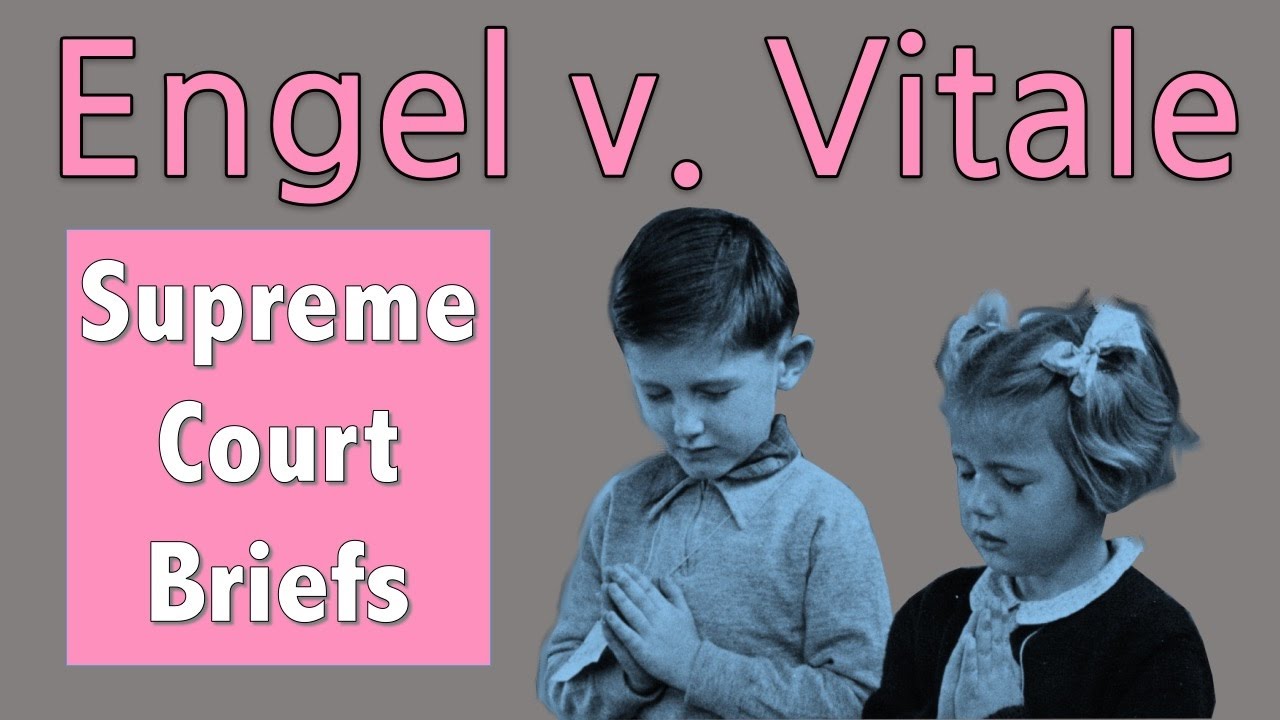
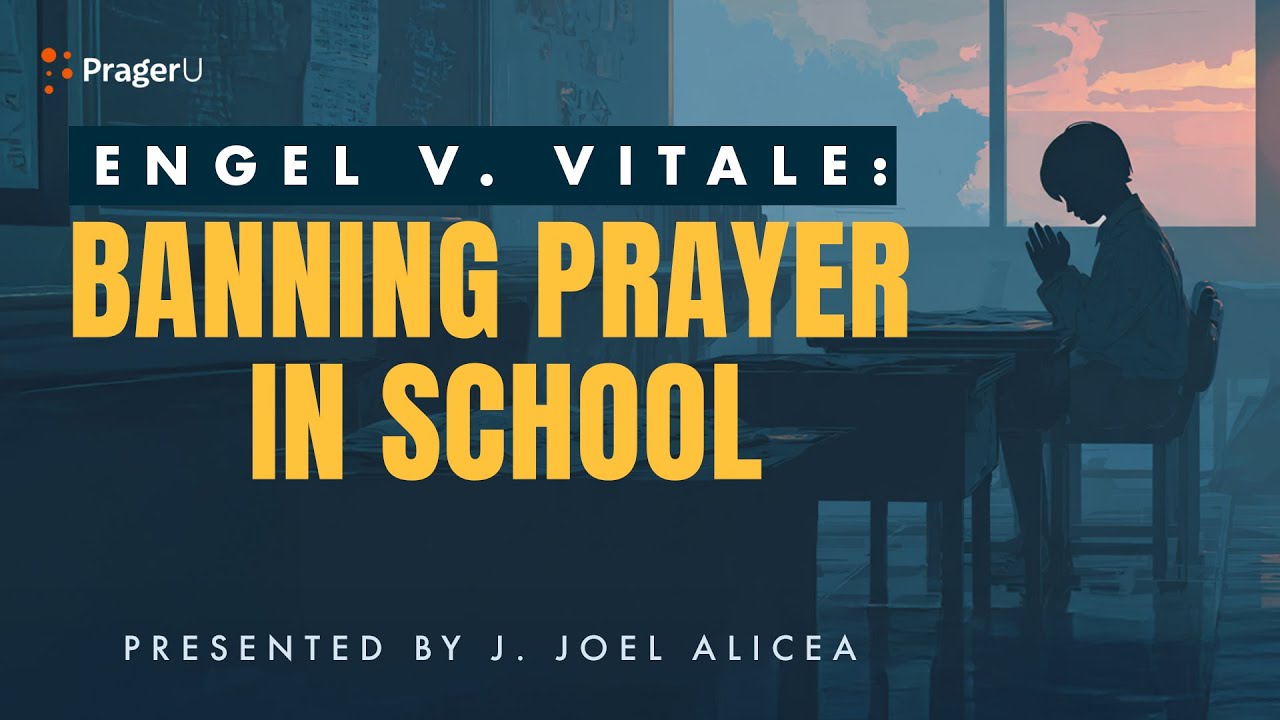
In the third episode of Supreme Court Briefs, Mr. Beat examines the first of many Supreme Court cases dealing with the separation of church and state- Engel v. Vitale.
The state board of education said that students were to open each day with a nondenominational prayer. Students across New York were to say: “Almighty God, we acknowledge our dependence upon Thee, and we beg Thy blessings upon us, our parents, our teachers and our Country.” Now, before some of you freak out, just calm down. Alright? CALM DOWN. The prayer was voluntary. It was purely promoted as a tool for character development. Now, I say voluntary, but if parents did not want their kids saying the prayer, they did have to take action and it was kind of a pain in the butt.
Well in July 1958, the Board of Education of Union Free School District Number 9, decided to have its students say the prayer. Students could opt out with their parent’s signature. However, a group of families complained that the prayer went against their religious beliefs. With the help of different organizations, the families decided to fight the prayer in court. Five parents, three Jewish and two who weren’t big on organized religion, sued the state school board President, William Vitale, on behalf of their children. They argued that the prayer violated the Establishment Clause of the First Amendment, which should be applied because of the Due Process Clause of the Fourteenth Amendment. Basically, it was a separation of church and state issue. Alphabetically, the first parent listed as a plaintiff was Steven Engel, so he ended up being the one who got all the attention. Engel later recalled how his kids were bullied at school for the lawsuit, and other families received obscene letters and phone calls in the middle of the night.
Vitale and the school board argued that they did not establish one particular religion with the prayer, nor did they force students to say the prayer. They also brought up that the prayer simply reflected the country’s religious heritage.
In the state court system, Engel and his fellow plaintiffs had absolutely no success. In 1959, they lost their case before the Supreme Court of New York. The next year, they lost before the Appellate Division of the Supreme Court of New York. The year after that, they lost before the Court of Appeals of New York, where Chief Judge Charles Desmond wrote “Not only is this prayer not a violation of the First Amendment (no decision of this or of the United States Supreme Court says or suggests that it is) but a holding that it is such a violation would be in defiance of all American history, and such a holding would destroy a part of the essential foundation of the American governmental structure.” Geez Charles. That was harsh.
Anyway, Engel and company next, of course, appealed to the Supreme Court, where all of a sudden things looked a lot better for them. The case was argued on April 3, 1962. On June 25, the Court ruled 6-1 in Engel and company’s favor. Two of the justices, Felix Frankfurter and Byron White didn’t take part in the decision. The Court said the prayer was unconstitutional. Justice Hugo Black wrote the opinion for the majority, writing “It is neither sacrilegious nor antireligious to say that each separate government in this country should stay out of the business of writing or sanctioning official prayers…” Basically, they agreed with the plaintiffs, determining the prayer broke the Establishment Clause of the First Amendment. The one dissenting opinion came from Justice Potter Stewart, who brought up early examples of religion in government, like “In God We Trust” being on coins.
Engel v. Vitale reasserted the importance of the separation between church and state. It basically banned state officials from trying to make prayer an official part of public schools, and it was the first of several cases in which the Court used the establishment clause to ban religious activities in public schools. The decision remains controversial to this day.
Повторяем попытку...
Доступные форматы для скачивания:
Скачать видео
-
Информация по загрузке:






![Tinker v. Des Moines [SCOTUSbrief]](https://imager.clipsaver.ru/q8CjOnrcXyw/max.jpg)


![Энгель против Витале, ОБЪЯСНЕНИЕ [Случаи, требующие рассмотрения правительством AP]](https://imager.clipsaver.ru/2MT-gmX7_k4/max.jpg)

