Mormon Pioneer National Historic Trail (Keosauqua, Iowa)
Автор: KCVids816
Загружено: 2022-07-17
Просмотров: 90
Описание:
Join along on a visit to Keosauqua, Iowa!
Keosauqua (/ˌkiːəˈsɔːkwə/ KEE-ə-SAW-kwə) is a city in Van Buren County, Iowa, United States. The population was 936 at the time of the 2020 census. It is the county seat of Van Buren County.
HISTORY
Keosauqua was laid out in 1839. The word Keosauqua derives from the Meskwaki and Sauk name for the Des Moines River, "Ke-o-saw-qua", which literally translates as "Bend in the River".
The Hotel Manning (0:07), a three-story relic from the Des Moines River's steamboat days, is Keosauqua's most notable landmark. Its unique Steamboat Gothic architecture mimics riverboats of the mid-1800s. The hotel was placed on the National Register of Historic Places in April 1973.
Also located in Keosauqua are many other notable historic sites. The 1847 Pearson House was a stop on the underground railroad. The Van Buren County Courthouse (0:57), built in 1843 in the Greek Revival style, is the oldest in continuous use in the state, and second-oldest in the United States. It is also on the National Register of Historic Places. The courthouse was the scene for the murder trial of William McCauley. A guilty verdict led to his subsequent demise at, appropriately, Hangman's Hollow. It was the first legal hanging in Iowa history.
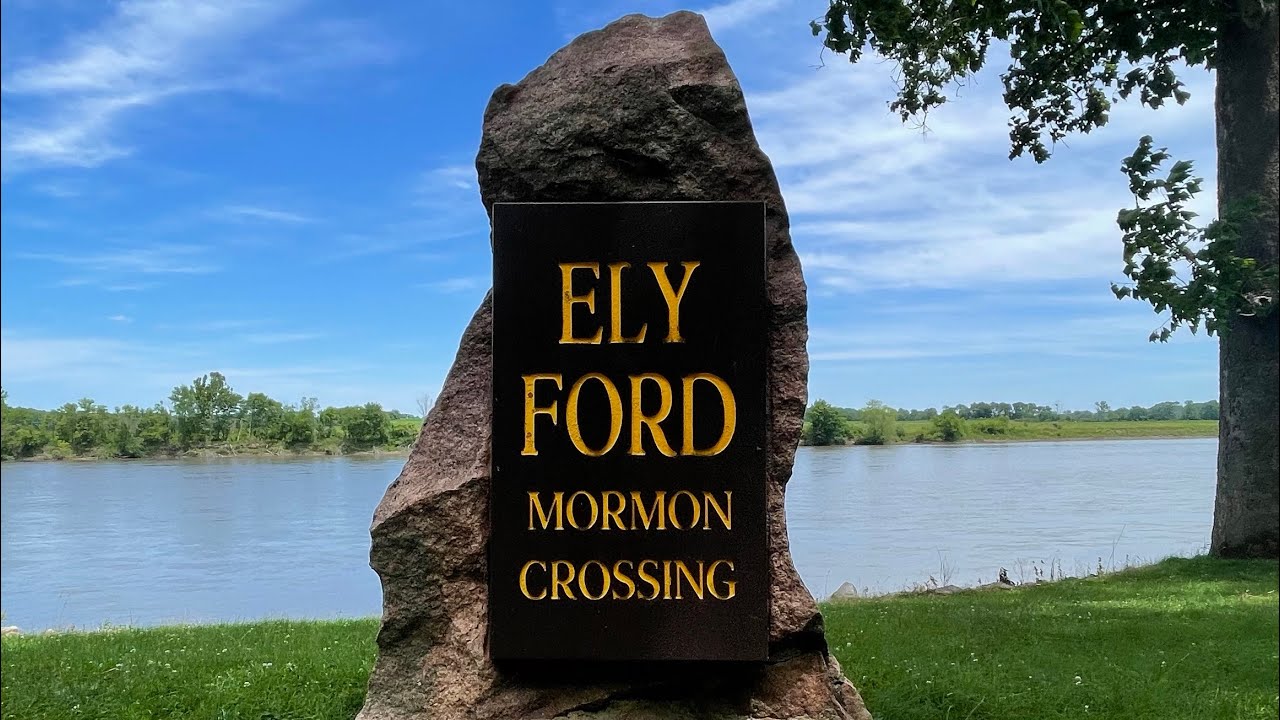
When Brigham Young and his followers were exiled from their base at Nauvoo, Illinois in 1846, their caravan crossed the Des Moines River at Ely's Ford (1:30), just upriver from Keosauqua on what is now known as the Mormon Trail.
Van Buren County native Voltaire Twombly received the Congressional Medal of Honor for actions taken at Ft. Donelson during the American Civil War. His post-war pursuits included a stint as mayor of Keosauqua and, as a businessman there, he built a stone building on the main street that remains to this day.
The 1839 Honey War (3:37), so named because three trees with beehives were cut down in the process, was fought south of Keosauqua in what is now Lacey-Keosauqua State Park. The event was a border disagreement between Iowa and Missouri. Before it was over, militias from both sides faced each other, though the dispute was ultimately resolved without a shot being fired.
Lacey-Keosauqua is one of the largest state parks in Iowa and was built by the Civil Conservation Corps during the Great Depression. The lake bathhouse and lodge stone work, from stone quarried within the park, remain outstanding testament to their work.
Keosauqua hosts its annual Fall Festival the second full weekend in October.
https://en.m.wikipedia.org/wiki/Keosa...
MORMON PIONEER NATIONAL HISTORIC TRAIL
ROAD TO ZION
From the late 1840s through the 1860s, an exodus of more than 70,000 Mormons passed by here on their way to their “New Zion” in Utah. Starting from Nauvoo, Illinois in February 1846, the first group of at least 13,000 Mormons crossed into Iowa to escape religious persecution, then spent the next winter in the area of present-day Council Bluffs, Iowa and Omaha, Nebraska.
In 1847, Brigham Young led an advance party of 143 men, 2 women, and 3 children along the Platte River. At Fort Bridger, Wyoming they departed from the Oregon Trail to head southwest to the Great Salt Lake. Today, a marked 1,624-mile auto route closely parallels their historic trek.
LOCAL CONCERTS FINANCE MUSICIANS’ TREK WEST
William Pitt was an English musician and band leader who converted to Mormonism. While living in Nauvoo, Illinois he organized Pitt’s Brass Band.
This band played for the enjoyment and inspiration of the Mormon Pioneers during their 1846 trek across Iowa. It also played concerts in towns in eastern Iowa. Sometimes they were paid by a cash collection, sometimes in corn, and once with a pail of honey. In Van Buren County they were particularly well received by the local residents. The band played in Farmington on March 4th and in Keosauqua on three different occasions.
They played for merchants and private parties , but their main concerts were held here, at the Van Buren County Courthouse. On the nights of March 10th and 11th, 1846, they were so well liked that they were paid $25.00. A third concert, on March 17th..netted a disappointing $7.00. These concerts helped the band members finance their journey west along the Mormon Pioneer Trail.
Mormon Pioneer National Historic Trail: https://www.nps.gov/mopi/planyourvisi...
Villages of Van Buren: https://villagesofvanburen.com
Повторяем попытку...
Доступные форматы для скачивания:
Скачать видео
-
Информация по загрузке: