Julius Röntgen: Piano Concerto No.7 in C Major, Oliver Triendl piano
Автор: sibarit101
Загружено: 2021-05-12
Просмотров: 2783
Описание:
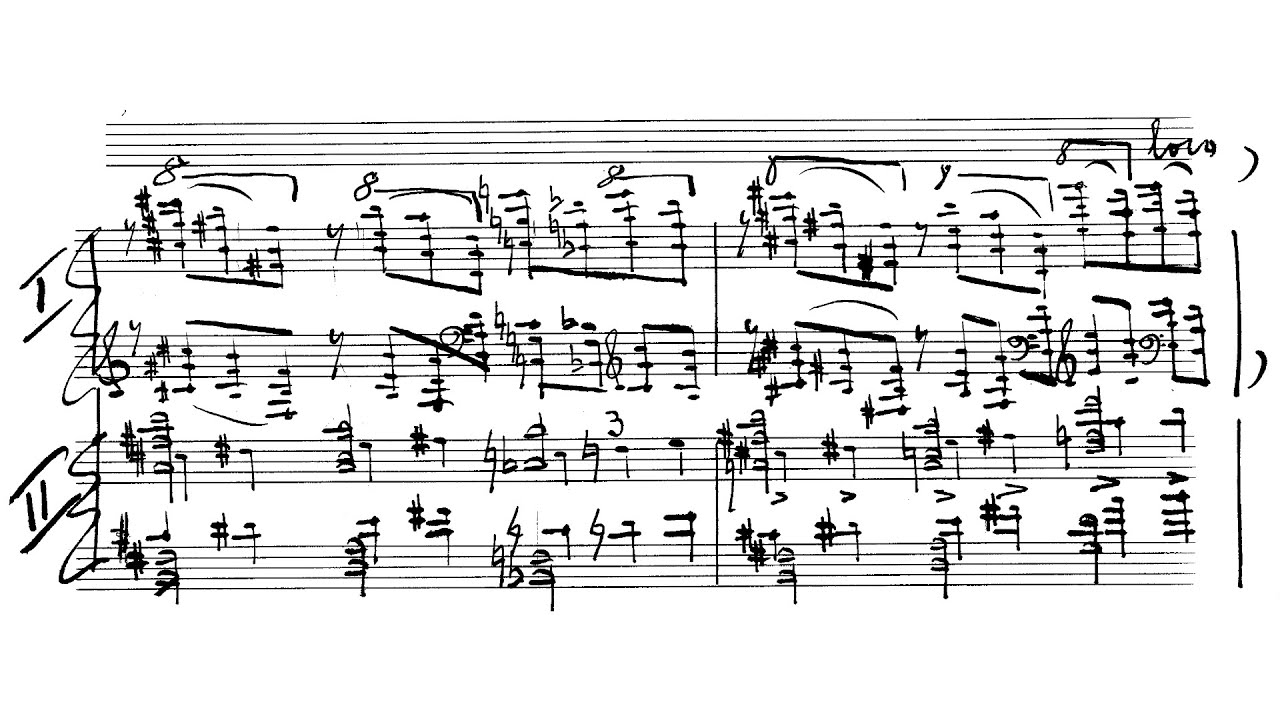
Julius Röntgen - Piano Concerto No. 7 in C Major, Oliver Triendl (piano), Kristiansand Symphony Orchestra, Hermann Bäumer (conductor)
I. Allegro – 00:00
II. Allegretto con grazia – 06:28
III. Romanze – 11:10
Julius Engelbert Röntgen (9 May 1855 – 13 September 1932) was a German-Dutch composer of classical music.
Julius Röntgen was born in Leipzig, Germany, to a family of musicians. He received his first piano lessons from his grandfather Moritz Klengel and from his mother Pauline Klengel. At a very early age he started composing and in 1864 he wrote his first composition: four duets for two violins. From 1865 until 1868 he was taught harmony, counterpoint and composition by Moritz Hauptmann. He continued his piano education with Louis Plaidy and Carl Reinecke, conductor of the Gewandhausorchester. He completed his composition studies with Franz Lachner in München. When he was 15 years old Röntgen was introduced to Franz Liszt, to whom he played two of his own compositions. As a child prodigy Röntgen took to the stage with his own works in Düsseldorf, Hamburg, Leipzig and other places.
In 1878 Julius Röntgen settled in Holland. He accepted a position as a piano teacher in Amsterdam and became the conductor of vocal society Excelsior as well as the Amsterdam division of the Maatschappij tot Bevordering der Toonkunst (Society for the Advancement of Music) and the Felix Meritis concerts.
In 1884 he founded the Amsterdam Conservatory together with Frans Coenen, Daniël de Lange and Johannes Messchaert. Later on he would become its managing director (from 1913 until 1924). Otherwise, he performed as a piano soloist and accompanist at musical soirées.
Röntgen was on friendly terms with Brahms and partly because of this, during the period 1878-1885, he initiated several concerts during which Brahms introduced his works to Holland. In 1884 Röntgen was a soloist in Brahms’ Second piano concerto conducted by the composer.
With Edvard Grieg especially he maintained a warm friendship. Their extensive correspondence is a unique document in which both composers comment on each others work and on that of others with complete candour and report about their colourful experiences and adventures on a musical, social and political level.
Julius Röntgen was a prolific composer. His extensive body of work (more than 600 compositions) is made up of symphonies, concertos, chamber music in various settings, songs, works for choir and operas. Opus numbers were only applied to printed works. Although he was well aware of international musical life, Röntgen remained true to his own way of composing, firmly rooted in the Leipziger Schule. His music is strongly reminiscent of that of Brahms, but his admiration for Reger also shines through in his work. With his research about and re-expression of Dutch folk music he has done important work, but he was also inspired by folk music from other countries as his works on themes and folk tunes from Scandinavia will testify. His enormous productivity as a composer is remarkable as his other activities included being a soloist, a performer of chamber music, an organiser and a teacher.
Röntgen started and ended his creative life as a piano composer.
His Concerto No. 7, his last such work, has three distinct movements and an ABA structure that would enable it to stand alone. It is Röntgen’s posthumous triumph that his two last concertos (no.6 and no.7, regularly performed together) have never disappeared from the repertoire.
Повторяем попытку...

Доступные форматы для скачивания:
Скачать видео
-
Информация по загрузке: