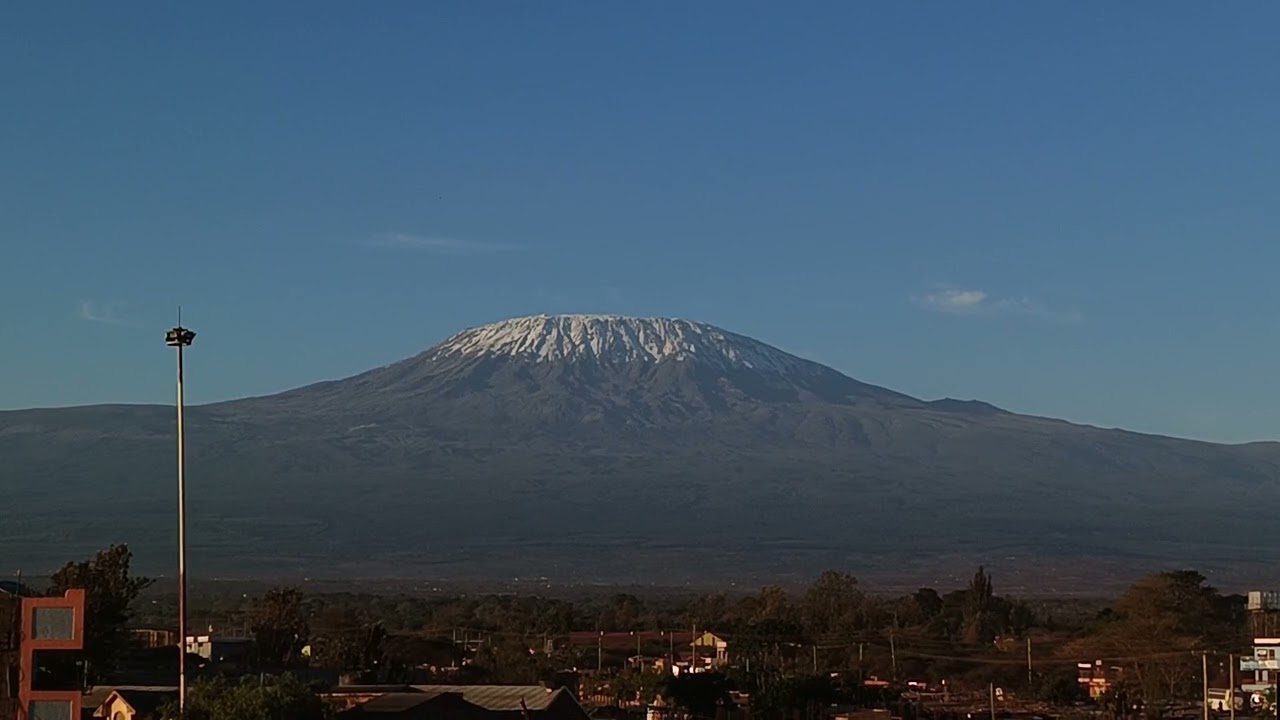
Mount Kilimanjaro dormant volcano Tanzania Africa's highest world's free-standing Kibo Mawenzi Shira
Автор: Antony Trivet Photography
Загружено: 2025-11-03
Просмотров: 10
Описание:
Mount Kilimanjaro is the highest peak in Africa and the world's tallest freestanding mountain, situated in northeastern Tanzania. A major hiking destination, it is comprised of three volcanic cones: Kibo, Mawenzi, and Shira. Uhuru Peak, on the crater rim of Kibo, is the mountain's highest point at 5,895 meters (19,341 feet).
The ascent to Uhuru Peak can be achieved without technical mountaineering skills, but it remains a significant physical and mental challenge due to the extreme altitude and unpredictable weather. All climbers must be accompanied by a licensed guide, and climbs generally take between five and nine days. The mountain is protected as Kilimanjaro National Park and is a UNESCO World Heritage site.
Key facts for climbing Mount Kilimanjaro
Location: Kilimanjaro Region, Tanzania, near the border with Kenya.
Highest Point: Uhuru Peak on the Kibo cone, at 5,895 meters (19,341 feet).
Volcanic Status: Kibo is dormant, while Mawenzi and Shira are extinct. Kibo last erupted between 150,000 and 200,000 years ago.
Trekking Duration: Climbs typically take 5 to 9 days to allow for proper acclimatization, with longer routes having higher success rates.
Best Time to Climb: The dry seasons—from January to mid-March and late June to October—offer the most reliable weather conditions, with less rain and clearer skies.
Wildlife: While large animals are rare at higher elevations, the lower forest and savanna zones are home to elephants, buffalo, primates, and various bird species.
Popular climbing routes
There are seven official ascent routes up Mount Kilimanjaro, each with different features and difficulty levels.
Lemosho Route: Often considered the most scenic and offering excellent acclimatization due to its longer duration (7–8 days) and varying terrain. It has a high summit success rate.
Machame Route: A popular and challenging route known as the "Whiskey Route." The 6–7 day trek includes steep sections but offers fantastic views and good acclimatization opportunities.
Rongai Route: The only route that approaches the mountain from the north, making it a drier and less crowded option, especially during the wet season. It is a good choice for those with less hiking experience.
Marangu Route: Also called the "Coca-Cola Route," this is the oldest and one of the most accessible routes. It is the only route with hut accommodations, rather than camping, but has a lower success rate due to its shorter duration.
Northern Circuit: The longest and newest route, offering the highest summit success rate due to superior acclimatization. It features some of the most remote parts of the mountain.
Umbwe Route: The shortest and most difficult route with a steep ascent, making it less favorable for acclimatization. It is no longer used for ascending.
Shira Route: Starts at a higher altitude, meaning climbers have less time to acclimatize and face an increased risk of altitude sickness. It merges with the Machame route before the summit.
Safety and difficulty
Climbing Kilimanjaro is a serious undertaking where the main risk is altitude sickness.
Not a technical climb: You do not need specialized mountaineering equipment or skills for most routes.
Altitude is the main challenge: With oxygen levels at the summit being roughly 50% lower than at sea level, acute mountain sickness (AMS) is the primary reason climbers fail to reach the top.
Acclimatization is key: To minimize risk, climbers should ascend slowly (or pole pole, meaning "slowly, slowly" in Swahili) and choose a longer itinerary, such as 7 or more days, to give the body time to adapt.
Reputable operators are essential: Park regulations require a licensed guide. Climbing with an experienced and well-equipped tour operator who prioritizes safety and carries emergency oxygen is crucial.
Proper gear and training: Adequate physical fitness and the right gear, including appropriate clothing layers, sturdy boots, and waterproof protection, are necessary to navigate the various climatic zones and unpredictable weather.
Повторяем попытку...
Доступные форматы для скачивания:
Скачать видео
-
Информация по загрузке: