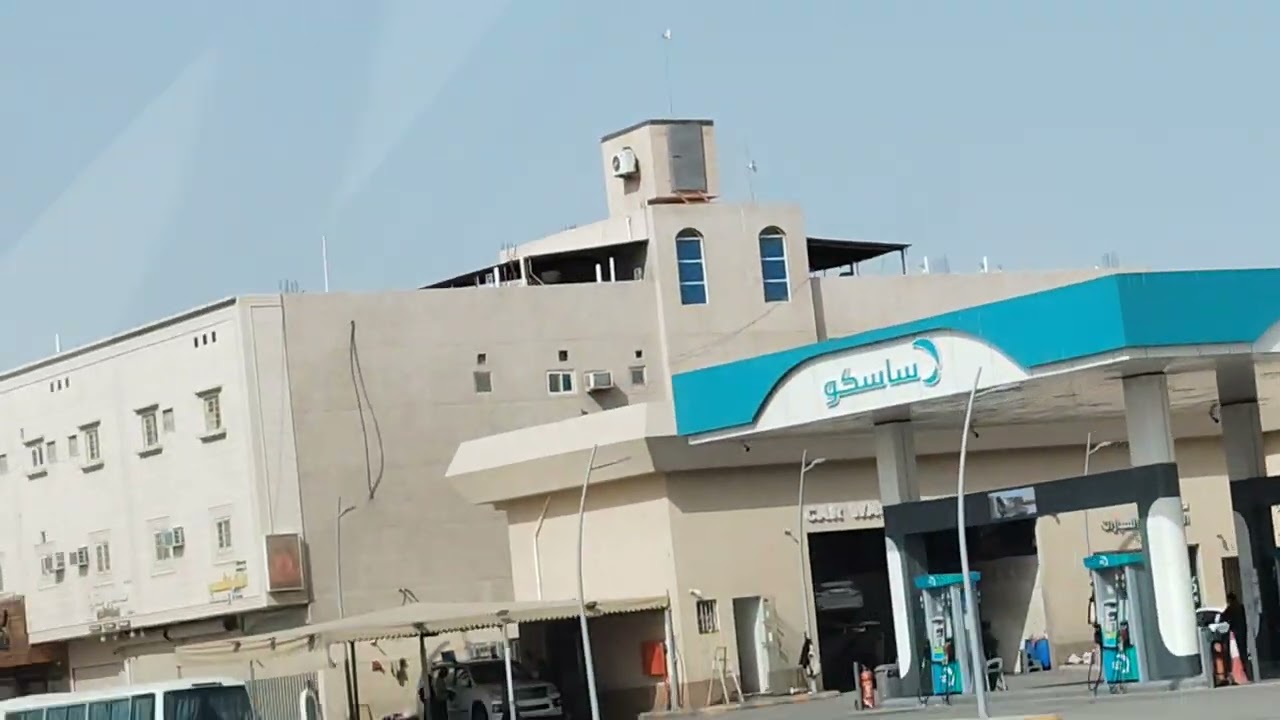
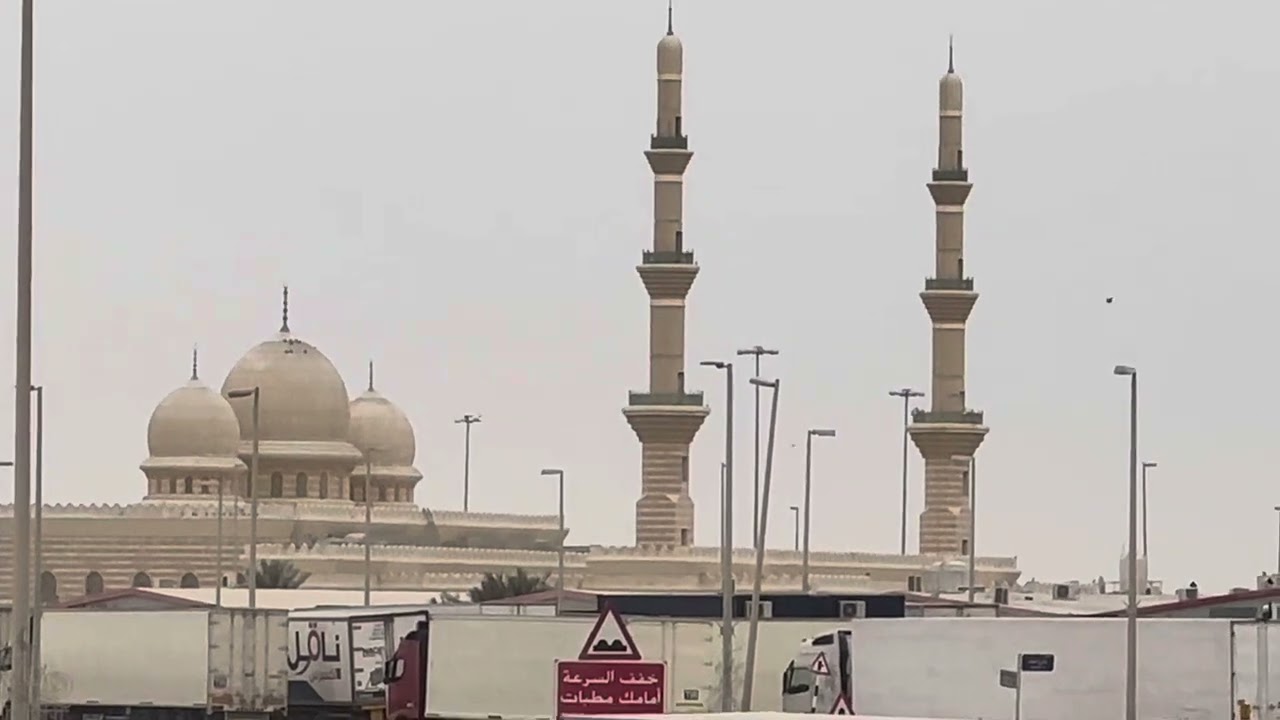
Saudia Arabia border UAE (Trailers and small cars can cross easily)
Автор: Talib Mallick official
Загружено: 2024-03-30
Просмотров: 14
Описание:
The Saudi Arabia–United Arab Emirates border is 457 km (284 mi) in length and runs from the Arabian Gulf coast in the west to the tripoint with Oman in the east.
Map of United Arab Emirates, the boundary with Saudi Arabia reflecting the 1974 Treaty of Jeddah agreement.
The governments of Saudi Arabia and the United Arab Emirates signed the Treaty of Jeddah in Jeddah, Saudi Arabia, on 21 August 1974 between Faisal of Saudi Arabia and Sheikh Zayed bin Sultan Al Nahyan apparently ending a long-running boundary dispute, but according to the UAE the dispute has not been settled due to discrepancies between the oral agreement before the treaty’s signing and the final text of the treaty itself. According to the UAE, the government did not notice this discrepancy until 1975 as a result of the absence of lawyers, technicians, and geographers on its negotiation team. The UAE has attempted to bring Saudi Arabia back to the negotiating table ever since.[2]
The provisions of the 1974 treaty were not publicly disclosed until 1995, when it was lodged with the United Nations. However, the United Arab Emirates never ratified the agreement.
Historically there was no clearly defined boundary in this part of the Arabian peninsula. During the 19th century Britain had signed a number of protectorate treaties with seven emirates on what was then known as the 'Pirate Coast', giving rise to the so-called Trucial States. The interior of Arabia consisted of loosely organised Arab groupings, occasionally forming emirates, most prominent of which was the Emirate of Nejd and Hasa ruled by the al-Saud family.[4] Britain and the Ottoman Empire theoretically divided their realms of influence in Arabia via the so-called 'Blue' and 'Violet lines' in 1913-14.[5][6]
During the First World War an Arab Revolt, supported by Britain, succeeded in removing the Ottomans from much of the Middle East; in the period following this Ibn Saud managed to expand his kingdom considerably, eventually proclaiming the Kingdom of Saudi Arabia in 1932. Ibn Saud refused to recognise the Anglo-Ottoman lines and lay claim to large parts of the eastern Arabian hinterland (the so-called ‘Hamza line’).[citation needed]
On 25 November 1935 British officials met with Ibn Saud in an attempt to finalise a frontier between the new kingdom and its coastal protectorates, including the Trucial States.[7] The conference proved abortive however and the issue remained unresolved.
In 1949, Saudi Arabia under the rule of Ibn Saud and Saudi Aramco had made incursions to the Western Region of the Emirate of Abu Dhabi, due to the prospect of getting oil. Ibn Saud was also interested in ruling the area of Al Ain and Al Buraimi, located in the Eastern Region of Abu Dhabi on its border with Oman. This led to the Buraimi Dispute.[10] On 31 August 1952, a group of some 80 Saudi Arabian guards, 40 of whom were armed, led by the Saudi Emir of Ras Tanura, Turki bin Abdullah Al Otaishan, crossed Abu Dhabi territory and occupied Hamasa, one of three Omani villages in the oasis, claiming it as part of the Eastern Province of Saudi Arabia.[11]
On 30 July 1954, it was agreed to refer the dispute to an international arbitration tribunal.[12] Meanwhile, Saudi Arabia embarked on a campaign of bribery to obtain declarations of tribal loyalty on which its case was to be based. This campaign even extended to Sheikh Zayed bin Sultan Al Nahyan, brother of Sheikh Shakhbut, the Ruler of Abu Dhabi and at that time the wali of Al Ain. Zayed was approached by the Saudis, first with an offer of 50% of any oil revenues from the area, then a new car and 40,000 Rupees. A third approach offered Zayed 400 million Rupees and finally, he was informed that the Saudi representative, Abdullah Al Qurayshi, wished to present him with three pistols.[13]
In 1955 arbitration proceedings began in Geneva only to collapse when the British arbitrator, Sir Reader Bullard, objected to Saudi Arabian attempts to influence the tribunal and withdrew – one of the two judges to resign,[14] the other being the Belgian President.[15]
Given these breaches of the agreement, the British government decided to unilaterally abrogate the Standstill Agreement and take the oasis on 25 October 1955. On 25 October, the Trucial Oman Levies quickly took the oasis and captured all fifteen of the Saudi contingent under the Saudi Emir Bin Nami, who was shot and lightly wounded.[16] The Saudi force was flown out on an RAF Valetta, which took them to Sharjah and then on to Saudi Arabia by sea. Most of the fighting took place after the surrender of the Saudis, with the Bedouin force of some 200 men putting up a spirited resistance to the Levies.[14] After this incident Britain stated that it would unilaterally use a slightly modified version of the 1935 'Riyadh line' as the border henceforth.
Повторяем попытку...
Доступные форматы для скачивания:
Скачать видео
-
Информация по загрузке: