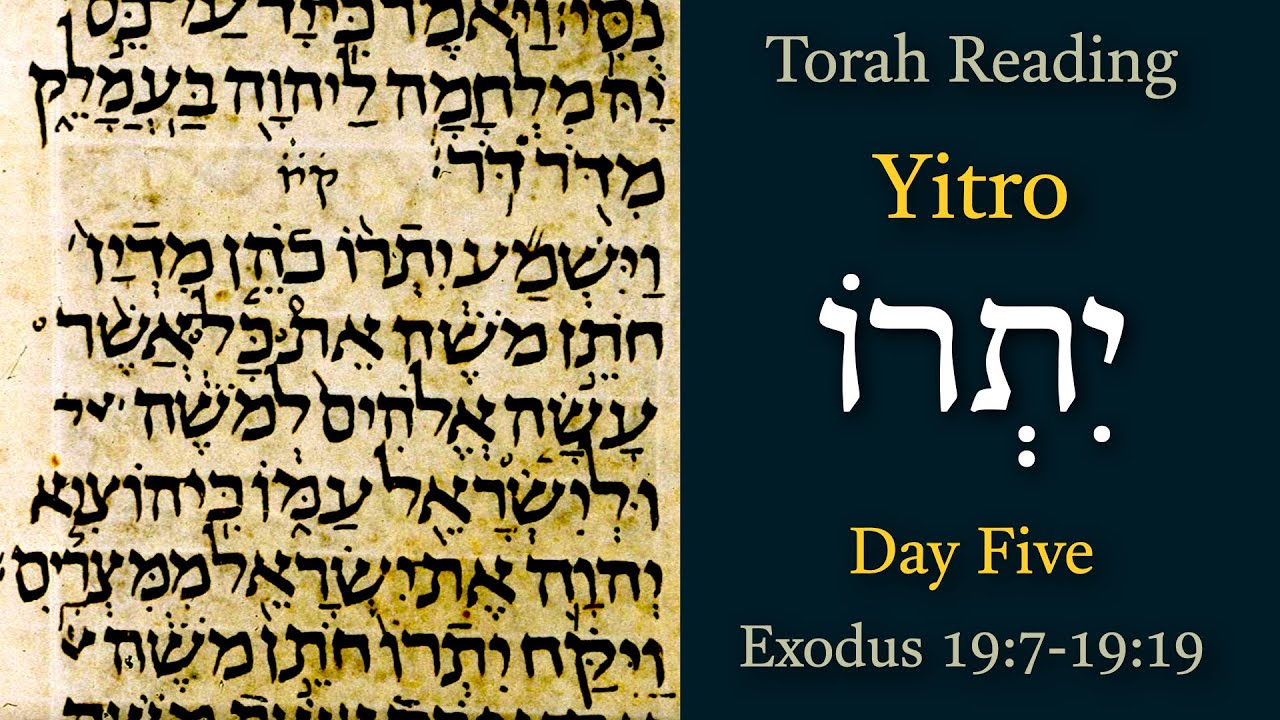
Yitro - Day 5 | Torah Portion | 13-Feb-2025 | Exodus 19:7-
Автор: The Hebrew Bible
Загружено: 2025-02-13
Просмотров: 382
Описание:
#hebrew #tanakh #yhvh #yhwh #tanach #biblicalhebrew
#torah #bible #hebrew #tanakh #ivrit
Voice of Abraham Shmuelof (available in the Open Source)
Credits: https://archive.org/details/HebBible_...
Please Consider Supporing My Work At:
One-off On Wise - https://bit.ly/HebrewBibleWise
Monthly PayPal - https://bit.ly/TheHebrewBiblePaypal
Hebrew Flashcards - Alphabet & Vowels:
US Orders - https://bit.ly/44L44tR
Non-US Orders - https://etsy.me/42Ka8lw
Merchandise (T-Shirts, Cups, Wall Art):
https://thehebrewbible-shop.fourthwal...
- - - - - - - - - - - - - - - - - - - - - - - - - - - - - - - - -
Parashat Yitro, found in Exodus 18:1-20:23, is a pivotal portion of the Torah that recounts two significant events: the arrival of Moses' father-in-law, Jethro (Yitro), and the revelation at Mount Sinai, where God gives the Ten Commandments to the Israelites.
The parashah begins with Jethro, a Midianite priest, hearing about the miraculous exodus of the Israelites from Egypt. He travels to meet Moses in the wilderness, bringing along Moses' wife Zipporah and their two sons, Gershom and Eliezer. Upon arrival, Jethro rejoices in the Israelites' deliverance and proclaims, "Now I know that the Lord is greater than all the gods". He then offers sacrifices to God, and they share a feast.
The next day, Jethro observes Moses judging the people from morning until evening. Concerned about the burden this places on Moses, Jethro advises him to establish a hierarchical system of judges to handle minor disputes, while Moses would deal only with the most difficult cases. This advice proves to be invaluable, as it helps distribute the responsibility of leadership and prevents Moses from burning out.
Following this administrative reorganization, the parashah shifts to the dramatic events at Mount Sinai. Three months after leaving Egypt, the Israelites arrive at the foot of Mount Sinai. God calls to Moses from the mountain, instructing him to prepare the people for a divine revelation. The people are told to sanctify themselves for three days, during which they must not approach the mountain.
On the third day, amid thunder, lightning, thick clouds, and the loud blast of a shofar, God descends upon Mount Sinai in fire. The mountain trembles violently, and the people are filled with awe and fear. Moses ascends the mountain to receive God's words.
It is at this moment that God proclaims the Ten Commandments directly to the entire nation of Israel. These commandments form the cornerstone of Jewish law and ethics:
1. Belief in one God who brought the Israelites out of Egypt
2. Prohibition of idolatry
3. Not taking God's name in vain
4. Observing the Sabbath
5. Honoring one's parents
6. Prohibition of murder
7. Prohibition of adultery
8. Prohibition of theft
9. Prohibition of bearing false witness
10. Prohibition of coveting another's possessions
The direct experience of God's voice proves overwhelming for the people. They plead with Moses to act as an intermediary, saying, "You speak to us, and we will listen; but let not God speak to us, lest we die". Moses reassures them but emphasizes that this awesome experience is meant to instill in them a lasting fear of God that will prevent them from sinning.
The parashah concludes with additional instructions from God to Moses, including prohibitions against making idols and regulations concerning the construction of altars.
Parashat Yitro is significant for several reasons. It demonstrates the importance of efficient leadership and delegation, as shown through Jethro's advice to Moses. More importantly, it marks the formal establishment of the covenant between God and the Israelites, with the giving of the Ten Commandments serving as the foundational ethical and religious code for the Jewish people.
The revelation at Sinai is considered one of the most pivotal moments in Jewish history, often described as a sort of "marriage" between God and Israel. This event not only solidifies the Israelites' relationship with God but also transforms them from a group of freed slaves into a nation with a divine mission and purpose.
The Ten Commandments, given in this parashah, continue to hold immense significance in Jewish tradition and have influenced moral and legal codes throughout Western civilization. They encapsulate fundamental principles of monotheism, ethics, and social responsibility that remain relevant to this day.
Biblical Hebrew Grammar
Learn Hebrew Alphabet
Hebrew Vowels
Hebrew Bible Explained
Torah Lessons
Hebrew Names
Bible Teaching
Original Hebrew
Masoretic Text
Old Testament
YHVH, YHWH, Yahweh, Jehovah, Hashem, Adonai
- - - - - - - - - - - - - - - - - - - - - - - - - - - - - - - - -
Повторяем попытку...
Доступные форматы для скачивания:
Скачать видео
-
Информация по загрузке: