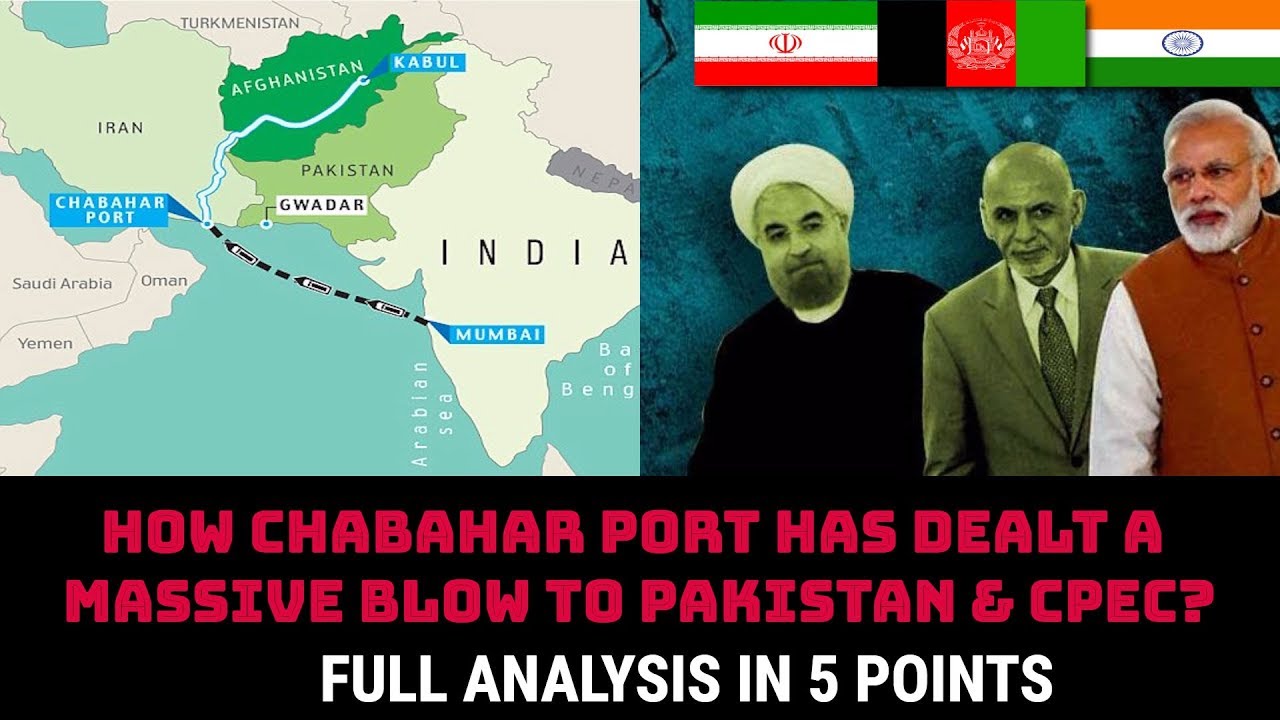
HOW CHABAHAR PORT HAS DEALT A MASSIVE BLOW TO PAKISTAN & CPEC?
Автор: Defense Updates
Загружено: 2017-11-05
Просмотров: 439061
Описание:
INTRODUCTION:
Indian Ministry of External Affairs spokesperson, Raveesh Kumar tweeted “The first consignment of wheat assistance to Afghanistan, flagged off by Indian External Affairs Minister Sushma Swaraj and Afghan Foreign Minister Rabbani, reached Chabahar port”.
A welcome ceremony held at Chabahar port on the landmark occasion was attended by dignitaries from India, Iran and Afghanistan.
The development has significant strategic, diplomatic and economic impact.
In this video, Defense Updates analyzes HOW CHABAHAR PORT HAS DEALT A MASSIVE BLOW TO PAKISTAN & CPEC?
NEED & TREATY
A trade route through Pakistan into land-locked Afghanistan would have been the logical step considering the distance of just 990 km between New Delhi and Kabul. The 1.1 million tonnes in 35,000 containers would take lesser time through the land route.
Instead, the first of several consignments was dispatched through the sea route to Chabahar in Iran from where it will enter Afghanistan via a different land route - a total distance of 3,900 KM or more than thrice the all-land distance.
Why was it done? The reason is Pakistan.
Pakistan borders Afghanistan to its south and east and has used its strategic location to have a controlling hand on Kabul in terms of trade. Traditionally, Pakistan has been Afghanistan's biggest supplier of wheat but because of its geo-political positioning, managed to dictate pricing. In 2014 for example, Pakistani wheat was Rs 500 more expensive per tonne than wheat from India. Both Afghanistan and India, quite naturally, wanted to trade in wheat but Pakistan refused to allow passage.
Pakistan repeatedly refused to allow land passage to Afghanistan through its territory each time India asked for it in the last 17 years.
In 2003, India began exploring other options of expanding bilateral trade with Afghanistan - leaving Pakistan on the sidelines. Helping Iran develop the Chabahar Port emerged as a viable alternative even if it meant a longer route.
In it was the birth of a historical trilateral agreement between India, Iran and Afghanistan - signed in May of 2016 - to make use of Chabahar Port for trade and transit into Central Asia and Europe.
"We want to link with the world. (The) agreement …can alter the course of history of the region,” Indian Prime Minister Narendra Modi had said after signing the agreement with Afghan President Ashram Ghani and Iranian President Hassan Rouhani.
GAIN FOR IRAN
Ever since the Iran-Iraq was in the early 1980s, Iran has been looking to reduce its dependence on ports in the Persian Gulf. Shifting eastwards has been widely seen as a logical step to ensure the security of trade routes and corridors. Chabahar, therefore, becomes vital for the country.
Partnering India - one of the biggest Asian economies - also is in the best interest of Iran. The port becomes a starting point for several other collaborations. Trade with Russia - a key partner - can also be enhanced.
GAIN FOR AFGANISTAN
Much like Iran, or even more perhaps, Afghanistan understands the need to expand trade with India. In the past, thorny India-Pakistan relations have hampered Kabul and New Delhi from discussing direct trade. Still, India received 46% of Afghan total exports in 2016 - worth USD 220 million. This figure may now rise at a rapid pace.
GAIN FOR INDIA
For India, the route represents a strategically attractive opportunity to trade with Afghanistan by bypassing Pakistan. This development comes just weeks after U.S. President Donald Trump outlined a new U.S. strategy for Afghanistan that welcomed a robust role for India economically in the country. Moreover, during his recent visit to New Delhi, U.S. Secretary of State Rex Tillerson reinforced U.S. support for a strong Indian economic presence in Afghanistan.
The route will enable unabated trade with Afghanistan but also open other markets for India.
LOSS FOR PAKISTAN
India-Afghanistan trade through Chabahar Port in Iran is a massive blow to Pakistani designs on a number of levels.
The failure to revive Afghanistan-Pakistan Transit Trade Agreement (APTTA) so far has now come to haunt Islamabad. In the past, Pakistan has dictated terms to Afghanistan - compelling the latter to look elsewhere.
Long opposed to any Indian involvement, but pressured, Pakistan Army Chief Qamar Javed Baja had started mulling the prospect of involving India.
It may have been just too late.
In such times, Chabahar Port not just further erodes Pakistan’s influence over Kabul but also makes its Gwadar Port, a key part of China-Pakistan Economic Corridor (CPEC) rather irrelevant.
Audio by Scott Leffler -- scottleffler.com
Повторяем попытку...
Доступные форматы для скачивания:
Скачать видео
-
Информация по загрузке: