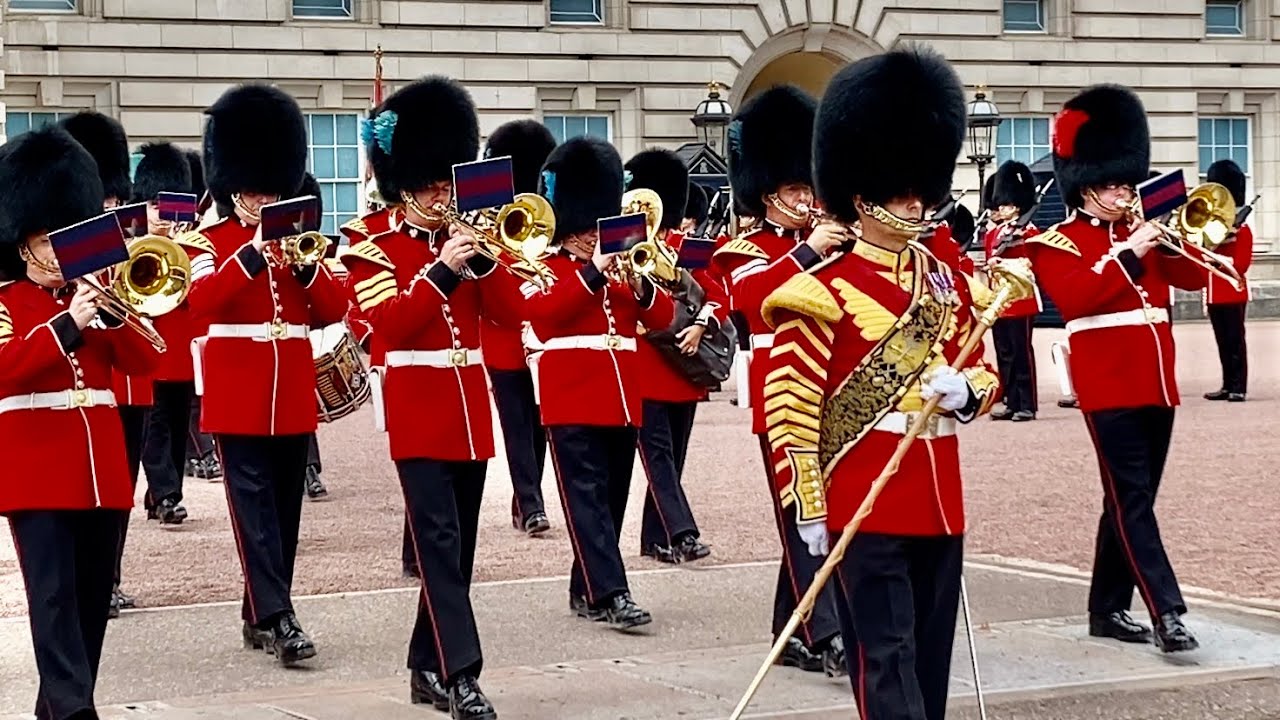
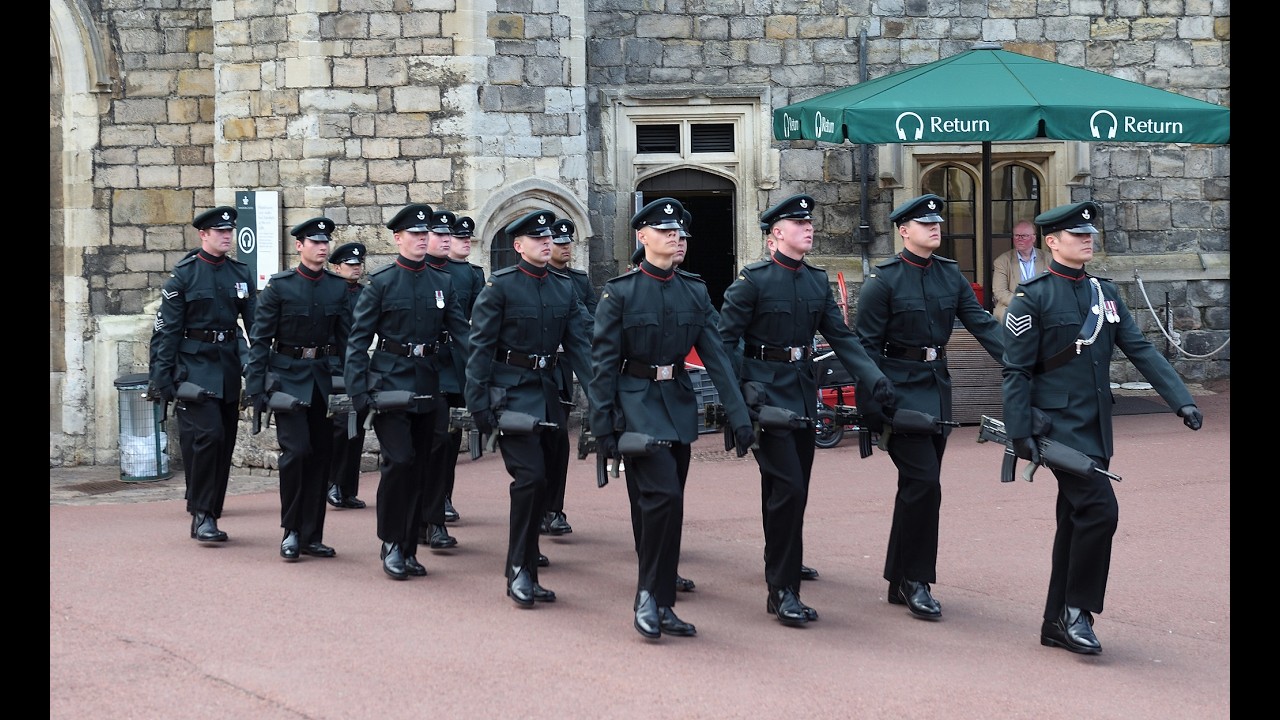
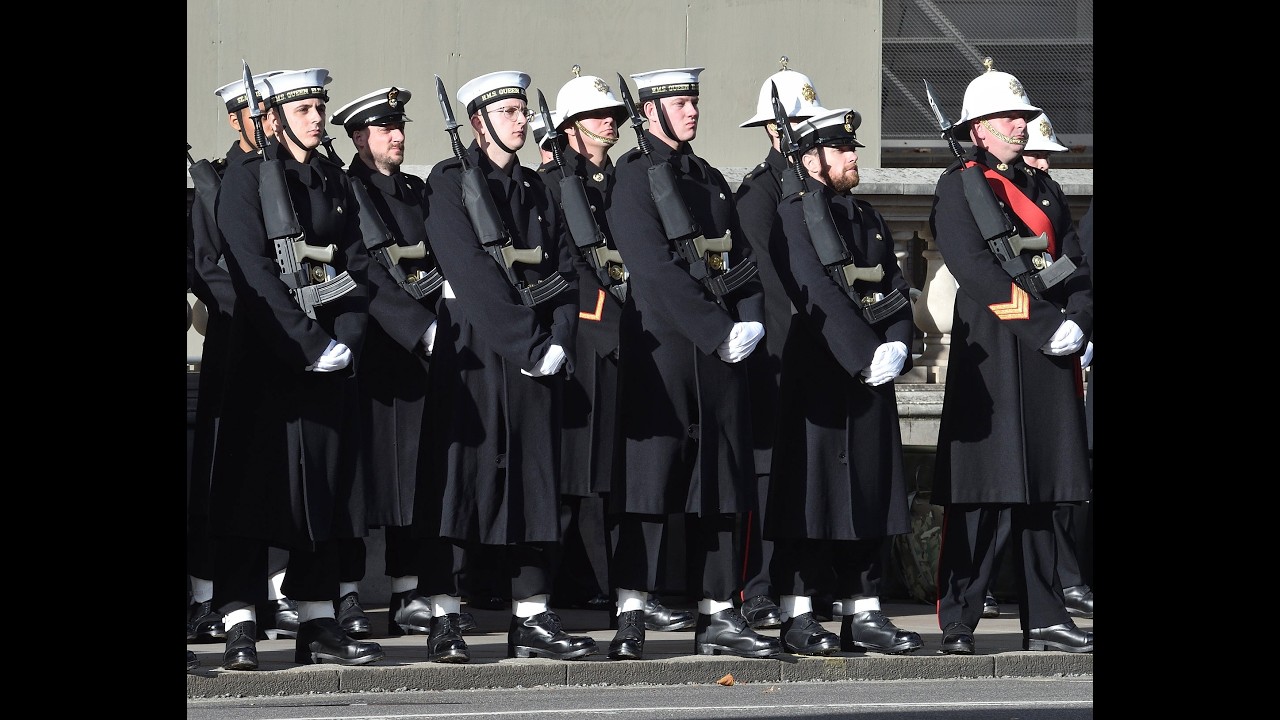
Remembrance Sunday, troops form up music before service, 10 November 2024
Автор: Military and Ceremonial
Загружено: 2026-03-05
Просмотров: 47
Описание:
Remembrance Sunday, Whitehall, 10 November 2024
In the United Kingdom, Remembrance Sunday is held on the second Sunday in November, which is the Sunday nearest to 11 November, Armistice Day, the anniversary of the end of hostilities in the First World War at 11 a.m. on 11 November 1918. Remembrance Sunday is held to commemorate the contribution of British and Commonwealth military and civilian servicemen and women in the two World Wars and later conflicts.
Remembrance Sunday is marked by ceremonies at local war memorials in most cities, towns and villages, attended by civic dignitaries, ex-servicemen and -women, members of local armed forces regular and reserve units, military cadet forces and uniformed youth organisations. Two minutes’ silence is observed at 11 a.m. and wreaths of remembrance poppies are then laid on the memorials.
The United Kingdom national ceremony is held in London at the Cenotaph in Whitehall. Wreaths are laid by King Charles III, principal members of the Royal Family, the Prince of Wales, the Princess Royal and the Duke of Edinburgh, the Prime Minister, leaders of the other major political parties, the Secretary of State for Foreign and Commonwealth Affairs, the Home Secretary, Commonwealth High Commissioners and representatives from the Royal Navy, Army and Royal Air Force, the Merchant Navy and Fishing Fleets and the civilian services, and veterans’ groups. In 2024 wreaths were laid by military officers on behalf of Queen Camilla, who did not attend due to illness but normally watches from a balcony, and the Duke of Kent, who viewed the ceremony from a balcony in Whitehall. Two minutes' silence is held at 11 a.m., before the laying of the wreaths. This silence is marked by the firing of a field gun on Horse Guards Parade to begin and end the silence, followed by Royal Marines buglers sounding Last Post.
Other members of the British Royal Family watch from the balcony of the Foreign and Commonwealth Office.
From 1919 until the Second World War remembrance observance was always marked on 11 November itself. It was then moved to Remembrance Sunday, but since the 50th anniversary of the end of the Second World War in 1995, it has become usual to hold ceremonies on both Armistice Day and Remembrance Sunday.
Each year, the music at the National Ceremony of Remembrance remains the same, following a programme finalised in 1930:
Rule, Britannia! by Thomas Arne
Heart of Oak by William Boyce
The Minstrel Boy by Thomas Moore
Men of Harlech
The Skye Boat Song
Isle of Beauty by Thomas Haynes Bayly
David of the White Rock
Oft in the Stilly Night by John Stevenson
Flowers of the Forest
Nimrod from the Enigma Variations by Edward Elgar
Dido's lament by Henry Purcell
O Valiant Hearts by Charles Harris
Solemn Melody by Walford Davies
Last Post – a bugle call
Beethoven's Funeral March No. 1, by Johann Heinrich Walch
O God, Our Help in Ages Past – words by Isaac Watts, music by William Croft
Reveille – a bugle call
God Save The King
Following the end of the official service at the Cenotaph, a mammoth column more than 10,000-strong (some 9,000 of whom were veterans) began marching along Whitehall, saluting the Cenotaph as they passed, Parliament Street, Great George Street, Horse Guards Road and back to Horse Guard Parade. The Prince of Wales took the salute from the column on Horse Guards Parade.
Повторяем попытку...
Доступные форматы для скачивания:
Скачать видео
-
Информация по загрузке: