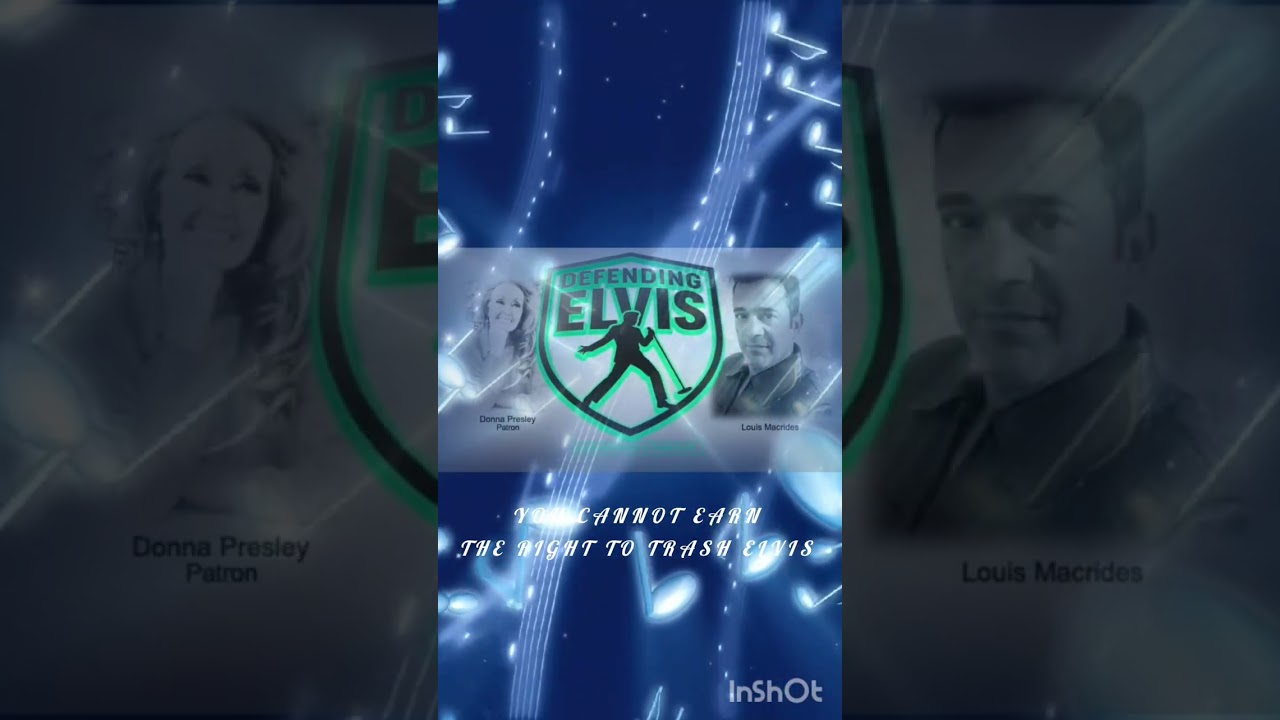
YOU CANNOT EARN THE RIGHT TO TRASH ELVIS by LOUIS
Автор: Elvis Blue 💙 Defending The King
Загружено: 2026-02-27
Просмотров: 44
Описание:
YOU CANNOT EARN THE RIGHT TO TRASH ELVIS
(A deep dive on dignity, loyalty, and the line that should never be crossed.)
I’ve been listening very carefully to some recent discussions from people who were close to Elvis — relatives, insiders, those who were “there” and who lived in his world.
And one argument keeps coming up again and again, almost like a shield:
“We have the right to say anything we want — good or bad — because we were there. Because we knew him. Because we’re family.”
No.
I’m going to say this clearly, because it needs saying:
Knowing Elvis does not give you a licence to humiliate him.
Being related to Elvis does not give you a free pass to reveal his most private struggles.
And you do not “earn” the right to trash Elvis.
You can’t earn that right.
You can’t inherit it.
You can’t justify it.
You can’t monetise it.
And you certainly can’t dress it up as “telling the truth” when what you’re really doing is taking away a man’s dignity.
Because the truth is… there are different kinds of “truth.”
There is truth that helps history.
There is truth that adds context.
There is truth that shows humanity without destroying respect.
And then there’s another kind:
The kind of “truth” that turns private pain into public entertainment.
The kind that digs into personal health, private struggles, and intimate details that a man would never have chosen to share with the world — especially in a way that embarrasses him.
That’s not bravery.
That’s not loyalty.
That’s not love.
That’s exploitation — even if it’s wrapped in nostalgia, smiles, and “we loved him” at the start and end of the story.
And that brings me to the real point.
Elvis was loyal. They were lucky.
Elvis was fiercely loyal to family.
He didn’t forget people. He didn’t abandon them. He didn’t act above them.
He brought relatives into his world early on — not because he had to, but because that’s who he was. He valued family. He carried people with him. He shared his life, his home, his time, his opportunities, his protection, his generosity.
And let’s be honest about what that means:
Many people who later spoke the most freely about Elvis…
were only in that position because Elvis let them be.
They were fortunate.
They were blessed.
They were given access that most human beings on earth never get.
To witness a legend up close.
To live in a world that Elvis built with his gift, his work ethic, and his sacrifice.
To benefit from his success, his kindness, his trust.
So when I hear the argument, “We can say whatever we want because we were there,” I think:
Being trusted by Elvis should have made people more careful — not less.
Being loved by Elvis should have made people more protective — not more reckless.
Being family should have meant dignity mattered even more.
Because if loyalty means anything… it means you don’t take what someone confided in you and sell it to the world.
“Elvis wasn’t perfect” is not an excuse
Another line gets thrown around like a weapon:
“Elvis wasn’t perfect.”
Yes. We know.
Every true fan knows Elvis was human.
Every true fan knows he had pressure, pain, flaws, struggles, and battles.
We are not children. We are not delusional.
But here’s the trick people play:
They use “Elvis wasn’t perfect” to silence anyone who objects to disloyalty.
As if the only reason you’d object is because you can’t accept reality.
No — the reason we object is because some people don’t just describe reality.
They target vulnerability.
They don’t just discuss the man.
They strip the man.
They don’t just show humanity.
They sell humiliation.
And that’s why I keep repeating this:
You can acknowledge Elvis was human without dehumanising him.
You can discuss history without dragging someone’s private life through the streets.
You can share memories without turning a man’s most painful chapters into content.
Think about his daughter
And now we come to something that matters deeply to me.
Because this isn’t just about Elvis.
It’s about what it does to the people who loved him most — especially his child.
Imagine being his daughter… and seeing private details shared again and again, in public, for profit, for attention, for “content,” for book pages, for interviews, for views.
Imagine knowing that the person being discussed isn’t here to respond.
Imagine knowing he trusted these people.
Imagine watching those private moments become headlines and talking points.
And then imagine the final insult:
That it happened while she was alive, hearing it, feeling it, carrying it.
People talk about “their right” to speak.
But what about her right to have her father’s dignity protected?
What about her right to not see his name turned into a product?
Because here’s what I believe — and I’ll say it plainly:
If a story would have hurt his child, it should never have been told.
Not in that way. Not for that reason. Not packaged as entertainment.
You cannot earn the right to trash Elvis
Louis
Team Elvis
Повторяем попытку...
Доступные форматы для скачивания:
Скачать видео
-
Информация по загрузке: