Making Sound Among the Ancestral Maya
Автор: SAR School for Advanced Research
Загружено: 2026-02-11
Просмотров: 38
Описание:
Speaker
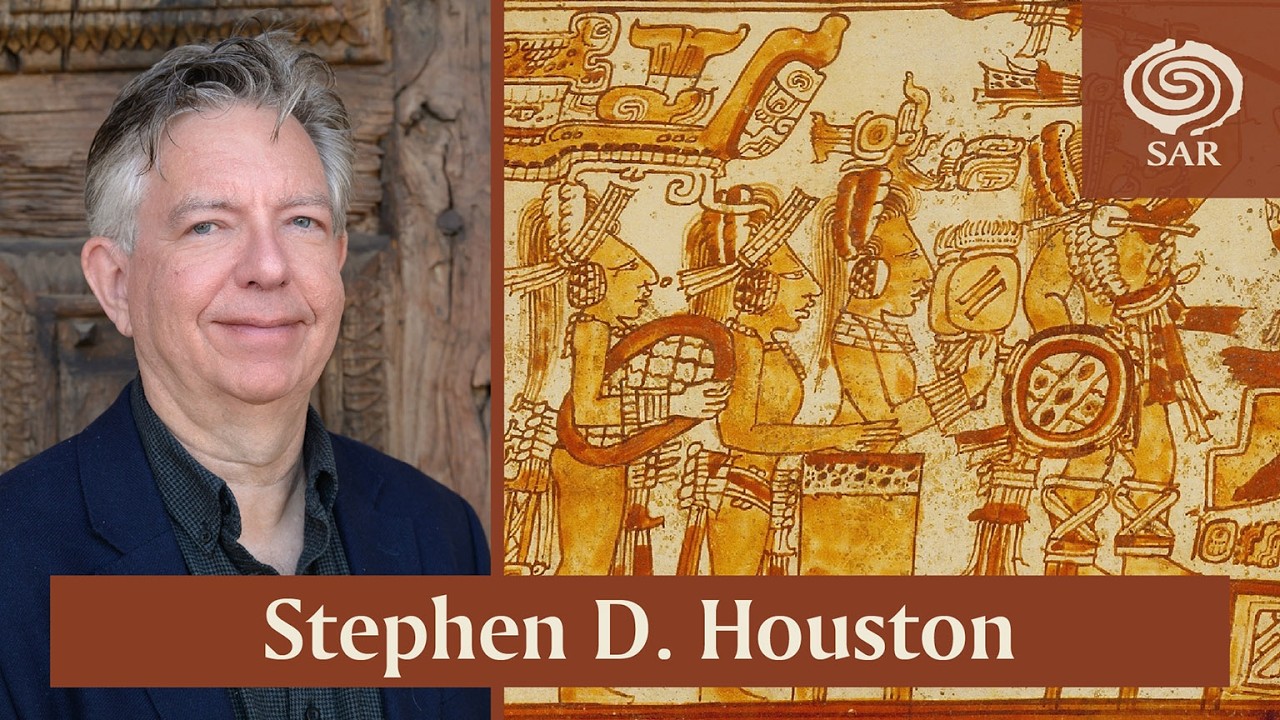
Stephen D. Houston
The ancestral Maya of Mexico and Central America had a lasting interest in sound. More than “music”—a restrictive term—their booms, calls, blats, cries, squeals, and whistles draw closer to us through glyphic decipherment, depictions in imagery, descendant languages, surviving or replicated instruments, reconstructed soundscapes, and enduring traditions of performance. This webinar targets early Maya concepts and production of sound. Mostly, it focuses on the Classic period (ca. 250-900 CE), when evidence is richest. By graphic skill, ethereal emanations could be materialized, seen, worn, and felt; they had substance, force, and instrumental variety. Players assembled in patterned ways. The human voice also played a strong role, along with instruments still in use today but some not. Movements of the body—a tapping of palm and fingers, a vigorous shake of rattles—accompanied dance, perhaps the single most important motivation for the formal production of sound. Some performers were human; others, especially the first musicians, were not, in a legacy that astonishes with its élan and detail.
Stephen D. Houston (Inaugural Barbara Tedlock Fellow) is the Dupee Family Professor of Social Science and Professor of Anthropology at Brown University. A former MacArthur Fellow, Dr. Houston is a leading scholar of Mesoamerica, particularly on the Classic Maya of Mexico and Central America. He has led major archaeological excavations at sites like Piedras Negras and El Zotz in Guatemala, contributing to a greater understanding of Maya court life and ritual. Houston is also a leading expert in the decipherment and interpretation of ancient scripts. His many books and articles span topics from epigraphy and architecture to the history of communication and the disappearance of writing systems. For that work, the President of Guatemala awarded him that country’s highest honor, the Order of the Quetzal in the grade of Grand Cross.
SCHOOL FOR ADVANCED RESEARCH
Established in 1907, the School for Advanced Research (SAR) advances creative thought and innovative work in the social sciences, humanities, and Native American arts. SAR is home to the Indian Arts Research Center (IARC), a leader in community-advised and collaborative Indigenous arts engagement and collections management. Through scholar residency, seminar, and artist fellowship programs, SAR Press publications, and a range of public programs, SAR facilitates intellectual inquiry and human understanding. SAR’s historic sixteen-acre campus sits on the ancestral lands of the Tewa people in O’gah’poh geh Owingeh or Santa Fe, New Mexico. SAR is a 501(c)(3) nonprofit educational institution.
sarweb.org
Повторяем попытку...
Доступные форматы для скачивания:
Скачать видео
-
Информация по загрузке: