How To Build a $40 Salt Battery That Cools Your Room All Afternoon — No Power
Автор: Ray Holton Secrets
Загружено: 2026-06-13
Просмотров: 28203
Описание:
📘 All 60 cooling methods from this channel in one manual — honest numbers, real costs, weekend builds → https://rayholtonsecrets.com/
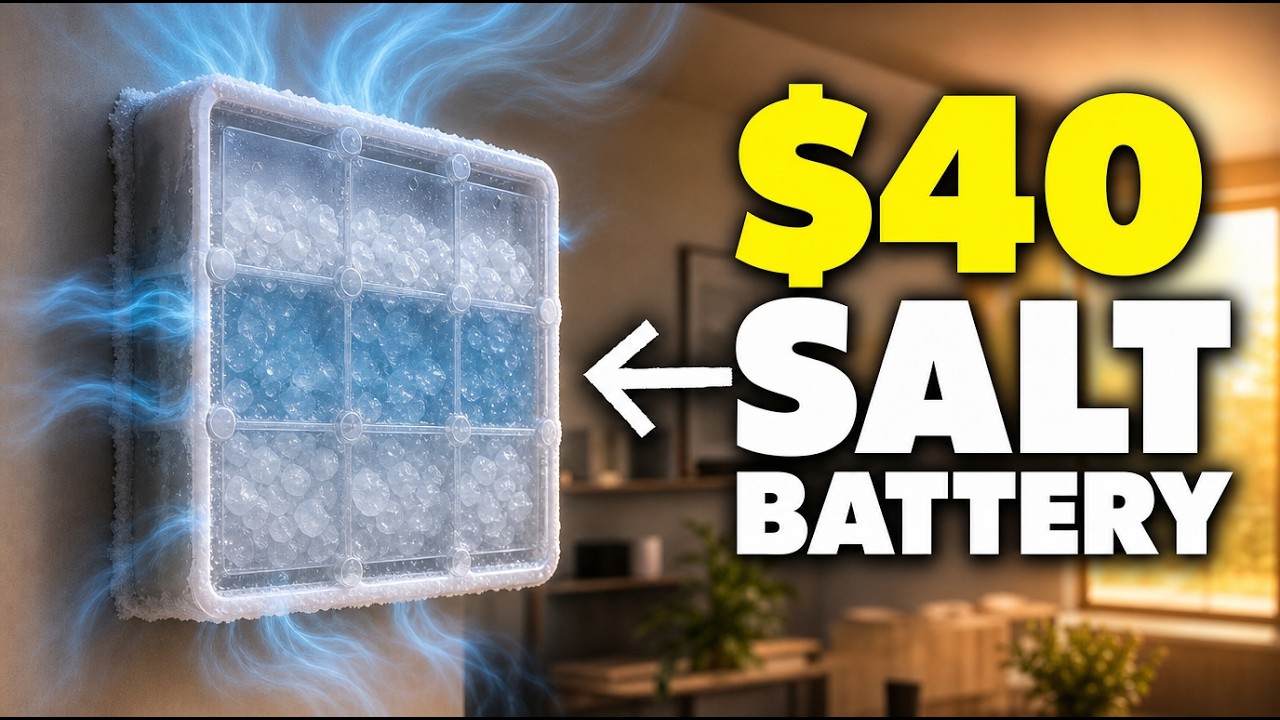
A salt battery is not an electrical battery. It is a thermal battery — a container of salt hydrate that absorbs heat from your room as it melts and holds that energy locked inside the material until it solidifies again overnight. Charge it with cool night air or a freezer. Set it in your room in the morning. It pulls heat out of the surrounding air silently for hours. No fan. No plug. No moving parts. About forty dollars in materials.
In this video, we show you how to build one step by step and explain the physics behind why it works better than a bucket of ice and lasts far longer.
The core material is a phase change salt — typically Glauber's salt or a commercial salt hydrate blend with a melting point between seventy and seventy-seven degrees Fahrenheit. When the room temperature rises above that melting point, the salt begins absorbing heat as it transitions from solid to liquid. It keeps absorbing heat without getting any warmer until the entire mass has changed phase. That latent heat storage is what makes it powerful — pound for pound, a salt hydrate absorbs five to ten times more cooling energy than ice water at the same weight and releases it over a much longer period.
We walk through the build. Container selection — food-grade plastic, sealed pouches, or stacked flat panels for maximum surface area. Salt sourcing — where to buy Glauber's salt or sodium sulfate decahydrate in bulk at low cost. Sealing methods that prevent leaks and evaporation. And the charging process — how to solidify the salt overnight using cool night air in dry climates or a standard freezer anywhere else.
We cover placement strategy. Surface area matters more than total mass. A flat shallow container cools a room faster than a single deep bucket of the same weight because more salt is in contact with warm air at once. We explain where to put the battery for maximum effect, how airflow around the container changes performance, and how many pounds of salt you actually need to keep a small room comfortable through an afternoon.
We also cover the problems. Salt hydrates suffer from incongruent melting — after repeated cycles, the salt can separate into layers and stop changing phase cleanly. This was the reason commercial PCM products failed in the 1980s and gave the technology a bad reputation. We explain what causes it, which additives and thickeners fix it, and how to mix a batch that cycles reliably for years without degrading.
We address what this is and what it isn't. A salt battery will not replace an air conditioner in a poorly insulated house on a hundred-and-ten-degree day. It is a supplement — a passive thermal buffer that shaves the peak off afternoon heat, delays when the AC kicks on, or keeps a single room comfortable in a mild climate with no power at all. We break down the realistic cooling capacity in BTUs and what size room it can handle based on salt mass and ambient conditions.
Finally, we cover advanced setups — pairing the salt battery with a small fan for forced convection, stacking multiple panels for whole-room coverage, and integrating it with nighttime ventilation so the charging happens passively without a freezer.
Disclaimer: This video is for educational and informational purposes only. Cooling performance depends on salt type, container design, room size, and ambient temperature. Some salt hydrates can be irritating to skin and eyes. Always handle materials according to safety data sheets and keep sealed containers away from children and pets.
#SaltBattery #PhaseChangeCooling #PassiveCooling
Повторяем попытку...
Доступные форматы для скачивания:
Скачать видео
-
Информация по загрузке: