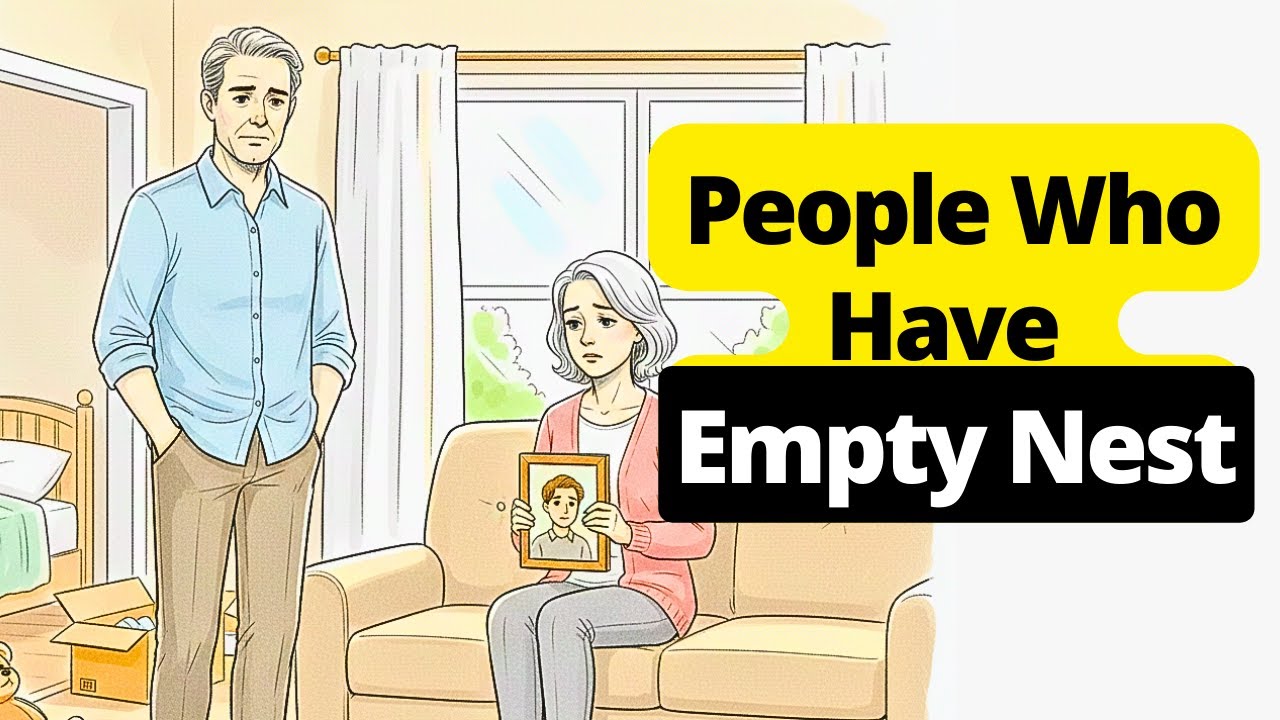
Why Your Brain Grieves When Your Kids Leave? Empty Nest Psychology Simplified
Автор: The Psyche Side
Загружено: 2026-01-23
Просмотров: 521
Описание:
Empty Nest Syndrome Psychology, Role-Loss Grief, Life after kids move out
If you are struggling with the psychology of empty nest syndrome, you are likely experiencing a profound sense of role-loss grief and a confusing identity crisis for parents. This transition often feels like more than just a quiet house; it’s a deep midlife transition where the primary caregiver role ends, leading to an unexpected loss of purpose. Many parents face ambiguous loss and loneliness as they navigate life after kids move out, searching for ways of finding purpose in the silence. Whether you are dealing with stay-at-home parent depression or the stress of adult children leaving home, understanding the stages of empty nest syndrome is the first step toward healing and rediscovery. This video explores coping with empty nest syndrome, reframing your relationship with your adult children, and overcoming the identity vacuum left behind by the 'busy years.'"
We explore:
The Identity Vacuum: Why your brain feels "unemployed" when the 6 AM chaos stops and how to fill the purpose gap left by the "busy years."
Sensory Dissonance: The "Ghost Sound" effect—why you still hear their voice in the hallway and how nostalgia acts as a survival mechanism during midlife transitions.
Ambiguous Loss: Understanding the unique psychological pain of mourning a version of your child (the toddler, the teenager) that no longer exists, even while they thrive in the real world.
The Pivot to Purpose: How to reframe your caregiver energy into personal growth, rediscovering the dreams you put on hold in 1998, 2005, or 2010.
I believe in backing up my content with real science. You can find the peer-reviewed journals and psychological frameworks used for this script cited below.
The nest isn't just empty—it's open. It’s time to fly.
📚 Scientific References & Further Reading:
On Role-Loss and Parental Identity: White, K., & Rogers, S. J. (2000). Economic Circumstances and Family Outcomes: A Review of the 1990s. Journal of Marriage and Family. [Focus on the psychological impact of children exiting the home.]
On Ambiguous Loss in Transitions: Boss, P. (1999). Ambiguous Loss: Learning to Live with Unresolved Grief. Harvard University Press.
On Midlife Transitions and "The U-Bend": Blanchflower, D. G., & Oswald, A. J. (2008). Is well-being U-shaped over the life cycle? Social Science & Medicine, 66(8), 1733-1749. https://doi.org/10.1016/j.socscimed.2...
On Empty Nest Syndrome and Marital Satisfaction: Gorchoff, S. M., John, O. P., & Helson, R. (2008). Contextualizing Change in Marital Satisfaction During Middle Age. Psychological Science, 19(11), 1194-1200.
Medical Disclaimer: This content is for educational purposes only and does not substitute for professional medical advice, diagnosis, or treatment. Always seek the advice of a qualified healthcare provider regarding any mental or physical health condition. Reliance on any information in this video is solely at your own risk.
The Psychology of Empty Nest Syndrome, Role-Loss Grief, Identity Crisis for Parents, Chronic Nostalgia, Life After Kids Move Out, Finding Purpose in Midlife, Midlife Transition, Ambiguous Loss, Why I Miss My Kids, Science of Parenting Transitions, Adult Children Leaving Home, Self Improvement 2026, Mental Health for Parents, empty nest syndrome, why do I feel lost after kids leave, psychology explained, signs of empty nest depression, deep thinking parents, role loss is not a flaw, empathy and parenting, stop feeling guilty, traits of empty nesters, how to find myself again.
Повторяем попытку...
Доступные форматы для скачивания:
Скачать видео
-
Информация по загрузке: