Landlord Collected Rent for YEARS With No Legal Occupancy Certificate
Автор: Court Watchers
Загружено: 2026-03-04
Просмотров: 1585
Описание:
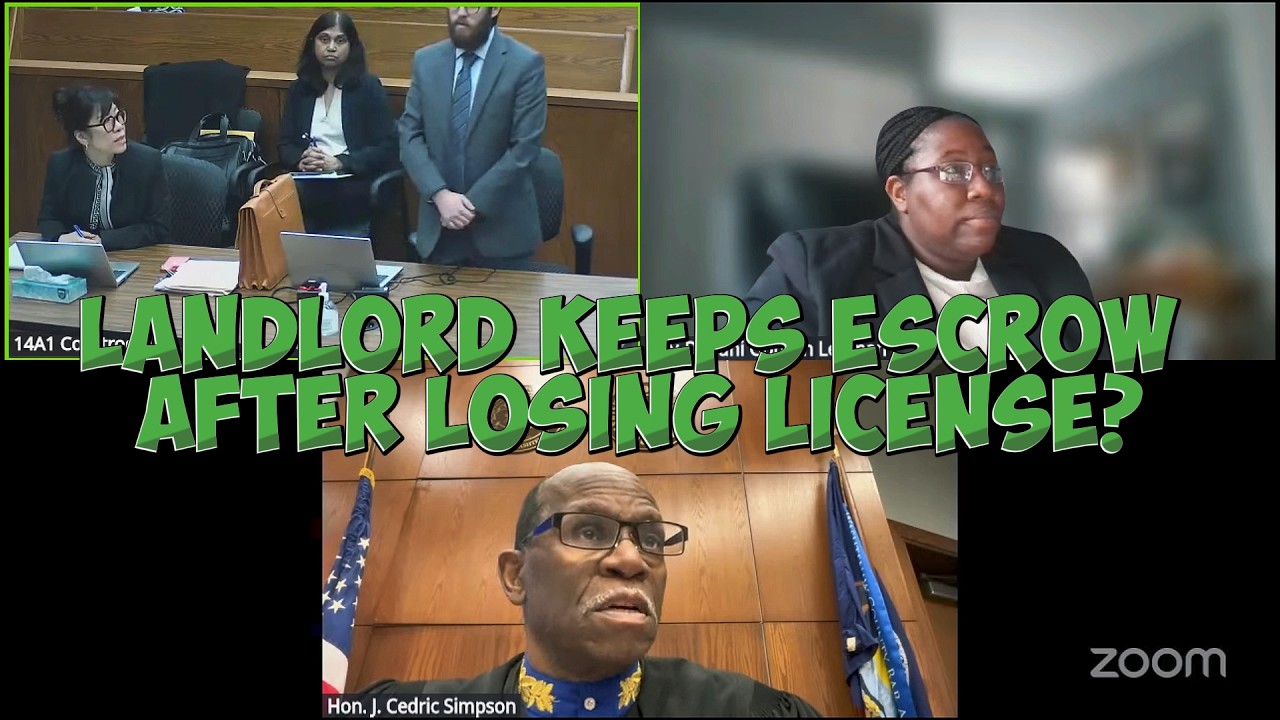
Tenants Fight Back For Trapped Rent Money After Forced Move-Outs
A landlord's mistake, and now dozens of tenants are caught in the crossfire! With the property's certificate of occupancy revoked, the fate of their rent deposits hangs in the balance. Tensions flare as the court struggles to sort out who gets what – and who's even still living there
00:00:00 Attorneys Propose Mass Dismissal Of Tenant Cases
00:02:14 The Escrow Confusion: Where Is The Rent Money?
00:06:47 Judge Demands Answers On The Jurisdictional Mess
00:11:58 Cross-Referencing The Missing Tenant List
00:16:26 Tenants Speak Up In Court And Unexpected Banter
00:20:51 Revealing The Actual Dollar Amounts Held Hostage
00:24:16 Scheduling The Showdown For The Trapped Funds
00:30:23 Judge Returns To The Bench For The Final Roll Call
Escrow: A sum of money held by a third party (in this case, the court) pending the fulfillment of an agreement or the resolution of a dispute. Commonly, escrow is used to hold money for a security deposit on a rental unit.
Counterclaims: A claim made by a defendant against a plaintiff in a civil lawsuit.
Dismissal: The termination of a legal case without a final judgment.
Certificate of Occupancy (CO or COC): A document issued by a local government that certifies a building is in compliance with all applicable codes and regulations and is safe for occupancy.
Motion: A formal request made to a court, typically seeking a specific ruling or order.
Jurisdiction: The official power to make legal decisions and judgments.
Arrears: Money that is owed and overdue.
Docket: A court's schedule of cases.
Unilateral: Performed by or affecting only one person, group, or country involved in a particular situation, without the agreement of another or the others.
Eviction: The action of expelling a tenant from a property.
Tenants: Individuals who pay rent to occupy the use of real property.
Landlord: The owner of real property that has been leased or rented to another, such as a tenant.
District Court: A trial court that hears misdemeanor criminal cases, civil cases, and landlord-tenant disputes.
Federal Court: Courts that handle cases involving the U.S. government, disputes between states, and cases involving federal laws.
Circuit Court: A court that typically hears appeals from lower courts.
Deposition: A sworn out-of-court testimony that is recorded for use later in court.
Arbor 1, Arbor West: The properties owned by the plaintiffs
This is legal commentary for educational purposes only. Not legal advice.
Повторяем попытку...
Доступные форматы для скачивания:
Скачать видео
-
Информация по загрузке: