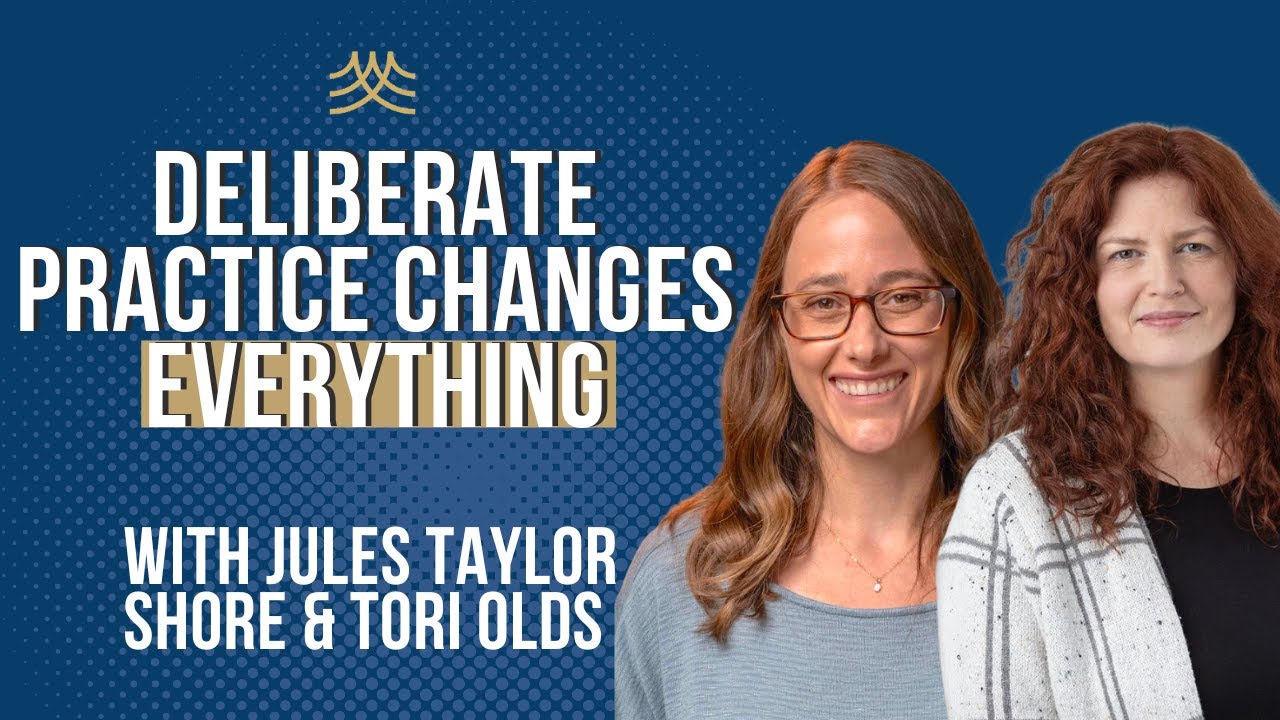
Become a Better Therapist: The New Science of Deliberate Practice. Juliane Taylor Shore & Tori Olds
Автор: Academy of Therapy Wisdom
Загружено: 2025-02-14
Просмотров: 788
Описание:
Become a Better Therapist: The New Science of Deliberate Practice. Juliane Taylor Shore & Tori Olds: https://therapywisdom.com/stair-level...
Are you unintentionally getting worse as a therapist with each passing year? In this eye-opening conversation, Juliane Taylor Shore and Tori Olds dive deep into the revolutionary concept of deliberate practice—a proven method to enhance therapeutic skills and achieve expert-level performance. Discover why traditional supervision might not be enough and how intentional, focused practice can dramatically improve client outcomes. Perfect for both new and experienced therapists, this video reveals actionable strategies to refine your approach, master experiential therapy, and avoid common pitfalls. Don’t miss out on transforming your therapeutic practice—watch now!
#TherapistLife #EmpathyFatigue #MentalHealthProfessionals #NeuroscienceOfEmpathy #TherapistBurnout #EmotionalWellness #CompassionFatigue #SelfCareForTherapists #MentalHealthMatters #therapistsupport
Transcript-
Tori Olds (00:00)
So deliberate practice is not specific to psychotherapy. It's just a general way of training.
Jules Taylor Shore (00:09)
We do know no matter how you're doing it makes a difference and hopefully we learn more and more and more about how to make it better.
Tori Olds (00:17)
on average, most therapists get slightly worse with more years of experience.
Jules Taylor Shore (00:22)
Can I have a moment of wanting to do a thing and then stop myself? Because just being able to have that skill is such a helpful skill to have in your back pocket when you're doing there.
Tori Olds (00:33)
It's really nice if we can practice it either in a role play or with video of actors pretending to be throwing challenging things at us or tape of our own clients. But like where we're actually pretending to be, we're in our therapist, you we're like, we're trying, you know, we're practicing.
Jules Taylor Shore (00:49)
If we commit to deep practice, changes how we can serve our people.
You all, we are so lucky because Tori Olds is here.
Tori Olds (01:03)
sweet Jules
Jules Taylor Shore (01:07)
Tori Olds, you're one of my very, very favorite trainers on the planet.
And I want to be really specific about why I was like, Tori, can you come and do this? It's because of the depth of thinking that you have devoted to helping helpers help people better. And specifically, your commitment to how do we learn to do experiential therapy incredibly well.
Tori Olds (01:42)
Right.
Jules Taylor Shore (01:43)
is
actually required. And you're a fan of deliberate practice. And I'm a fan of deliberate practice. And you teach so wonderfully about deliberate practice. So I thought, let's have Tori come in and tell people why we're excited about this thing that's been around for a long time, infusing into therapy training. Right.
Tori Olds (02:06)
Okay, great. Well, maybe I'll just start with describing it a little bit and then you guide me. I may just keep going. we'll talk about it. But yeah, so I'll kind of assume people don't know much. mean, so deliberate practice is not specific to psychotherapy. It's just a general way of training. And it was a term developed by Anders Ericsson, who Malcolm Gladwell kind of popularized his book with like the 10,000 hour rule and all that stuff.
But Erickson is the actual researcher. you can think of him as an expert on expertise, an expert on how to become an expert. And so he studied peak performance or expert performance, the expert level of performance in many different arenas, and just found that what people do when they become expert, what they've put in hours and hours is something he termed deliberate practice. So practice in general, especially deliberate practice, is
when you're usually, it's usually in solitude where you really have a clear, specific skill or objective or piece you're trying to focus improving on. It's like one thing at a time. We'll get into some of these details. It's repetitive, it's very focused and it's at your right level of challenge. So these are some things we'll get more into. But it's really, really important because just doing the whole thing
rather than one skill at a time, doesn't, and this is not, this is true for therapists, but also other fields, just doing the whole thing. They call that performance. I mean, excuse me. Yes, they call, yeah, they call it. I'm getting it right.
Jules Taylor Shore (03:47)
Yeah, you're doing it exactly...
Повторяем попытку...
Доступные форматы для скачивания:
Скачать видео
-
Информация по загрузке: