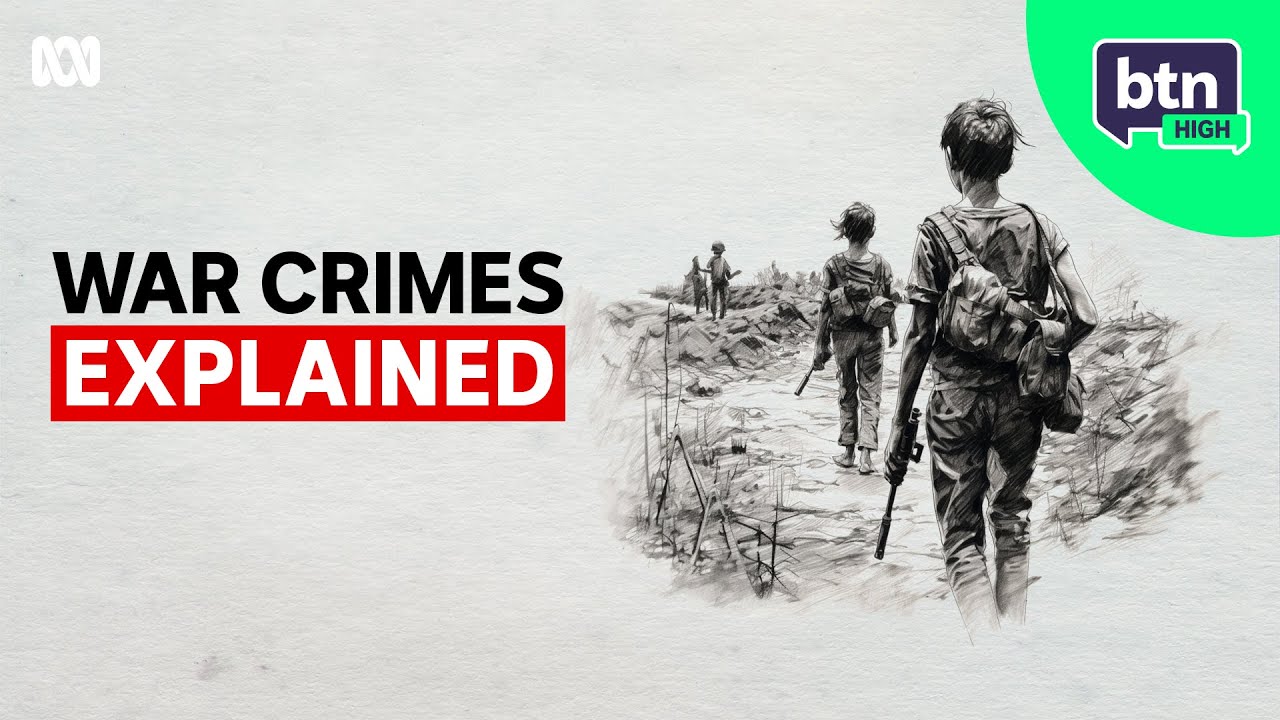
What you need to know about War Crimes: Collective Punishment, Crimes Against Humanity Explained
Автор: Behind the News
Загружено: 2023-10-19
Просмотров: 5230
Описание:
Right now, a lot of people are talking about war crimes, but what actually is a war crime, how difficult is it to punish a war criminal, and are war crimes ever justified? The simple answer to that last question, is: no.
0:00 Can War Crimes be Justified?
0:50 The Rules of War & International Humanitarian Law
1:41 What are the types of War Crimes?
2:42 What is Collective Punishment
3:10 Proportionality
3:38 What are Crimes Against Humanity?
4:20 What is Genocide?
4:50 How are War Crimes Proven?
5:58 How are War Criminals Punished?
The concept of "the rules of war" goes back a long time, but only recently did most of the world agree on how wars should be conducted. This is known as International Humanitarian Law and it's made up of a patchwork of different treaties and conventions, like the Geneva Conventions which were created after WWII.
Because International Humanitarian Law is pulling from a number of different sources, not all countries agree on every single law within it. They may recognise one convention, but not another - but pretty much every country recognises the core ideas of minimising suffering and protecting people not involved in the fighting.
So, what are the different types of war crimes? The Rome Statute breaks it down into 3 different categories: War Crimes, Crimes Against Humanity and Genocide - there's a bit of overlap, but they're largely separate.
War crimes are when you break the rules of war during an armed conflict, and there are a lot of different crimes that fall under this category (killing civilians, torture and taking hostages, denying medical care, attacking historical monuments, forcing people to leave their homes).
It's not just what you do during a conflict, but also how you conduct yourself when you’re actually fighting (child soldiers, using civilians as human shields - e.g. firing missiles from inside a crowded school, so your enemy can't retaliate).
There's also something called collective punishment (punishing a group of people because you suspect some might be enemies). Then there’s the use of certain weapons. They may be considered inhumane because they cause unnecessary suffering, or it could be because they’re indiscriminate, not targeted, and likely to cause collateral damage & harm civilians.
A war crime can be the death of just one person, whereas crimes against humanity are often organised campaigns with the aim of killing or torturing or displacing a large group of civilians over a period of time. Another big difference is that crimes against humanity don’t need to take place during a conflict. Think Apartheid in South Africa, or the way that Joseph Stalin used to make his political opponents disappear in the Soviet Union.
The final category is genocide. What separates genocide from Crimes Against Humanity is that the end goal needs to be the complete destruction of an entire group of people. Genocide also doesn't technically have to involve killing. It could take the form of trying to starve a group of people, or taking away their children.
When it comes to proving war crimes, Human Rights groups play a big role in the collection of evidence. That can involve interviewing witnesses and survivors, working with local organisations and journalists, and going through huge amounts of photos and videos to try to reconstruct events.
Human Rights Groups create detailed reports and pass them on to international bodies or governments, or use them to pursue legal action.
Prosecuting war criminals in court, is challenging for a number of reasons. Proving a war crime has taken place can be straightforward, but linking it to an individual, can be very tough. Also, it’s often not possible to go to court in the country where the crime was committed, because the country may still be at war, or it may be the government that has committed the crime.
There are international tribunals and courts like the ICC, but its powers are limited because not every country recognises its authority. Another option are the domestic courts of countries that have universal jurisdiction (e.g. France in 2014, convicting Pascal Simbikangwa for his role in the Rwandan Genocide).
Actual war crime convictions aren't all that common, but that doesn't mean that the work of Human Rights Groups goes to waste. Detailed reports and evidence can lead to international pressure, and travel bans on war criminals. Early reporting on war crimes can also sometimes help to stop a conflict from escalating, and it can lead to support and assistance for victims of war crimes and make sure that the crimes committed against them aren't forgotten. - Story by Nicholas Maher
__________________________________________
Subscribe https://www.youtube.com/behindthenews...
TikTok: / behindthenewstv
Facebook: / abcbtn
Instagram: / behindthenews
Повторяем попытку...
Доступные форматы для скачивания:
Скачать видео
-
Информация по загрузке:


