Lecture - Larry Hurtado - Early Christian Distinctiveness in the Roman World
Автор: fleetwd1
Загружено: 2016-10-14
Просмотров: 24069
Описание:
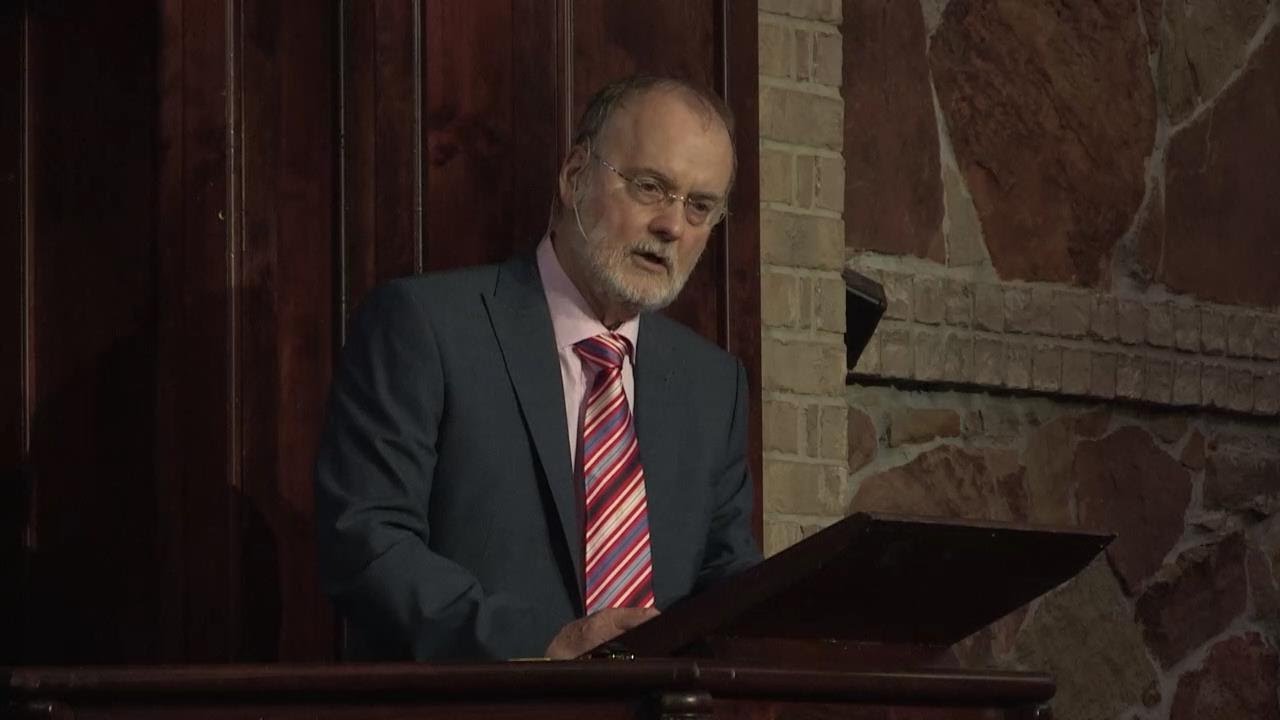
Lecture by Larry Hurtado “A New and Mischievous Superstition: Early Christian Distinctiveness in the Roman World” given September 10, 2016 at the Lanier Theological Library in Houston, TX.
It is part of the Lanier Library Lecture Series. A series devoted to bringing world class lectures to benefit the community of all those who might be interested.
I am indebted to the generosity of the library to allow me to share these videos of theirs. Please support them by visiting their website for more information and resources:
http://www.laniertheologicallibrary.org/
Lecture by Larry Hurtado – September 10, 2016
“A New and Mischievous Superstition: Early Christianity in the Roman World”
In the Roman world in which Christianity first emerged it was viewed as different and dangerous. And Christianity was distinctive. Christian's were called atheists and regarded as impious, because they refused to worship the traditional gods. Unlike other religious groups of the day, they had no shrines, altars, images or priests. Reading and disseminating texts were central activities. Early Christianity comprised a new kind of religious identity that wasn’t tied to ethnicity. Unlike traditional Roman-era religion, Christianity also made ethics central. But, ironically, all these things that made early Christianity distinctive, even odd, in the ancient Roman world, have become commonplace assumptions about “religion” for us. This lecture addresses our cultural amnesia, showing how early Christianity helped to challenge the ancient world and helped to shape our world.
Bio info:
Larry W. Hurtado is Emeritus Professor of New Testament Language,Literature & Theology at the University of Edinburgh. He is the author of 11 books and over 100 articles in journals, multi-author and reference works. His research has ranged broadly on issues in New Testament textual criticism, physical/visual features of early Christian manuscripts, the Gospel of Mark, early Christian worship, and the origins and early development of devotion to Jesus.
Born in Kansas City, Missouri, Larry Hurtado moved to Canada shortly after finishing his PhD, initially teaching in Regent College (Vancouver), and then in the University of Manitoba (Winnipeg). During his time there, he founded the University of Manitoba Institute for the Humanities. In 1996 he accepted the professorial chair in New Testament in the University of Edinburgh, where he founded the Centre for the Study of Christian Origins. Since his retirement in 2011, he remains active in research and publications dealing with various questions concerning the origins of Christianity.
His first book, Text-Critical Methodology and the Pre-Caesarean Text (Eerdmans, 1981) redrew the history of the textual transmission of the Gospel of Mark, and he continues to make contributions to New Testament textual criticism. More recently, he has led in the study of the physical and visual features of earliest Christian manuscripts, as in his book, The Earliest Christian Artifacts: Manuscripts and Christian Origins (Eerdmans, 2005). He is perhaps best known for his numerous publications on the origins of devotion to Jesus, beginning with his 1988 book, One God, One Lord: Early Christian Devotion and Ancient Jewish Monotheism (3rd ed., Bloomsbury T&T Clark, 2015), and culminating in his programmatic study, Lord Jesus Christ: Devotion to Jesus in Earliest Christianity (Eerdmans, 2003). He is widely credited with helping to establish what is now referred to as the emerging consensus view that devotion to Jesus as sharing in divine status erupted early, quickly, and initially in circles of Jewish believers.
More recently, in his 2016 Marquette Lecture, Why on Earth did Anyone Become a Christian in the First Three Centuries? (Marquette University Press, 2016), and in his forthcoming book, Destroyer of the Gods: Christian Distinctiveness in the Roman World (Baylor University Press, 2016), he focuses on the distinctive nature of early Christianity in the ancient Roman setting. He is an elected member of the Society for New Testament Studies.
He was elected a Fellow of the Royal Society of Edinburgh in 2008, and was President of the British New Testament Society, 2009-2012. He has given invited lectures in a number of colleges, universities, and symposia all over the world. He and his wife, Shannon (an art historian), live in Edinburgh.
Повторяем попытку...
Доступные форматы для скачивания:
Скачать видео
-
Информация по загрузке: