Art History (Lesson 31): The Pre-Raphaelites/John Everett Millais,Hunt,Rossetti,Ford Madox Brown
Автор: Art Pencil Drawing
Загружено: 2025-04-21
Просмотров: 1002
Описание:
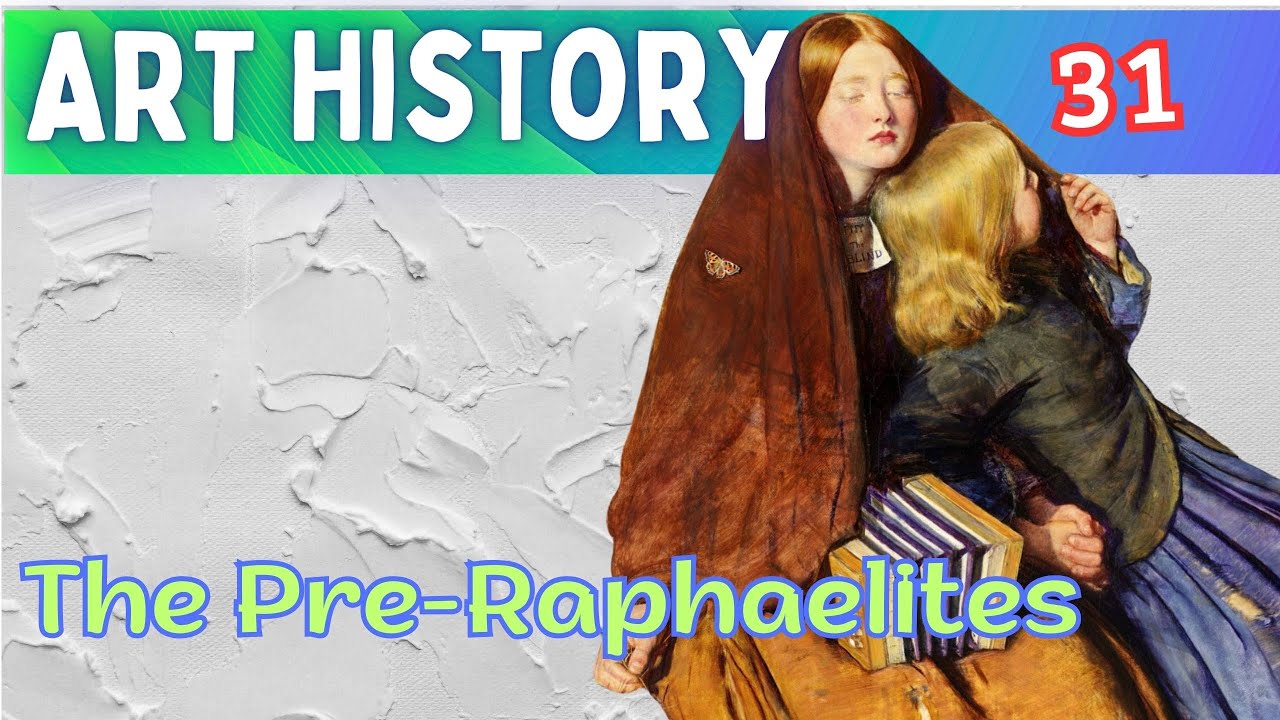
Art History (Lesson 31): The Pre-Raphaelites/John Everett Millais,William Holman Hunt,Dante Gabriel Rossetti,Ford Madox Brown:
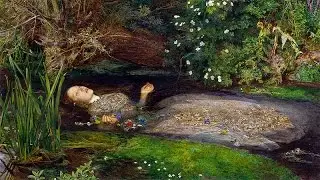
The Pre-Raphaelites burst upon the English art scene in the mid-19th century. In a youthful act of rebellion, they vowed to counter the stifling predictability of academic art by seeking to recapture the honest simplicity of early Italian painters who had flourished before Raphael, hence “Pre-Raphaelite”.
Origins and influences:
The Pre-Raphaelite Brotherhood was formed in 1848 by a group of seven young artists, including John Everett Millais, William Holman Hunt, and Dante Gabriel Rossetti. They sealed their pact by adding the initials PRB to paintings. This caused an outcry in the press — largely because of the apparent insult to Raphael, who was regarded as the greatest of all painters. The protests were short- lived, however, after John Ruskin lent his support to the group.
Ruskin had advised artists to “go to nature... rejecting nothing, selecting nothing, and scorning nothing.” The Pre-Raphaelites adopted this principle wholeheartedly, with the landscape settings of their early pictures often depicted in microscopic detail. The three main members of the group soon went their separate ways.
Hunt turned to religious painting, while Millais joined the art establishment. Rossetti carried the movement forward, influencing Edward Burne-Jones and William Morris. They, in turn, introduced Pre-Raphaelite ideas to a wider audience, through the Symbolist (see pp.382-87) and Arts and Crafts movements.
Subjects:
The Pre-Raphaelites tackled a wide variety of themes. They shared the Victorian appetite for the colour and romance of the Middle Ages, taking themes from Arthurian legend. In spite of these escapist tendencies, they were interested in covering modern issues, such as emigration, prostitution, and religious reform. The group often focused on a moral or a story, many of which were drawn from literary sources. They avoided classical authors, but Shakespeare, Keats, and Tennyson were popular choices, and Rossetti was passionate about the Italian poet Dante. Eventually, Pre-Raphaelite was used as a tag associated with some of the movement's most iconic images, from imitations of Rossetti's femmes fatales to the pale, androgynous figures in Burne-Jones's designs.
|John Everett Millais :
Milais was a child prodigy, becoming the youngest ever pupil at the Royal Academy Schools (a national art school, founded in 1768 and based in London). His superb technical skills were well suited to the precision that the Pre-Raphaelites sought to achieve. In his early work, Millais opted for literary themes — drawn from Shakespeare, Tennyson, and Keats — and autumnal scenes that were reflections on mortality. Gradually, he abandoned his Pre-Raphaelite roots and veered towards a sentimental style, which was In line with mainstream Victorian taste. Millais had a particular gift for portraying children, and they feature prominently in his most famous pictures, such as The Boyhood of Raleigh (1870) and Bubbles (1886).
William Holman Hunt:
Of all the Pre-Raphaelites, Hunt was the one who remained truest to the group's original principles. From an impoverished background, he worked as a clerk from the age of 12, until he gained admission to the Royal Academy Schools. Hunt was extremely devout, and he used the group's painstaking approach to make his biblical scenes as realistic as possible. He even made several trips to the Holy Land to ensure authenticity.
Dante Gabriel Rossetti:
Charismatic, domineering, and eccentric, Rossetti was the driving force behind the Pre-Raphaelite movement. He proposed the idea of a brotherhood, was the first to exhibit a picture with the group’s initials, and inspired the second wave of Pre-Raphaelitism through his contacts with Morris and Burne-Jones. In early paintings, Rossetti conjured up a romantic, medieval dreamworld, but increasingly he concentrated on pictures of mysterious female beauties.
Ford Madox Brown:
Although he was never an official member of the Pre-Raphaelite Brotherhood, Brown had close links with them and shared many of their ideals. Much of his childhood was spent on the continent where, among others, he was influenced by the Nazarenes. After settling in London, he began painting scenes from early British history. Rossetti was sufficiently impressed by these to ask Brown for lessons, and, although this arrangement soon fell through, the two men remained good friends. Later, Brown himself was influenced by the Pre-Raphaelites. This is most evident in his best-known work, The Last of England (1852-55). The modernity of the subject matter was typical of the group, as was the artist's unfailing attention to detail. In order to capture the wintry setting, Brown painted outdoors until his hands turned blue, while his wife bemoaned the fact that she had to go without her warmest shaw! for several months.
Повторяем попытку...
Доступные форматы для скачивания:
Скачать видео
-
Информация по загрузке: