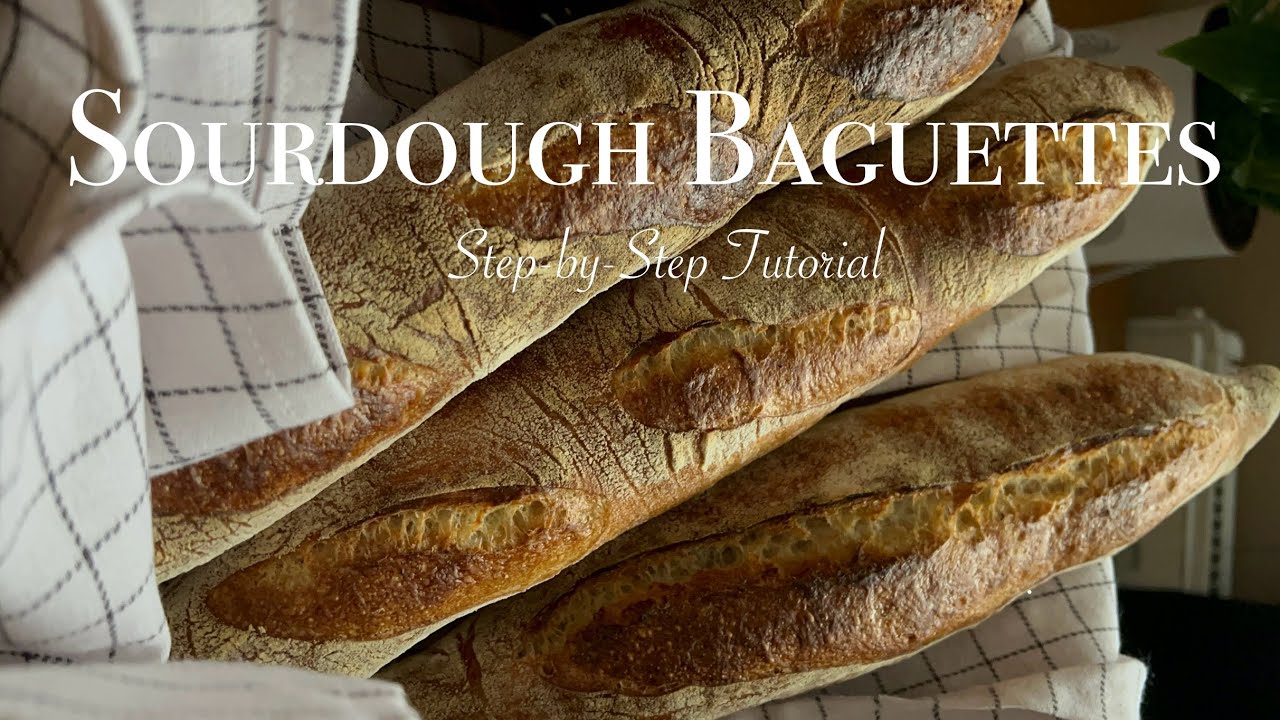
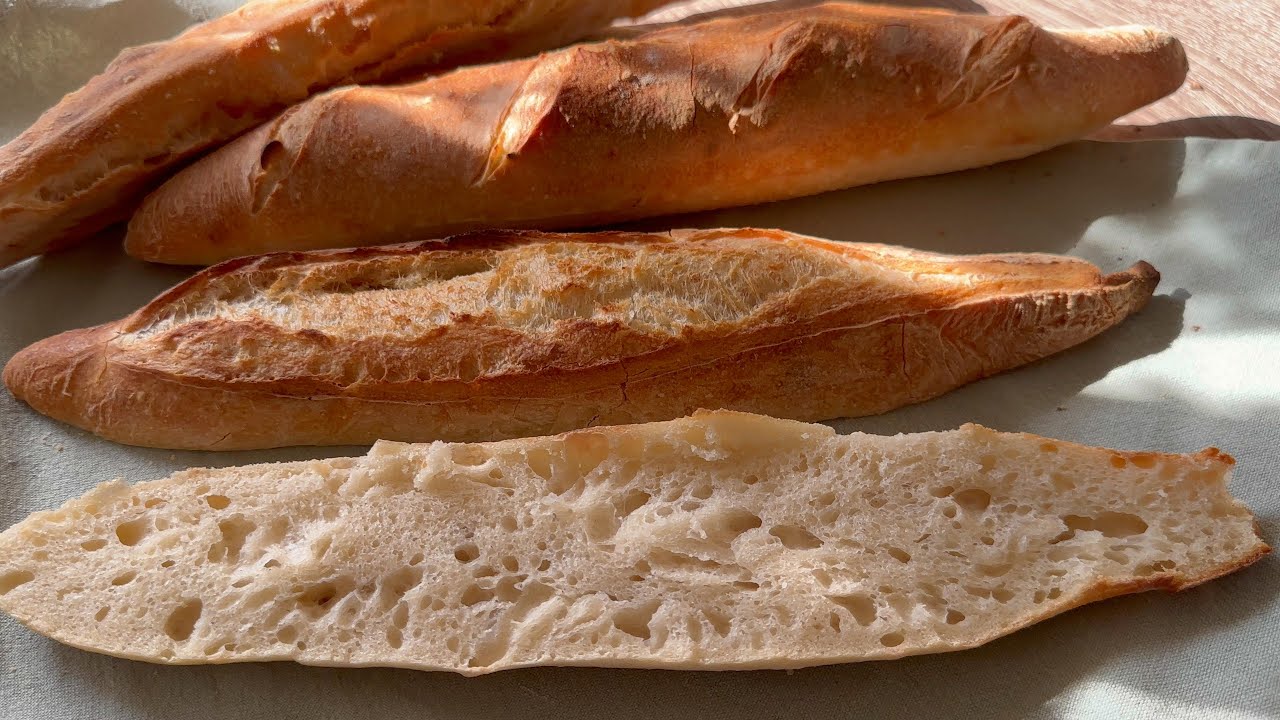
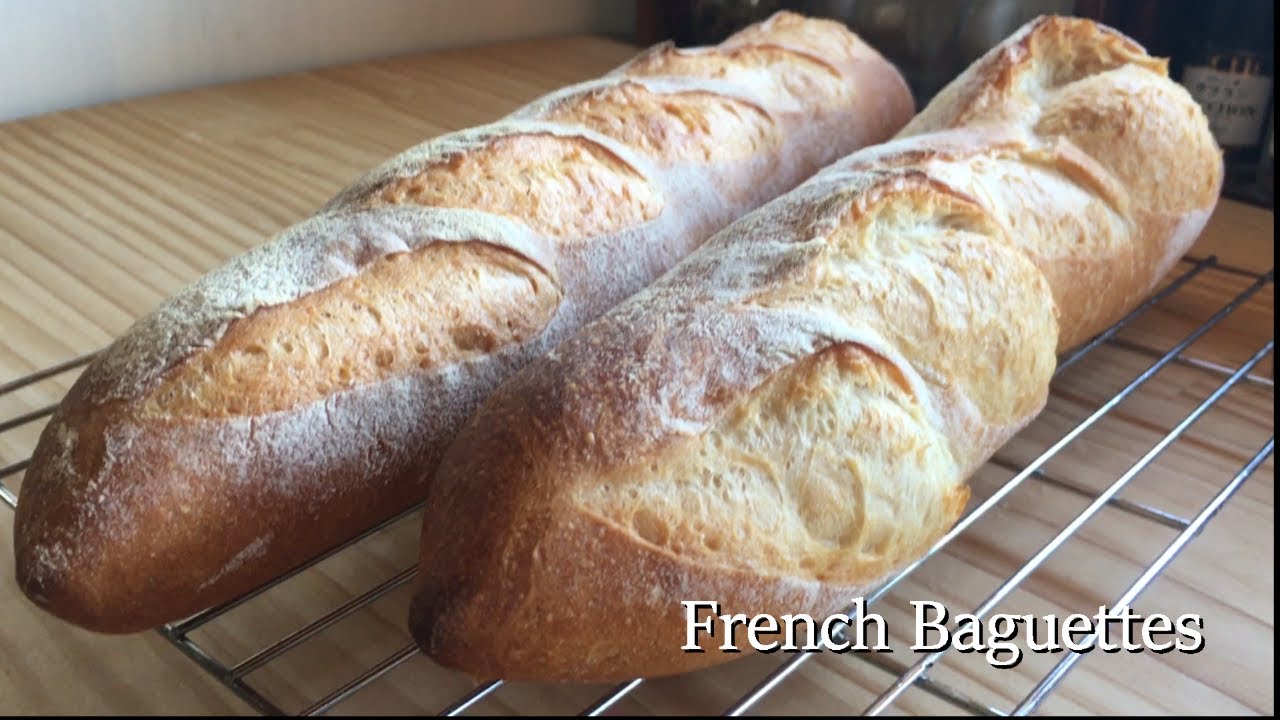
The PERFECT SOURDOUGH BAGUETTE You Can Make At Home | Step-by-step Recipe
Автор: Not Only BREAD
Загружено: 2025-05-16
Просмотров: 5991
Описание:
Ingredients
• 360 g all-purpose flour
• 40 g whole wheat flour
• 120 g sourdough starter
• 8 g salt
• 260 g water 1
• 20 g water 2 (added with the salt)
The temperature of my dough throughout the entire fermentation process was 20–21°C (68-70°F). Cold fermentation was carried out at 5°C (41°F).
Instructions
1. Feed Your Starter:
Feed your sourdough starter and let it reach its peak.
2. Mixing :
Mix the water and sourdough starter, then add the flours. Stir thoroughly until the flour absorbs all the water. Cover the dough and let it rest for 40 minutes .
3. Add Salt and Additional Water:
Add the salt and the additional water to the dough. Knead until the salt is completely dissolved. Then, let the dough rest for 1 hour.
4. Stretch and Fold:
Perform a stretch and fold. Cover the dough and let it rest for 40 minutes.
5. Coil Folds:
Perform 2 series of coil folds with 40-minute intervals between each. After the final fold, let the dough ferment until it becomes airy, full of bubbles, and holds its shape.
6. Cold Fermentation:
Cover the dough and leave it for cold fermentation in the refrigerator overnight.
7. Bring to Room Temperature:
The next day, take the dough out of the refrigerator and let it warm up at room temperature for about 1–2 hours (depending on your room temperature).
8. Pre-shaping:
Divide the dough into three equal parts and pre-shape them (round the dough or form it into a log, as I did). Cover the dough and let it rest for 30–40 minutes.
9. Shaping:
Take one piece of dough and gently flatten it with your hand. Fold the longer side of the dough approximately to the middle, then flip it over and repeat the folding process so the edge overlaps the previous fold slightly. Now, fold the dough in half, creating tension, and seal it with the heel of your hand. You should form a tight, elongated log. Place one hand in the middle of the baguette and gently roll it back and forth on the table, using both hands to help shape it. Roll from the middle to the edges so that the center is thicker and the ends are tapered. Repeat this process with all pieces of dough.
10. Prepare Proofing Cloth:
Generously sprinkle a kitchen towel or a specialized couche with flour (rice flour or semolina is best).
11. Proofing:
Place the baguettes seam-side up on the cloth, creating folds between each baguette to separate them. Cover them with another cloth or plastic wrap to prevent drying out. Let them proof for 30 minutes to 2 hours, depending on the dough’s rise.
12. Preheat the Oven:
Heat your oven to the highest setting (mine is 250°C/480°F) with a baking steel inside. Also, place a tray with lava rocks on the bottom and preheat everything for 30–40 minutes.
13. Transfer Baguettes:
Using the cloth, gently flip the baguettes onto a board, one by one, and place them on parchment paper seam-side down, leaving space between each.
14. Scoring:
Make cuts on the baguettes with a sharp blade and transfer them to the baking steel using a peel or a sturdy piece of cardboard.
15. Steam the Oven:
Pour a cup of boiling water onto the tray with lava rocks and immediately close the oven door. (Place a towel over the oven glass to protect it from water splashes.)
16. Bake:
Lower the oven temperature to 230°C (445°F). Bake with top and bottom heat or bottom-only heat (no convection) for 15 minutes.
17. Release Steam:
Slightly open the oven door to release the steam, remove the water tray, and close the door again. Continue baking аt 200° C (390°F) for another 10 minutes or until the baguettes develop a golden crust.
18. Cool Down:
Remove the baguettes from the oven and let them cool completely.
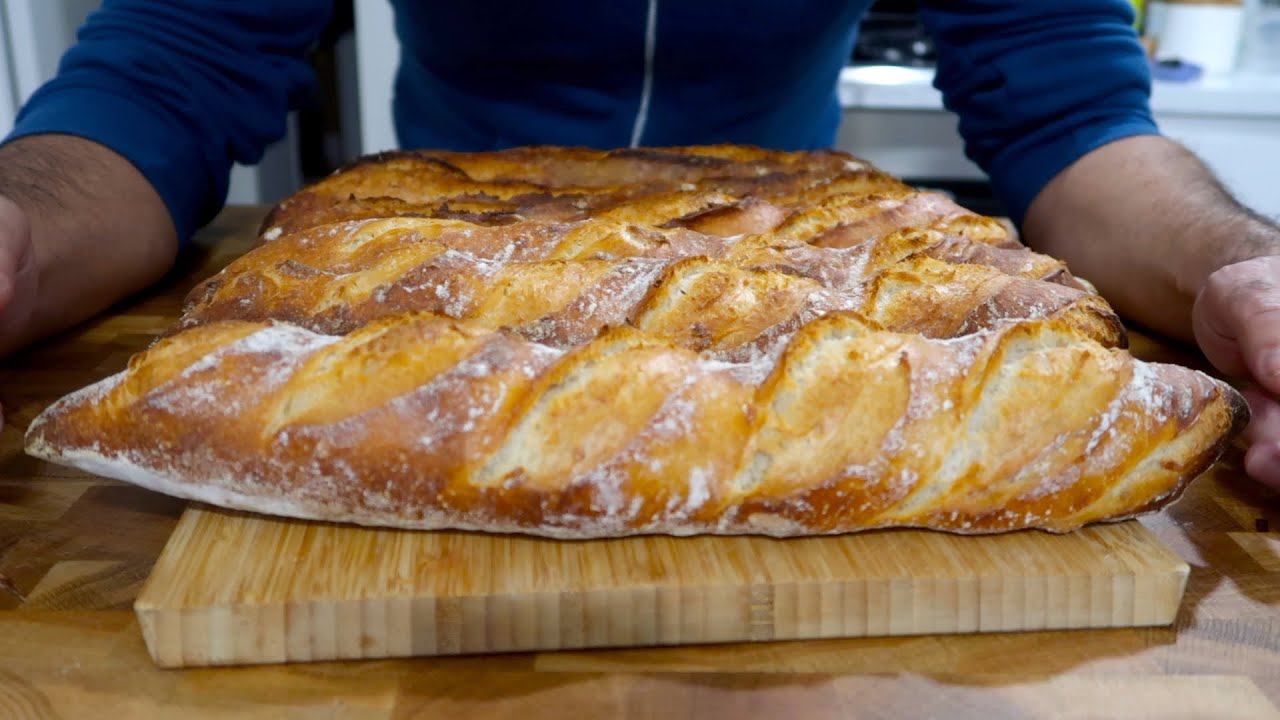
Enjoy your freshly baked baguettes!
I hope this information was helpful—I worked hard on it! 😊 Let me know your thoughts in the comments. Don’t forget to subscribe to my channel to stay updated on new videos. 🤍
Note: If your kitchen is very warm, the fermentation process will speed up significantly. Pay attention to how the dough rises. In warmer conditions, the dough may relax faster, so you may need to perform folds at shorter intervals. Always observe your dough—it’s your best guide. If it loses shape after 20 minutes, fold it earlier. If it hasn’t relaxed enough, give it more time to avoid over-stressing the dough.
And remember, proper fermentation is 80% of the success. Don’t be afraid to make mistakes or experiment—it’s part of the journey to perfect baking!
Повторяем попытку...
Доступные форматы для скачивания:
Скачать видео
-
Информация по загрузке:







![[Сауэрдоубред] Домашний заквасочный хлеб, которому не уступает и пекарня](https://imager.clipsaver.ru/lPXRJ_zB-ps/max.jpg)