Inside the Prairie Style Masterpiece Prototype Vision for the Middle Class
Автор: Space Shape Scale
Загружено: 2025-06-26
Просмотров: 27151
Описание:
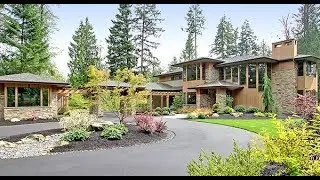
Step into the architectural elegance and quiet innovation of the Purcell-Cutts House, a hidden gem of the Prairie School movement and one of the most refined expressions of early 20th-century American residential architecture.
Completed in 1913 and nestled in a leafy Minneapolis neighborhood, this remarkable home was designed by William Gray Purcell and George Grant Elmslie, two visionary yet often underappreciated figures who advanced the ideals of organic design alongside Frank Lloyd Wright.
While profoundly influenced by Wright’s architectural breakthroughs, the Purcell-Cutts House is far more than an echo of his work. It stands as a thoughtful reinterpretation of Prairie Style principles, uniquely tailored for the aspirations and daily rituals of the middle-class American family. In many ways, it is a prototype for how modern architecture could be democratic, intimate, and deeply humane.
Reinventing the American home
In the early 1900s, the United States was shaking off the ornate excess of Victorian design. The Industrial Revolution had transformed society, but domestic architecture lagged behind cluttered with parlors, dark woodwork, and rooms designed for rigid social codes. Against this backdrop, the Purcell-Cutts House offered a radically different vision.
Here, architecture embraced:
Low horizontal lines that mirrored the vast Midwest landscape.
Broad overhanging eaves that shaded interiors and tied the building to the earth.
Bands of art glass windows, dissolving barriers between inside and out, flooding the home with natural light.
Open plans that nurtured informal, flexible family life, discarding the stuffy Victorian box.
Purcell and Elmslie believed that beauty should be accessible, not reserved for the wealthy. Their homes rejected imposing monumentality in favor of a warm, human scale creating spaces where craftsmanship and thoughtful detail brought joy into everyday living.
A fusion of cultures and movements
Unlike many architectural styles that looked backward to classical Europe, Prairie School design was both deeply regional and globally curious. In Minnesota, Purcell and Elmslie absorbed local Scandinavian influences evident in the house’s simplicity, light finishes, and honest use of wood. They also drew from the English Arts & Crafts movement, sharing its reverence for handcrafted details and rejection of cheap industrial ornament.
Custom cabinetry, leaded glass panels, and built-in seating were not afterthoughts but integral to the architecture.
Together, these elements created a holistic environment where structure, decoration, and daily life merged into a single harmonious experience.
A prototype for middle-class ideals
Above all, the Purcell-Cutts House was a social statement. It proved that thoughtful, modern design could elevate the lives of ordinary families.
Its modest footprint and efficient plan challenged the notion that architectural sophistication required opulence.
Living spaces were designed for togetherness, centered on hearth and shared views of the garden.
Subscribe & keep exploring
At Space Shape and Scale, we uncover how visionary minds from Gaudí’s surreal cathedrals and Wright’s democratic prairies to Behrens’s industrial temples and Loos’s minimalist manifestos — forever changed how we build and live.
Join us each week to see how space, shape, and scale reveal the deepest aspirations of their time and challenge us to imagine richer ways of living today.
#PrairieStyle #ArtsAndCrafts #OrganicArchitecture #PurcellElmslie #AmericanModernism #ResidentialDesign #ArchitectureHistory #MidwestModern #HistoricHomes #SpaceShapeScale
TIMELINE OF INFLUENTIAL ARCHITECTS
Joseph Paxton (1803) – Victorian Engineering / Proto-Modernism
Otto Wagner (1841) – Vienna Secession
Lluís Domènech i Montaner (1850) – Catalan Modernisme
Antoni Gaudí (1852) – Catalan Modernisme
Louis Sullivan (1856) – Prairie School / Functionalism
Josep Puig i Cadafalch (1867) – Catalan Modernisme
Frank Lloyd Wright (1867) – Prairie School / Organic Architecture
Charles Rennie Mackintosh (1868) – Art Nouveau / Arts and Crafts
Charles & Henry Greene (1868) – American Arts and Crafts
Peter Behrens (1868) – Industrial Modernism
Giacomo Mattè-Trucco (1869) – Industrial Architecture
George Grant Elmslie (1869) – Prairie School
Adolf Loos (1870) – Rationalism / Early Modernism
Auguste Perret (1874) – Concrete Modernism
Antonin Nechodoma (1877) – Caribbean Prairie Style / NeoGothic
William Gray Purcell (1880) – Prairie School
Adolf Meyer (1881) – Bauhaus / Functionalism
Walter Gropius (1883) – Bauhaus / Modernism
Pierre Chareau (1883) – Industrial Modernism
Erik Gunnar Asplund (1885) – Nordic Classicism / Functionalism
Sigurd Lewerentz (1885) – Nordic Classicism / Brutalism
Ludwig Mies van der Rohe (1886) – International Style
Rudolf Schindler (1887) – Early California Modern
Le Corbusier (1887) – International Style / Modernism
Повторяем попытку...

Доступные форматы для скачивания:
Скачать видео
-
Информация по загрузке: