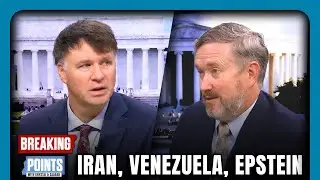
Col Doug Macgregor: The Iran Gamble, Will China & Russia Sit This One Out
Автор: Daniel Davis / Deep Dive
Загружено: 2026-01-14
Просмотров: 18686
Описание:
** NEW MERCH ** Jackets & Sweatshirts, Thermo Mugs!!
Daniel Davis Deep Dive Merch: Etsy store
https://www.etsy.com/shop/DanielDavis...
Col Douglas Macgregor argues that President Trump has significant leverage to reduce global conflict but is failing to use it coherently. On Russia and Ukraine, he suggests Trump should directly pressure NATO leaders to negotiate seriously with Russia, offering concessions such as lifting sanctions or abandoning provocative ideas (like seizing Greenland) in exchange for ending the war. Trump, as president, should rein in hawkish U.S. politicians and act decisively in the broader interest of the American public, which does not want war with Russia or China.
The critique frames U.S. leadership as chaotic and unfocused, warning that such unpredictability undermines global stability, supply chains, and trust among major powers. Russia and China, it is argued, increasingly view the U.S. as unreliable, which raises systemic risks to international commerce and security.
The conversation then shifts to Iran, which is presented as the most dangerous flashpoint. The speaker warns that Trump may be gambling that Iran would not retaliate against U.S. or Israeli strikes—a gamble that could put American troops at serious risk. Iran is described as possessing a vast and advanced missile arsenal, including hypersonic weapons capable of overwhelming air defenses and inflicting severe damage on Israel and U.S. assets in the region.
The analysis expands to a broader regional escalation scenario:
China could intervene to protect vital Persian Gulf energy supplies.
Russia would not allow Iran to collapse, given its strategic interests in Central Asia and the Middle East.
Turkey, increasingly hostile to Israeli actions and Kurdish militancy, may align tactically with Iran and Russia to protect its interests.
The speaker warns that continued pressure could push regional actors toward an “all-out” response, believing restraint only leads to destruction. Such a war would not remain local and could trigger a wider geopolitical confrontation.
Domestically, the concern is that a major overseas military setback—especially one involving visible American casualties—could destabilize U.S. financial markets and intensify internal unrest. The U.S. economy is described as fragile, with bond markets particularly vulnerable to shocks. The speaker concludes that American public support for a large war with Iran would likely be weak, and that U.S. leadership should prioritize internal stability over foreign military adventures.
Повторяем попытку...

Доступные форматы для скачивания:
Скачать видео
-
Информация по загрузке: