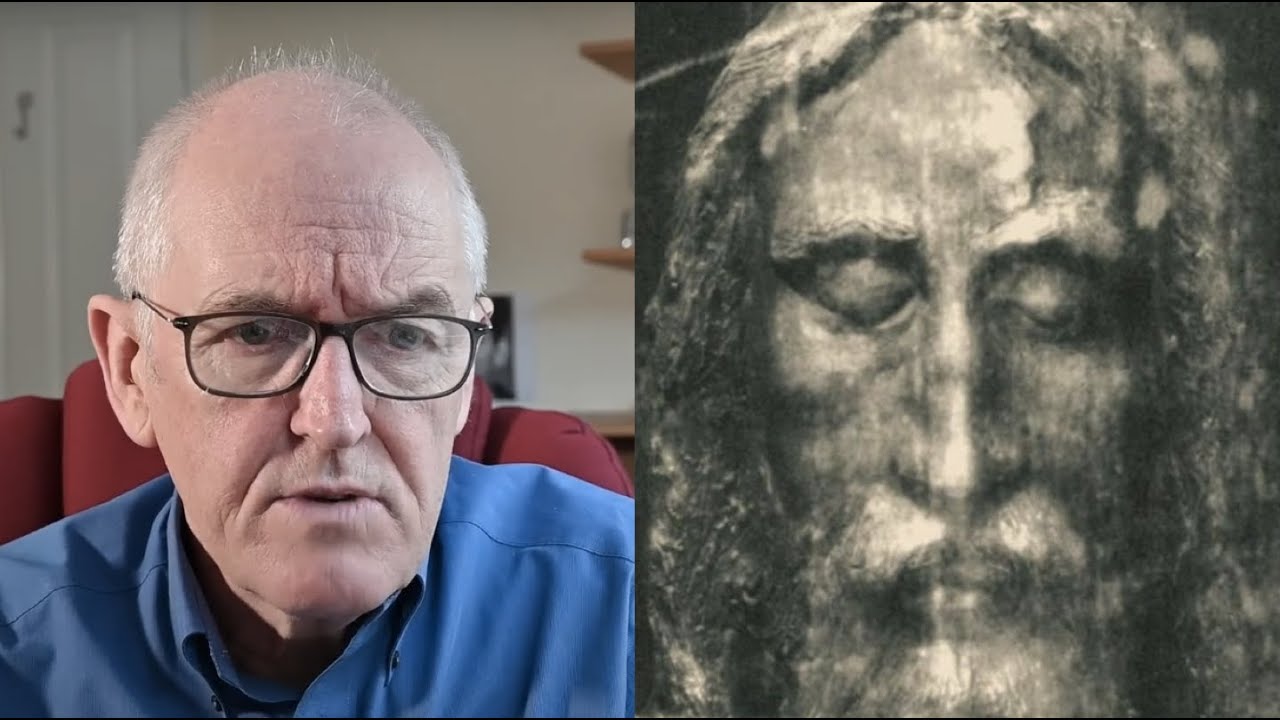
Shroud, Biblical and historic aspects
Автор: Dr. John Campbell
Загружено: 2025-06-29
Просмотров: 50882
Описание:
Links for Rich, YouTube videos: "Biblical Mysteries Explained"
/ @biblicalmysteriesexplained
Article sites: academia.edu, researchgate.net, richardsorensen.com, unholygrail.net/blog
Watch this excellent film from David Rolfe, https://whocanhebe.com/Stream.html
Watch this excellent film from David Rolfe, https://whocanhebe.com/Stream.html
Link to download my PowerPoint, https://drjohncampbell.co.uk/
Shroud.com https://www.shroud.com/menu.htm
Shroudphotos.com https://shroudphotos.com
3D Image https://shroud3d.com/introduction/3d-...
Shroud fabric https://www.shroud.com/pdfs/ssi3233pa...
3D reconstruction https://www.shroud.com/pdfs/ssi3233pa...
STURP conclusions https://www.shroud.com/78conclu.htm
Study on radiocarbon result https://www.sciencedirect.com/science...
New dating study on X ray scattering https://www.mdpi.com/2571-9408/5/2/47
Polon studies https://powo.science.kew.org/taxon/ur...
1. ca. 33 Jesus is crucified and buried by Nicodemus and Joseph of Arimathea, with
burial cloth and tomb provided by the latter. Then Jesus rises from the dead. When the
disciples enter the empty tomb, they see the burial cloths according to the Gospels.
2. ca 33-38 The burial cloth of Christ was said to be brought to Edessa by Thomas or
Thaddeus at the request of King Abgar V of Edessa, who was miraculously healed.
Edessa becomes a Christian city. A mosaic tile was made of face on the Shroud, known
as the Keramion, and placed over the city gate. In addition to the Shroud, this tile may
have been the model used for future pictures of Christ.
3. 57 Ma’nu VI becomes king of Edessa and reverts the city to paganism. The Shroud and
the Keramion are hidden in the city walls to protect them from destruction, and the
location was apparently forgotten.
4. 525 The Shroud and the Keramion are rediscovered during the rebuilding of Edessa after
a flood.
5. 544 Edessa is besieged by a Persian army and the Shroud and/or the Keramion
purportedly save the city. Following this, the Hagia Sophia church (named after its
analog in Constantinople) is constructed to house and venerate the Shroud and the
Keramion. The Shroud is shown to the public every Easter, but in an air of secrecy and
mystery.
In this era the appearance of Christ as depicted in Christian art suddenly changes from a
smooth Greco-Roman style to a Semitic man, with the characteristics of the face from the
Shroud and/or the Keramion. Syriac artists become the main source of Christian art.
6. 944 - 1204 The Byzantine emperor, Romanus Lacapenus sends an army to Edessa to
capture the Shroud and bring it to Constantinople as a means of divine protection. The
Shroud was received with great ceremony and paraded through the city – a copy of the
sermon given by on that occasion still exists. The Shroud is kept in the imperial relic
treasury and periodically presented to private audiences.
7. 1204 The knights of the 4th Crusade come to Constantinople, supposedly on their way to
Jerusalem, but due to a complex and unfortunate series of political events, they sack
Constantinople instead. The Shroud is taken by the crusaders.
8. 1204 – 1355 This period is known as the “missing years” of the Shroud. The explanation
with the most documentary evidence is that the Shroud was given to or taken by the
knight Othon de la Roche, a knight from the Burgundy region of France who became the
Lord of Athens in Greece. The Shroud may have been in Greece but was eventually
brought to Besançon, the capital of Burgundy. In any case the Shroud eventually became
the property of Geoffrey de Charny and his family.
Geoffrey de Charny, a Templar and high counselor to King John II of France, and the
Lord of Lirey and Savoisy in France, had built a chapel in Lirey to commemorate his
rescue from the English. He and/or his wife Jeanne displayed the Shroud to the public
and had pilgrim medallions minted to commemorate the display of which examples exist.
9. 1389 Pierre D’Arcis, the Bishop of Troyes, wrote the D’Arcis Memorandum in which he
complained to Pope Clement VII that the Shroud being shown in Lirey was a painting
and a fake. However, this memorandum has been debunked.
10. 1400 – 1454 Margaret de Charny, the granddaughter of Geoffrey, allowed the cloth to be
publicly viewed on a number of occasions during the period of 1400-1453. In 1454 she
sold the Shroud to Duke Louis I of Savoy.
11. 1464 The sale of the Shroud by the de Charny family to the Savoys is detailed in a
document in the Paris archives. Some years later a history of the Savoy family recorded
that Louis’ acquisition of the Shroud was his greatest achievement.
Повторяем попытку...

Доступные форматы для скачивания:
Скачать видео
-
Информация по загрузке: