Eryops - Large Permian Predator
Автор: Enchiridion
Загружено: 2020-12-18
Просмотров: 6438
Описание:
Hi, welcome to Enchiridion.
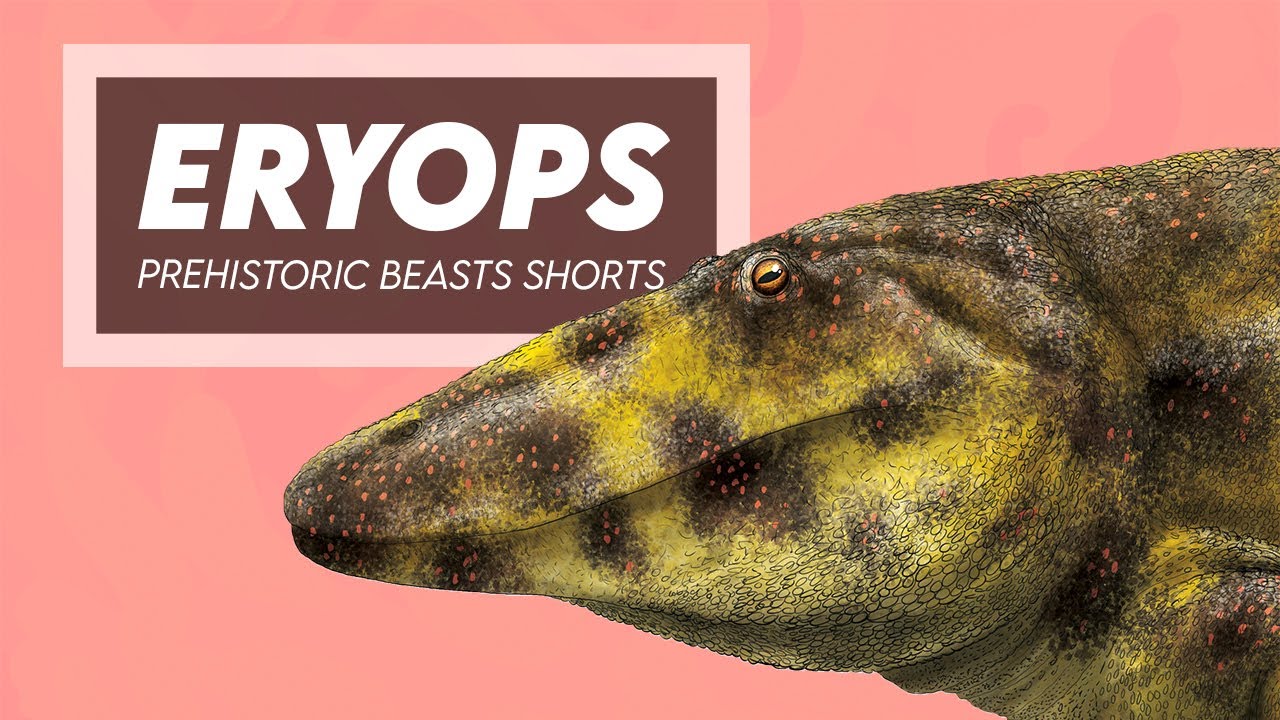
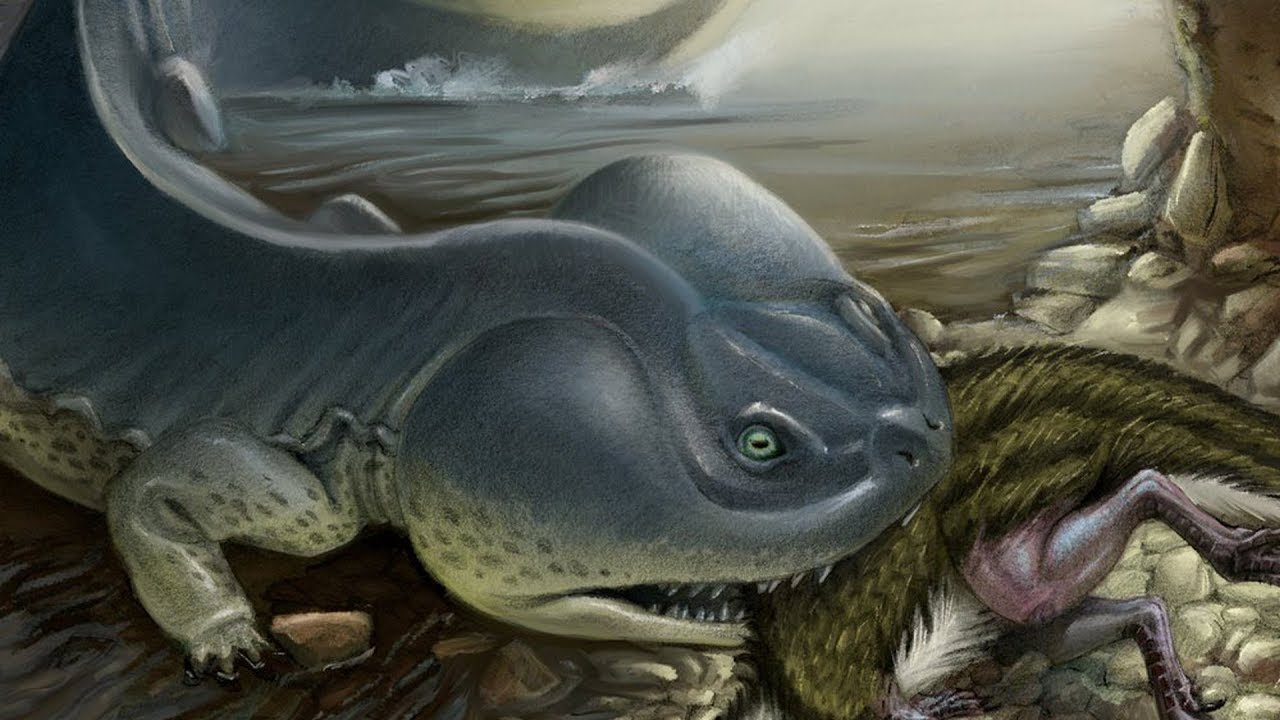
Eryops is one of the most well-preserved predators of the early Permian, and may have been close to the top of the food chain. It had a thick build supported by a strong spine that was designed for it not to suffocate under its own bulk. Respiration was carried out by actually breathing into lungs as opposed to relying on breathing through the skin, which wouldn’t have been very efficient due to the body mass to skin surface area ratio.
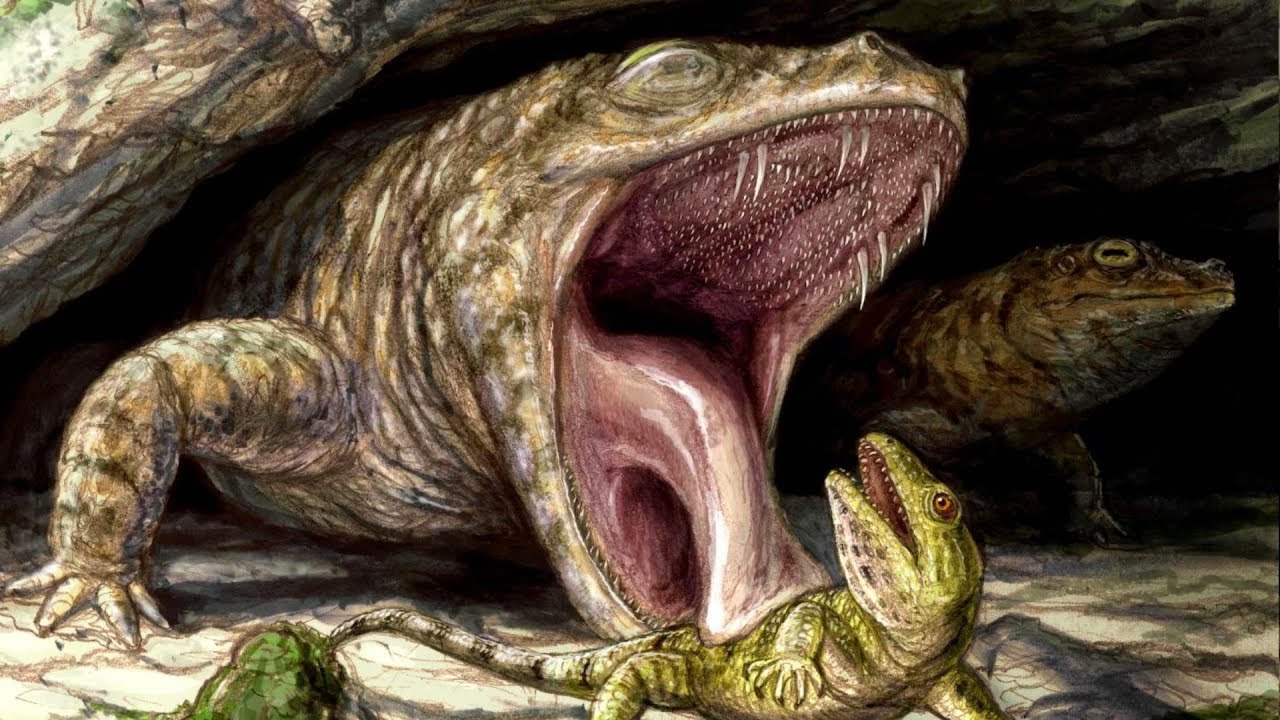
The skulls that have been discovered were mostly well-preserved, with an ear structure which was well-adapted for use out of the water. Eryops was one of the first true four-legged animals on Earth, able to walk on land. In fact, it had the most massive and heavily ossified skeleton of all temnospondyls. However, it wasn’t a good walker. Its legs had to lift its heavy body clear off the ground, but because they were only short they could not raise it very high. When Eryops moved it probably dragged its belly on the ground. With this sprawling body posture, Eryops could only take short, broad strides. Its walk was slow and difficult, and it probably couldn’t run. Eryops may have been a slow, ungainly mover on land, but when it returned to water it might have been a good swimmer. In other words, it had some terrestrial adaptations, yet its bulk meant that it would’ve been quite slow and ungainly on land. The limbs projected out from the sides and would have only just been able to lift the body off the ground. However, in the water, it had the buoyancy of the water to support its bulk and thus would’ve been a much more agile hunter.
Eryops was a large amphibian that lived in and near swamps. It was a meat-eater with a stout body and four short, sturdy legs. Its tail was short and its head was wide and long. Packed into its strong jaws were many sharp fang-like teeth, indicating that it was probably a predatory animal. Nonetheless, it had no chewing motion in its jaw structure and would therefore have had to swallow its prey whole. It also had teeth on the palate, or roof of the mouth, that would’ve aided in seizing and holding onto prey as it tossed the unfortunate creature around for swallowing.
The texture of Eryops’ skin was revealed by a fossilized “mummy” described in 1941. This mummy specimen demonstrated that the body was covered in a pattern of oval bumps.
Eryops means “drawn-out face” because most of its skull was in front of its eyes.
It was named by Edward Drinker Cope in 1877.
Species include E. megacephalus.
Like other prehistoric creatures that were the ancestors of dinosaurs, such as Eogyrinus or Pholiderpeton, it was a piscivore, and thus, a carnivore, hunting for fish, giant cockroaches, millipedes, dragonflies, and smaller amphibians and reptiles.
It ranged from 5 to 6.5 feet (1.5 - 2 m) in length but it could even grow up to almost 10 feet (3 m) in length, making them among the largest land animals of their time.
Adults weighed about 200 lbs (90 kg).
It has been found in North America in places like New Mexico and Texas.
It lived in the early Permian (roughly 295 million years ago) and in the late Carboniferous.
Fossil Representation includes several skeletons, and due to the fact that it had a strong build, its skull is often preserved.
Thank you for watching. This is Enchiridion, see you next time.
#Enchiridion #PrehistoricBeasts #Eryops
Table of Contents:
0:00 - Introduction
1:38 - Description
2:26 - Naming
2:32 - Named By
2:37 - Species
2:41 - Diet
2:57 - Size
3:07 - Weight
3:12 - Known Locations
3:16 - Time Period
3:22 - Fossil Representation
3:31 - Outro
_____
Image and Video Sources
Icons from Flat Icon
Eryops photos and related work from PrehistoryByLiam, Dinosaur Wiki, Pinterest, geol.umd.edu, Dinosaurs - Pictures and Facts, Wikipedia, ResearchGate, and Fine Art America
Audio Source:
Walking with Dinosaurs OST, 11 - Jurassic Forest
Matt Quentin - Waves
Sources:
Malam, J., & Parker, S. (2009). Encyclopedia of dinosaurs and other prehistoric creatures. Bath, UK: Parragon Pub.
Www.prehistoric-wildlife.com, D. (n.d.). Retrieved December 07, 2020, from http://www.prehistoric-wildlife.com/s...
Eryops. (2020, November 08). Retrieved December 07, 2020, from https://en.wikipedia.org/wiki/Eryops
Повторяем попытку...
Доступные форматы для скачивания:
Скачать видео
-
Информация по загрузке:

![Permian Life - Jurassic World Evolution 2 [4K]](https://imager.clipsaver.ru/x3B8LV5aV4o/max.jpg)