🎚️what is Low-Pass Filter | Low-Pass Filter Explained in 60 Seconds | Simple Electronics ⚡
Автор: SP-ThinkHub
Загружено: 2025-12-08
Просмотров: 1421
Описание:
Welcome to this short video about the Low-Pass Filter — one of the most important and widely used circuits in electronics! ⚡🎧
A low-pass filter is a circuit that allows low-frequency signals to pass through easily while reducing or blocking high-frequency signals.
In simple terms, slow signals can pass, but fast, noisy signals get filtered out. This makes low-pass filters essential for cleaning and shaping electrical signals in almost every electronic device today.
⭐ How a Low-Pass Filter Works
A basic low-pass filter is made using just two main components:
Resistor (R)
Capacitor (C)
When a signal enters the circuit:
At low frequencies, the capacitor acts like an open circuit. This means the signal flows to the output with almost no change.
At high frequencies, the capacitor starts to conduct and sends the signal to ground, reducing the output.
This behavior creates what is known as the cutoff frequency (fc). After this point, the output begins to drop rapidly.
🎛️ Cutoff Frequency Formula
The cutoff frequency of a simple RC low-pass filter is given by the formula:
fc = 1 / (2πRC)
This frequency determines the point where the filter starts to reduce high-frequency content.
A smaller resistor or capacitor increases the cutoff frequency.
A larger resistor or capacitor lowers the cutoff frequency.
🧠 Why Low-Pass Filters Are So Important?
Low-pass filters are everywhere in electronics because they clean and smooth signals. Without them, devices would be unstable, noisy, and unreliable.
They are used to:
Remove high-frequency noise
Smooth sensor outputs
Clean up audio signals
Shape square waves into sine waves
Filter signals coming from microcontrollers or DACs
Protect circuits from unwanted interference
🔊 Applications of Low-Pass Filters
Here are some real-world uses:
Audio Systems: Removing hiss, noise, and high-frequency spikes
Power Supplies: Filtering AC ripple from the DC output
Sensors: Smoothing noisy temperature, light, or vibration readings
Microcontrollers: Cleaning PWM signals to generate analog voltages
Communication Circuits: Reducing interference in radio signals
Camera Circuits: Stabilizing sensor outputs
Every modern electronic device — phones, computers, radios, speakers — relies on low-pass filters to function correctly.
⚙️ Active vs Passive Low-Pass Filters
There are two main types:
🔹 Passive Low-Pass Filter
Made using only R and C.
No external power needed.
Simple and cheap, but limited gain.
🔹 Active Low-Pass Filter
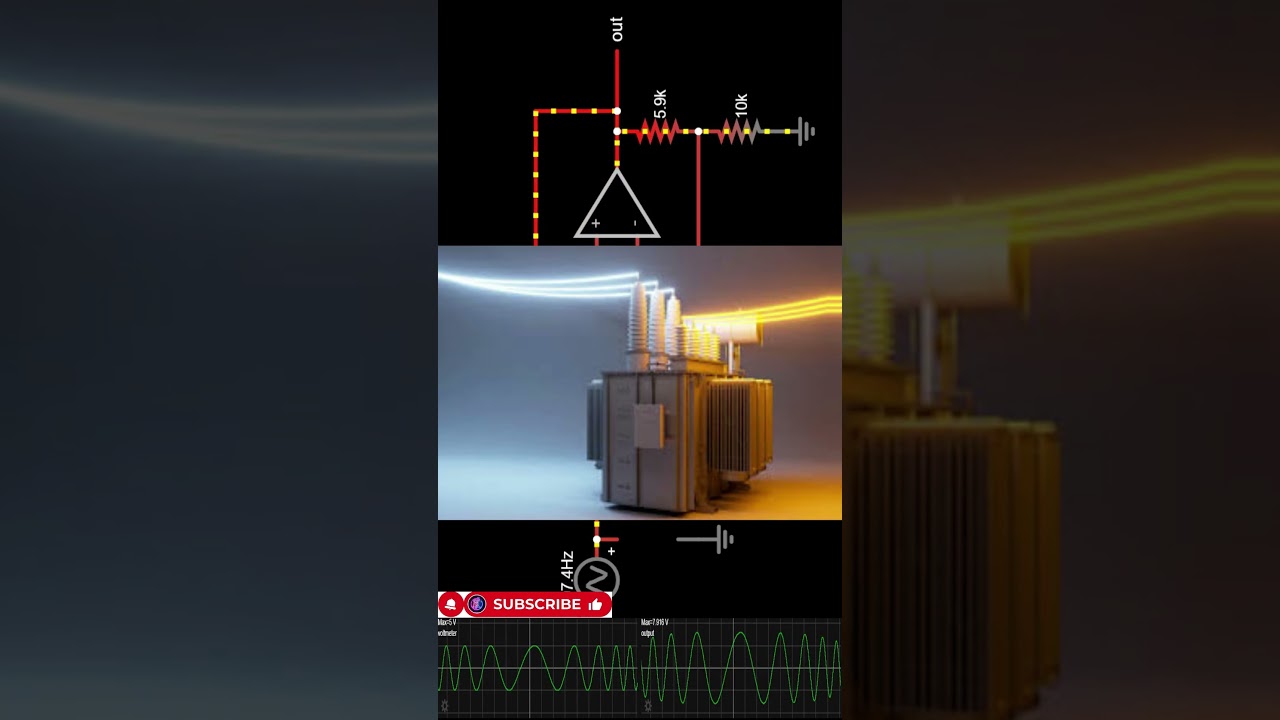
Made using an Op-Amp + R + C.
Powered using an external supply.
Provides amplification, stability, and better filtering performance.
Active low-pass filters are used in higher-quality audio and precision electronics.
🎥 About This Video
In this short animation, we clearly show how the low-pass filter works, how the capacitor behaves at different frequencies, and how the output signal is shaped.
The goal is to help beginners, students, and electronics lovers understand this very important concept in the simplest possible way.
This video is especially useful for:
O/L & A/L ICT students
Electronics beginners
Hobby circuit builders
Engineering students
Tech creators
Anyone learning filters
💡 Key Points to Remember
✔ Low frequencies pass easily
✔ High frequencies are reduced
✔ RC combination sets the cutoff frequency
✔ Used everywhere in electronics
✔ Helps reduce noise and stabilise signals
🔔 Support the Channel
If you enjoyed this demonstration and learned something new, don’t forget to:
👍 LIKE the video
🔁 SHARE it with friends
🔔 SUBSCRIBE for more electronics animations
Your support helps us create more simple, clear, and high-quality educational shorts! 💙
🎯 Hashtags for Reach
#LowPassFilter #ElectronicsShorts #RCFilter #TechEducation #ICT #EngineeringBasics #SignalProcessing #Shorts
Qulity photos download කරන්න here: https://500px.com/p/priyashansuchinthaka
Повторяем попытку...
Доступные форматы для скачивания:
Скачать видео
-
Информация по загрузке: