Building the SuperBIT Telescope: Floating to the Edge of Space with NASA in Search of Dark Matter
Автор: DunlapInstitute
Загружено: 2023-09-19
Просмотров: 17125
Описание:
Astronomers have successfully launched a balloon-borne telescope that is helping researchers investigate the mystery of dark matter after its first flight above the Earth’s atmosphere.
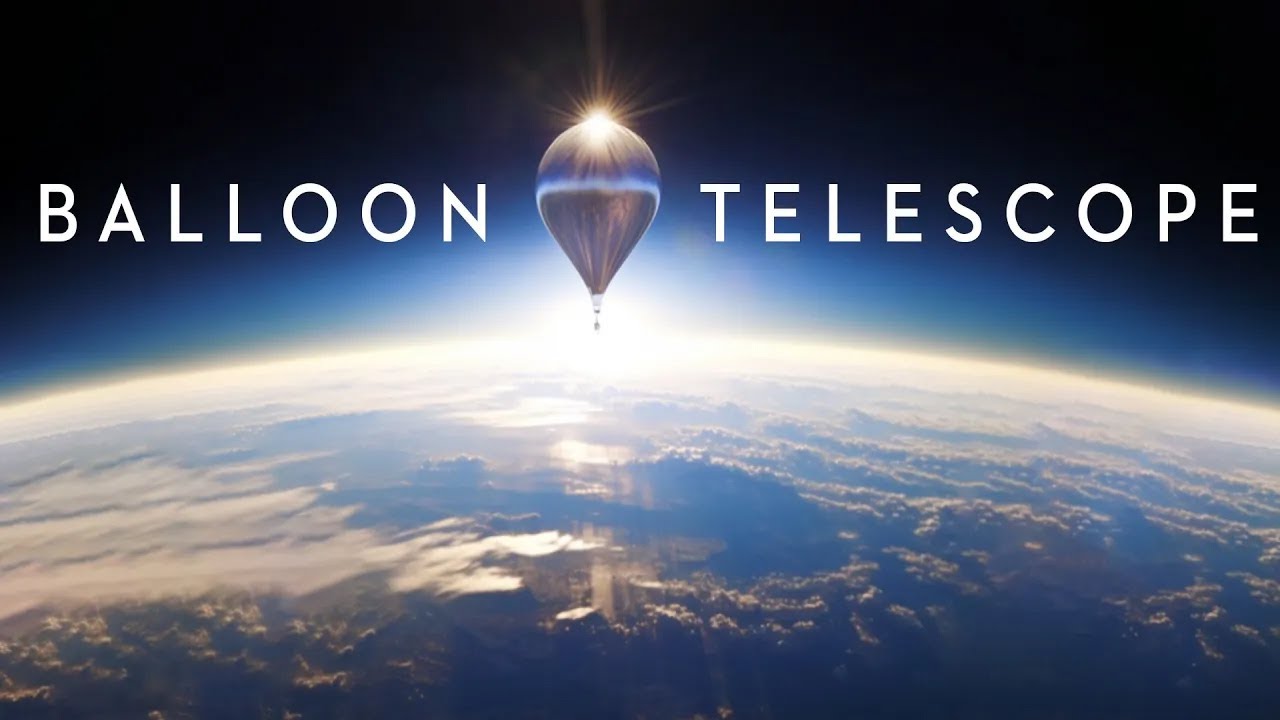
The Super Pressure Balloon-Borne Imaging Telescope (SuperBIT) was flown to the edge of space by a helium-filled NASA scientific balloon the size of a football stadium earlier this year, where it also captured extraordinary images of the Universe.
Among the first images taken on this flight, SuperBIT captured the “Tarantula Nebula” — a bright cluster of gas and dust in a galaxy neighbourhood near our Milky Way — and the collision between the two galaxies, NGC 4038 and NGC 4039, known as “the Antennae.”
Timestamps:
00:00 Prologue
00:23 Balloon Telescopes are Kinda Hard
02:41 Countdown to Texas
03:39 Why Balloon Telescopes?
05:34 Changes Since the Last Engineering Flight
07:03 104 Days Left: Image Stabilization Problems
08:10 SuperBIT's Image Stabilization Explained
09:21 49 Days Left: Coding Errors
11:28 47 Days Left: Telescope Assembly
13:10 28 Days Left: Assembly Completed
14:37 SuperBIT's Telescope Stabilization Explained
16:24 7 Days Left: Looking for Stars
21:04 What SuperBIT Means for Astronomy
24:26 2023 NASA Wanaka Launch
SuperBIT is a collaboration between Durham University, UK, the University of Toronto, Canada, Princeton University, USA, NASA, and the Canadian Space Agency.
It launched from Wānaka, New Zealand, following a two-year delay due to the COVID pandemic.
SuperBIT circumnavigated the southern hemisphere several times — imaging the sky all night, then using solar panels to recharge its batteries during the day.
SuperBIT flies at an altitude of 40km, above 99.5 per cent of the Earth’s atmosphere. It takes high-resolution images like those from the Hubble Space Telescope, but with a much wider field of view.
The science goal for this first flight was to measure the properties of dark matter, a heavy but invisible type of material. Dark matter is all around us but poorly understood.
SuperBIT aims to test whether dark matter particles can bounce off each other, by mapping the dark matter around clusters of galaxies that are colliding with neighbouring galaxy clusters.
Various theories about dark matter suggest that, during a collision, some dark matter might either slow down, spread out, or get chipped off.
The researchers say that if they can map dark matter leaving the collision, they could finally start to learn what it is made of.
“A dedicated team of students developing one of the world’s great telescopes – it’s inspiring,” says Barth Netterfield, a Professor at the David A. Dunlap Department of Astronomy and Astrophysics and Department of Physics at the University of Toronto, and an Associate at the Dunlap Institute for Astronomy and Astrophysics. “And now, after a decade of tremendous effort, we are getting these exquisite images with a wide range of science goals, which will help us to better understand the Universe.”
Funding for the SuperBIT mission has been provided by NASA, the Canadian Space Agency, the Royal Society, and the Dunlap Institute for Astronomy and Astrophysics.
Archival footage courtesy of BLAST (2008)
--
About NASA’s Scientific Balloon program
NASA’s Scientific Balloon program, managed from the Agency’s Wallops Flight Facility, flies about a dozen balloon missions annually from the United States and worldwide locations, such as New Zealand, Sweden, and Antarctica. The program supports scientific investigations largely in the field of Astrophysics along with supporting technology development and student flight opportunities.
--
About the Dunlap Institute:
The Dunlap Institute for Astronomy and Astrophysics at the University of Toronto is an endowed research institute with over 80 faculty, postdocs, students, and staff, dedicated to innovative technology, groundbreaking research, world-class training, and public engagement. The research themes of its faculty and Dunlap Fellows span the Universe and include: optical, infrared and radio instrumentation, Dark Energy, large-scale structure, the Cosmic Microwave Background, the interstellar medium, galaxy evolution, cosmic magnetism and time-domain science. The Dunlap Institute, the David A. Dunlap of Astronomy and Astrophysics, and other researchers across the University of Toronto's three campuses together comprise the leading concentration of astronomers in Canada, at the leading research university in the country. The Dunlap Institute is committed to making its science, training, and public outreach activities productive and enjoyable for everyone of all backgrounds and identities.
--
Follow Us!
Instagram: @dunlap_institute
Twitter: @dunlapinstitute
Facebook: @dunlapinstitute
#Science #Technology #Education #Learning #JamesWebbSpaceTelescope
Filmed and directed by Jonathan Qu and Kevin Li
Повторяем попытку...
Доступные форматы для скачивания:
Скачать видео
-
Информация по загрузке:

![Weather Balloon Flight to Stratosphere [Uncut]](https://image.4k-video.ru/id-video/KnxvS9XFJnE)