Bruce Lee vs Mike Tyson: A Physics Engineer Solves It (F=ma Proves Everything)
Автор: Bruce Lee: The Untold Legacy
Загружено: 2026-02-02
Просмотров: 42
Описание:
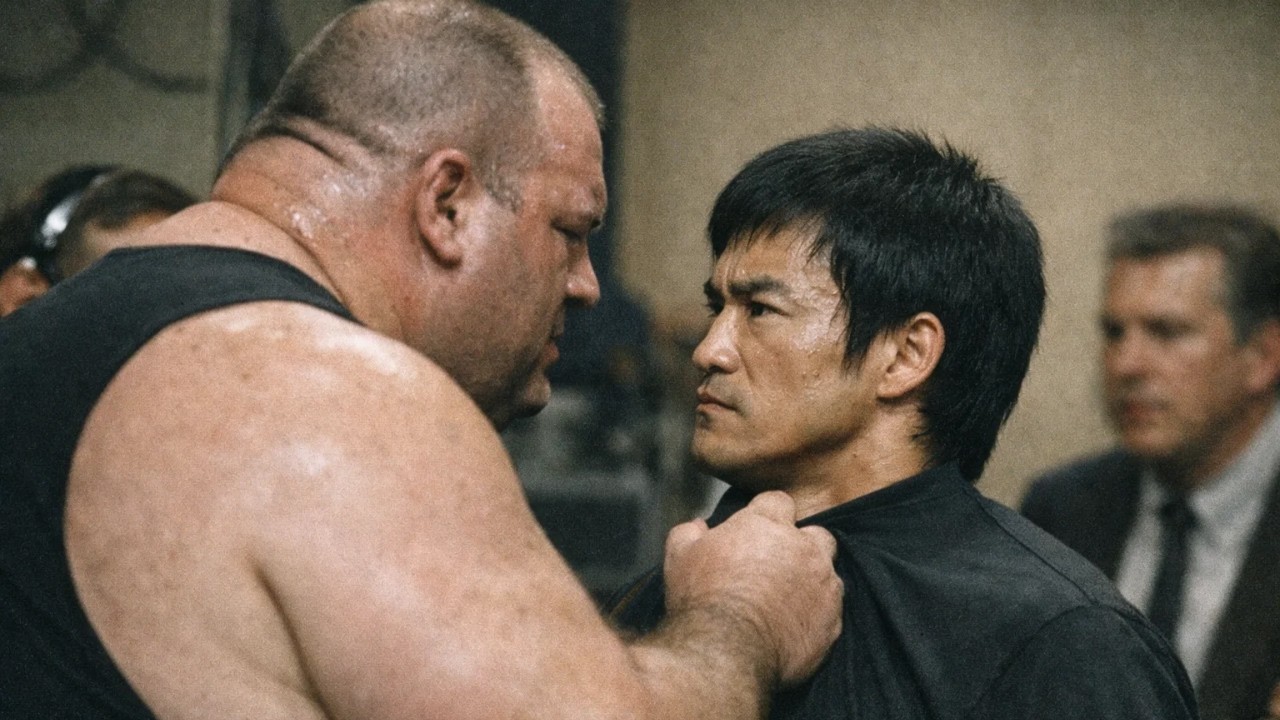
Can a 135-pound man defeat a 220-pound heavyweight champion? Physics has the answer.
Bruce Lee vs. Mike Tyson. Speed vs. Mass. Acceleration vs. Momentum.
This is the most requested hypothetical fight in combat sports history. And most people answer it with emotion, bias, or fandom. We're answering it with Newton's Second Law: F = ma.
🔬 IN THIS SCIENTIFIC ANALYSIS:
The physics of Bruce Lee's one-inch punch (F = ma breakdown)
How acceleration compensates for lower mass
Biomechanical leverage and kinetic energy transfer (KE = ½mv²)
Mike Tyson's peek-a-boo power generation mechanics
Why mass × velocity creates devastating momentum (p = mv)
The structural durability advantage of heavyweight conditioning
Scientific simulation: What actually happens when they collide
Why physics gives both men legitimate paths to victory
This isn't fandom. This is engineering applied to martial arts.
📚 SCIENTIFIC SOURCES:
Newton's Laws of Motion (Principia Mathematica)
High-speed footage analysis of Bruce Lee's striking mechanics
Boxing science studies on Mike Tyson's measured punching force
Biomechanics research on kinetic chain force transfer
Sports physics: velocity, acceleration, and impact force calculations
Combat sports injury data and structural damage thresholds
🥊 THE FIGHTERS:
*Bruce Lee (Prime: 1973)*
Height: 5'7" (170 cm)
Weight: 135 lbs (61 kg)
Striking speed: ~0.05 second impact time
One-inch punch force: 350-400 lbs
Training: Multi-disciplinary (Wing Chun, Boxing, Fencing, Jeet Kune Do)
Strategy: High acceleration, biomechanical efficiency, neurological targeting
*Mike Tyson (Prime: 1986-1988)*
Height: 5'10" (178 cm)
Weight: 220 lbs (100 kg)
Left hook force: ~1,178 lbs (measured)
Professional record: 50-6, 44 KOs
Training: Peek-a-boo boxing, heavyweight conditioning
Strategy: Momentum transfer, structural damage, durability advantage
⚖️ THE PHYSICS:
*Force Generation:*
F = ma (Force = Mass × Acceleration)
Bruce optimizes "a" (acceleration)
Tyson optimizes "m" (mass)
Both generate significant force through different mechanisms
*Kinetic Energy:*
KE = ½mv² (Kinetic Energy = ½ × Mass × Velocity²)
Bruce's velocity squared compensates for lower mass
Small speed increases = exponential energy increases
*Momentum:*
p = mv (Momentum = Mass × Velocity)
Tyson's 64% mass advantage creates superior momentum
Momentum determines impact force transfer to target
💬 THE ENGINEERING QUESTION:
Does pure physics determine fight outcomes, or do variables like:
First strike accuracy
Environmental factors (space, terrain)
Psychological pressure
Defensive timing
Durability under sustained strikes
...create too much chaos for equations to predict?
🔗 RELATED VIDEOS:
Gene LeBell & Bruce Lee: When Size Met Technique
The Physics of the One-Inch Punch (Scientific Breakdown)
Mike Tyson's Peek-a-Boo: Biomechanical Analysis
🔔 SUBSCRIBE for more physics-based combat analysis. We solve martial arts debates with engineering, not emotion.
#BruceLee #MikeTyson #Physics #MartialArts #Boxing #Engineering #Biomechanics #ForceAnalysis #SpeedVsMass #CombatScience #NewtonsLaw #KineticEnergy #Documentary
© 2025 Bruce Lee: The Untold Legacy
Повторяем попытку...

Доступные форматы для скачивания:
Скачать видео
-
Информация по загрузке: