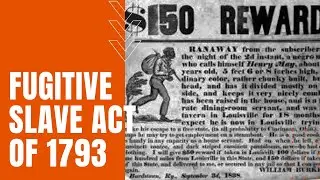
The $1,000 Fine: Why the North Hated the Fugitive Slave Act
Автор: George Explains Georgia
Загружено: 2026-01-08
Просмотров: 111
Описание:
Imagine living in a time where the law forced you to help capture people who were running away to find freedom. In this video, we look at the Fugitive Slave Acts of 1793 and 1850, two of the most controversial laws in American history that made the fight over slavery much more intense
What were these laws? These were rules passed by Congress that allowed for the capture and return of enslaved people who had escaped to other states or territories.
The 1793 Law: The first law was signed by George Washington. It allowed judges to decide the fate of a runaway person without a jury trial. This made many people in the North angry, and they began to help enslaved people escape through the Underground Railroad. Some Northern states even passed "personal-liberty laws" to try to protect these people.
The 1850 Law (The Stricter Rule): Because the South wanted a stronger law, a second act was passed as part of the Compromise of 1850. This new version was much harsher:
• No Voice: Runaway people were not allowed to testify or speak for themselves in court.
• No Jury: There were no jury trials to decide if someone was actually a runaway.
• Forced Help: Federal marshals and even regular citizens were commanded to help catch runaways. If a marshal refused or let someone escape, they could be fined $1,000.
• Big Penalties: Anyone caught helping an enslaved person escape or hiding them could be fined $1,000 and sent to jail for six months
Why did it fail? Even though the laws were meant to help enslavers, they actually made more people in the North become abolitionists (people who wanted to end slavery). The Underground Railroad became even more active, and the bitterness between the North and South grew so strong that it eventually helped lead to the Civil War. These laws weren't finally ended until June 28, 1864.
#FugitiveSlaveActs #USHistory #5thGradeHistory #UndergroundRailroad #HistoryForKids #AmericanHistory #FreedomSeekers #CivilWarHistory #SocialStudies #CompromiseOf1850 #HistoricalLaws #LearningIsFun #HelpingFreedom
Analogy for Understanding: Think of it like a game of "Hide and Seek" where the seeker is much more powerful. Usually, if you find a safe spot, you are safe. But then, a new rule is made that says everyone else playing the game must help the seeker find you, and if they don't, they get in big trouble. Instead of making the game "fair," this new rule made everyone so upset that they decided they didn't want to play by the rules anymore.
Повторяем попытку...

Доступные форматы для скачивания:
Скачать видео
-
Информация по загрузке: