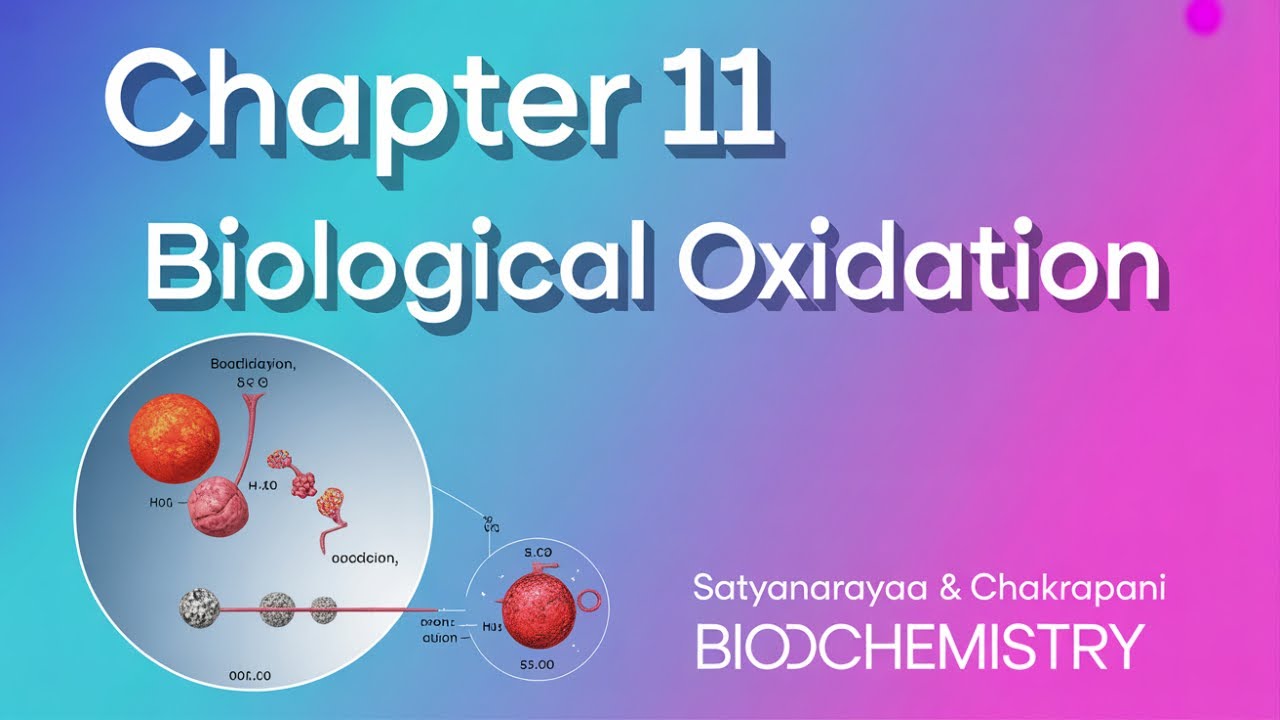
Chapter 11 Biological Oxidation | How Your Cells Make Energy ATP
Автор: Definition
Загружено: 2025-12-12
Просмотров: 9
Описание:
Welcome to this MBBS Biochemistry lecture on Biological Oxidation, based on U. Satyanarayana & U. Chakrapani Biochemistry (Latest Edition) and other standard medical textbooks.
In this video, we explore oxidation-reduction reactions, biological oxidising systems, electron carriers, cytochromes, dehydrogenases, oxidases, oxygenases, and the complete framework of the electron transport chain (ETC) and oxidative phosphorylation.
This is a high-yield, exam-oriented lecture for MBBS, BDS, Nursing, Pharmacy, and NEET-PG learners.
📘 BIOLOGICAL OXIDATION — FULL EXPLANATION
⭐ 1️⃣ What Is Biological Oxidation?
Biological oxidation refers to enzyme-mediated oxidation–reduction (redox) reactions in living cells.
It involves the transfer of electrons from reduced substrates to acceptors, producing energy, primarily in the form of ATP.
In the human body, mitochondria are the primary sites of cellular respiration.
⭐ 2️⃣ Importance of Biological Oxidation
Generates ATP via oxidative phosphorylation
Removes hydrogen atoms from metabolic fuels
Supports biosynthesis, detoxification, and metabolism
Maintains redox balance (NAD⁺/NADH, NADP⁺/NADPH)
Essential for oxygen utilisation
⭐ 3️⃣ Components of Biological Oxidation
The body uses several specialised oxidising enzymes and electron carriers.
A. DEHYDROGENASES (Most Common)
These enzymes remove hydrogen atoms from substrates.
Coenzymes:
NAD⁺ (catabolic reactions)
NADP⁺ (anabolic reactions)
FAD, FMN (flavoproteins)
Examples:
Lactate dehydrogenase
Malate dehydrogenase
Glucose-6-phosphate dehydrogenase (NADPH pathway)
B. OXIDASES
Transfer electrons to oxygen to form water or hydrogen peroxide.
Examples:
Cytochrome oxidase (ETC Complex IV)
Xanthine oxidase
Monoamine oxidase (MAO)
Some oxidases generate H₂O₂, which requires catalase or peroxidase to be degraded.
C. OXYGENASES
Incorporate one or both atoms of oxygen into substrates.
Types:
Monooxygenases / Mixed-function oxidases
Dioxygenases
Examples:
Cytochrome P450 enzymes
Tryptophan dioxygenase
Essential in drug metabolism, steroid synthesis, and detoxification.
D. HYDROGEN PEROXIDASES & CATALASE
These enzymes destroy harmful peroxides (H₂O₂).
Catalase converts H₂O₂ → water + oxygen.
Protects cells from oxidative damage.
⭐ 4️⃣ Electron Transport Chain (ETC) — The Heart of Biological Oxidation
Located in the inner mitochondrial membrane.
Sequence of Electron Carriers:
NADH → Complex I → CoQ → Complex III → Cytochrome c → Complex IV → Oxygen
or
FADH₂ → Complex II → CoQ → Complex III → Cytochrome c → Complex IV
Major Components:
Complex I (NADH dehydrogenase)
Complex II (Succinate dehydrogenase)
Coenzyme Q (Ubiquinone)
Complex III (Cytochrome bc₁ complex)
Cytochrome c
Complex IV (Cytochrome c oxidase)
Oxygen is the final electron acceptor, reduced to water.
⭐ 5️⃣ Oxidative Phosphorylation — ATP Generation
Energy released during electron transfer pumps protons into the intermembrane space, creating a proton gradient.
ATP synthase (Complex V) uses this gradient to convert:
ADP + Pi → ATP
Known as the chemiosmotic mechanism (Mitchell’s hypothesis).
⭐ 6️⃣ Free Energy Changes
Transfer of electrons from NADH to oxygen releases a significant amount of energy (~53 kcal/mol), thereby driving ATP synthesis.
⭐ 7️⃣ Uncouplers of Oxidative Phosphorylation
These substances allow electron transport but block ATP synthesis by dissipating the proton gradient.
Examples:
2,4-Dinitrophenol (DNP)
Thermogenin (brown fat)
Excess thyroxine
Effects:
↑ Heat production
↓ ATP generation
↑ Oxygen consumption
⭐ 8️⃣ Inhibitors of ETC (High-Yield Exam Topic)
Rotenone, Barbiturates → inhibit Complex I
Antimycin A → inhibits Complex III
Cyanide, Carbon monoxide (CO) → inhibit Complex IV
Oligomycin → inhibits ATP synthase (Complex V)
⭐ 9️⃣ Reactive Oxygen Species (ROS) & Antioxidants
Incomplete reduction of oxygen forms:
Superoxide (O₂•⁻)
Hydrogen peroxide (H₂O₂)
Hydroxyl radicals (•OH)
Antioxidant defences include:
Superoxide dismutase
Catalase
Glutathione peroxidase
Vitamins C, E, and β-carotene
Imbalance leads to oxidative stress, implicated in ageing, cancer, and neurodegeneration.
⭐ 10️⃣ Clinical Applications
ETC inhibitors → severe tissue hypoxia
Cyanide poisoning → lactic acidosis, seizures, coma
MAO inhibitors used in depression
G6PD deficiency increases oxidative stress
P450 enzymes crucial for drug metabolism
📚 REFERENCES:
U. Satyanarayana & U. Chakrapani – Biochemistry (Latest Edition)
#BiologicalOxidation #ElectronTransportChain #OxidativePhosphorylation #Cytochromes #Dehydrogenases #Oxidases #P450 #MBBSBiochemistry #USatyanarayana #ETC
biological oxidation,
electron transport chain,
oxidative phosphorylation,
cytochromes,
dehydrogenases,
oxidases,
oxygenases,
reactive oxygen species,
uncouplers,
etc inhibitors,
satyanarayana biochemistry,
clinical biochemistry mbbs
Повторяем попытку...
Доступные форматы для скачивания:
Скачать видео
-
Информация по загрузке: