High Luminosity Large Hadron Collider
Автор: UPES Infinity Space Club
Загружено: 2021-03-27
Просмотров: 247
Описание:
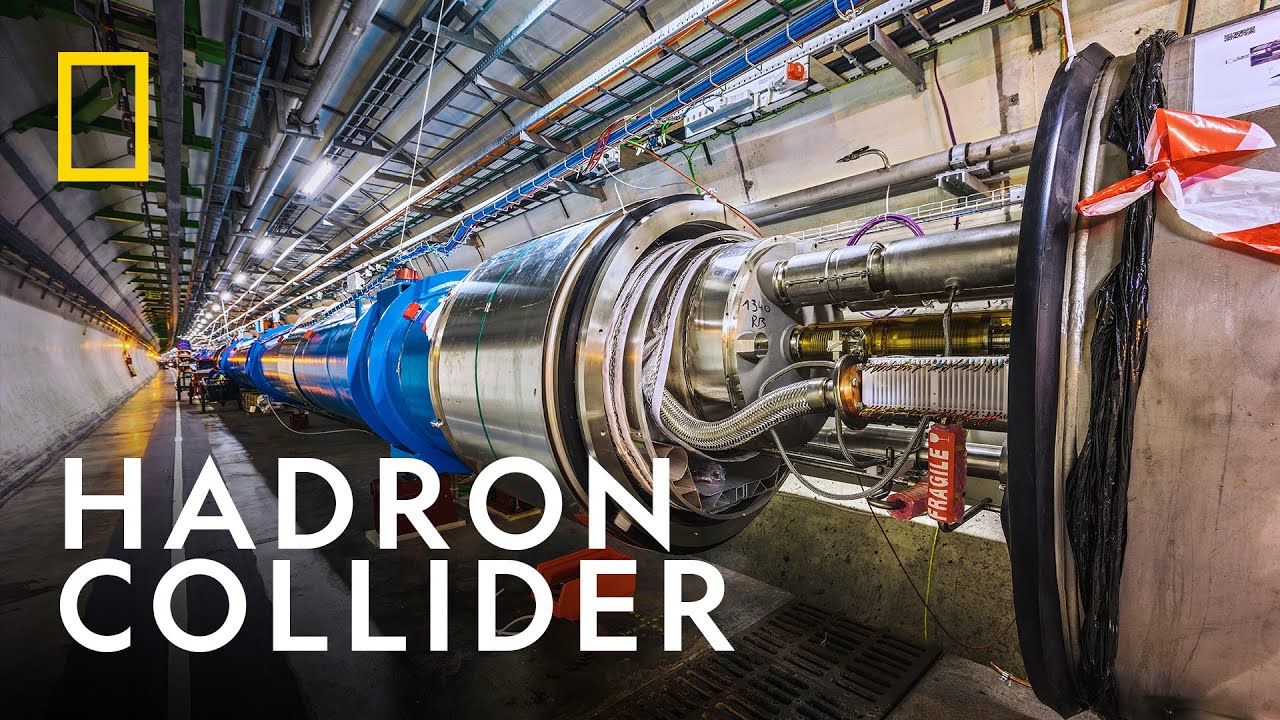
The Large Hadron Collider (LHC) at CERN, which is situated at the Franco-Swiss border near Geneva, is the largest scientific instrument ever designed and built for scientific research. It has been exploring the new high-energy frontier since 2010, attracting a global user-community of more than 7,000 scientists spanning more than 60 countries. Since March 2010, LHC has been producing proton-proton collisions at 7, and then at 8 TeV centre-of-mass energy, a factor of 4 greater than the previous record (held by Tevatron at the Fermi National Laboratory, USA). On 4th July 2012 the LHC experiments, ATLAS and CMS, announced the first major discovery: the long-sought Higgs boson, the cornerstone of the Standard Model (SM) of particle physics. This announcement has been heralded by scientists, as well as by the media, as a giant leap in the understanding of our world and the origin of universe.
After a two-year long shutdown in spring 2015, the LHC restarted delivering proton-proton collisions at a new record of 13 TeV centre-of-mass energy. In order to further increase its discovery potential around the mid-2020's, LHC would eventually need an upgrade to increase the total number of collisions by a factor of 10. A more powerful LHC would provide more accurate measurements of new particles and enable observation of rare processes that occur below the current sensitivity level. This would make it possible to detect rare events not previously witnessed, and increase our understanding of the energy frontier. How this should be done is at the heart of the High Luminosity LHC project (HL-LHC), of which the design phase was supported in part by funding from the Seventh Framework Programme (FP7) of the European Commission, the HiLumi LHC Design Study.
Повторяем попытку...

Доступные форматы для скачивания:
Скачать видео
-
Информация по загрузке: