The Evolution of the Sawmill
Автор: North Country History with Rob Burg
Загружено: 2025-07-27
Просмотров: 61
Описание:
The lumber boom of the second half of the 19th Century in the Great Lakes Region was fueld by the demand for more lumber due to the fast growth in the United States after the Civil War. This included the completion of the Transcontinental Railroad and the opening of places like the Great Plains for new settlement.
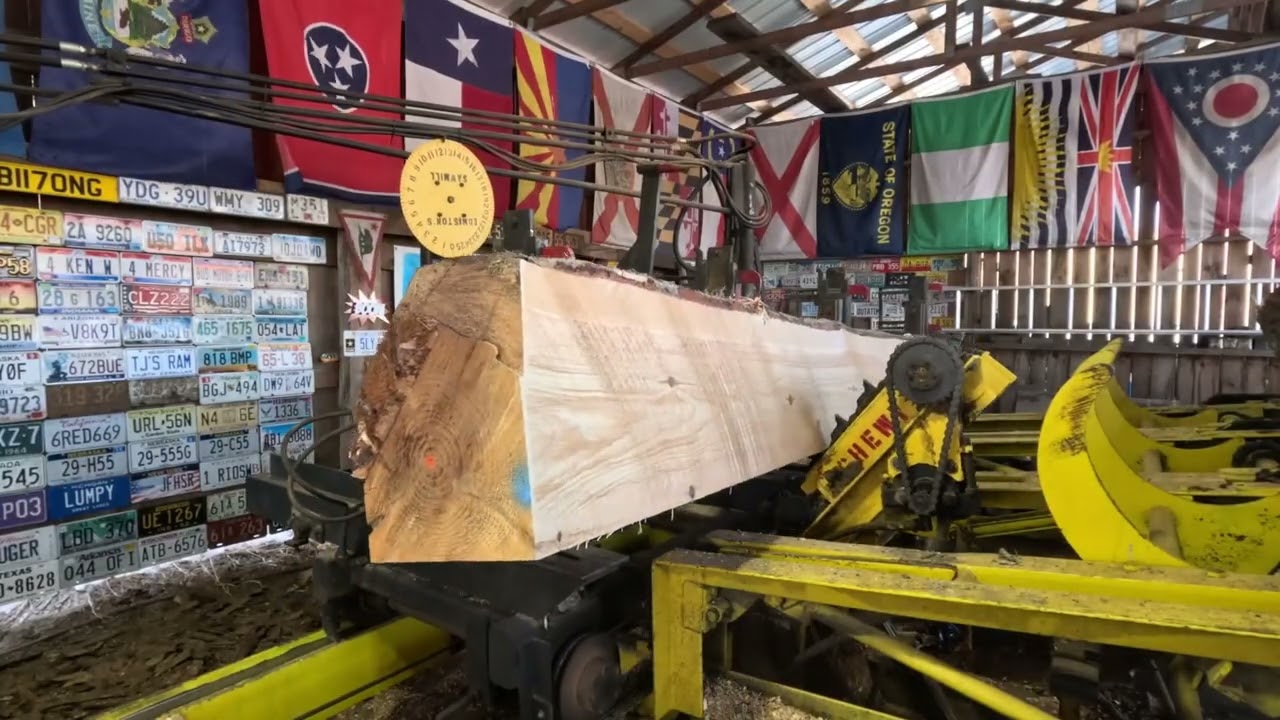
To meet this growing demand, new technology was introduced and perfected to aid in the greater harvesting of the forests and to increase the supply of wood products to the consumer. In last week's episode we covered one part of this with the introduction of railroad logging that allowed more of the forests to be accessed and for logging to expand into a year-round operation. This week we discuss the evolution of the sawmills to increase the amount of lumber that could be cut at the mills.
The earliest sawmills in North America, dating back to the 1630s in Maine, were water-powered affairs. These mills required a swift stream to provide the energy to operate the crude saws located within the mills. These were saws that to the uninformed looked rather like a large sawblade that was used for sawing logs by hand placed into a frame that was moved by the water current below or aside the mill. These saws were faster than cutting by hand (two men) pulling a pit saw to cut a log into lengths of planks. Waterpowered sawmills were continuously improved to make them faster and more efficient. Eventually the circular saw blade would be introduced and with the addition of steam power around 1840, this would make sawmills able to provide lumber for not just small communities, but for growing cities as well.
Circular saws would be the major technolgy for the next thirty years, but along with the railroad, the next evolution in the lumber industry would be the band saw. Like most of these technologies, the band saw was invented earlier than it's popular adaptation, and was a product of Great Britain's Industrial Revolution of the 18th and 19th centuries. The band saw eliminated most of the waste of the circular saw and with a much faster saw, increased the amount of lumber being cut. Band saws would not totally eliminate the use of circular saws though. The circular saw remained an important tool in large mills to do prep cuts and work on smaller jobs. Small mills, and even portable mills relied on the cheaper and lighter circular saws for small jobs.
If you would like to support the podcast, please visit this link:
https://northcountryhistorywithrobbur...
Note: In the episode I keep mentioning that England was where the saws, the steam engine, etc. were invented. What I really meant was Great Britain. Scotland was just as much an important location of industrialization and innovation as England. The inventor James Watt was Scottish, not English.
Episode Resources:
Fries, Robert F. Empire in Pine: The Story of Lumbering in Wisconsin 1830-1900. William Caxton, Ltd. Ellison Bay, WI. 1951, (1989 revised edition).
Mabel Edwards Secord Papers. The Michigan Historical Collections, Bentley Historical Library, University of Michigan, Ann Arbor, Michigan.
Salling, Hanson and CompanyBusiness Records. The Michigan Historical Collections, Bentley Historical Library, University of Michigan, Ann Arbor, Michigan.
Wakerle, Mary. Correspondence relating to Frank Kellogg. Historical newspaper clippings and letter. Received in 2014.
To leave a comment, send me a text here. (https://www.buzzsprout.com/twilio/tex...)
Support the show (https://www.buzzsprout.com/2422296/su...)
Повторяем попытку...

Доступные форматы для скачивания:
Скачать видео
-
Информация по загрузке:












![Почему взрываются батарейки и аккумуляторы? [Veritasium]](https://imager.clipsaver.ru/a3-3R9zwyGY/max.jpg)