GAMES PEOPLE PLAY #15 - Dice, change & The Anthropic Principle
Автор: mistermetaphor
Загружено: 2017-04-14
Просмотров: 61
Описание:
Song is 'Tenga Tango' by James Brown (1964).
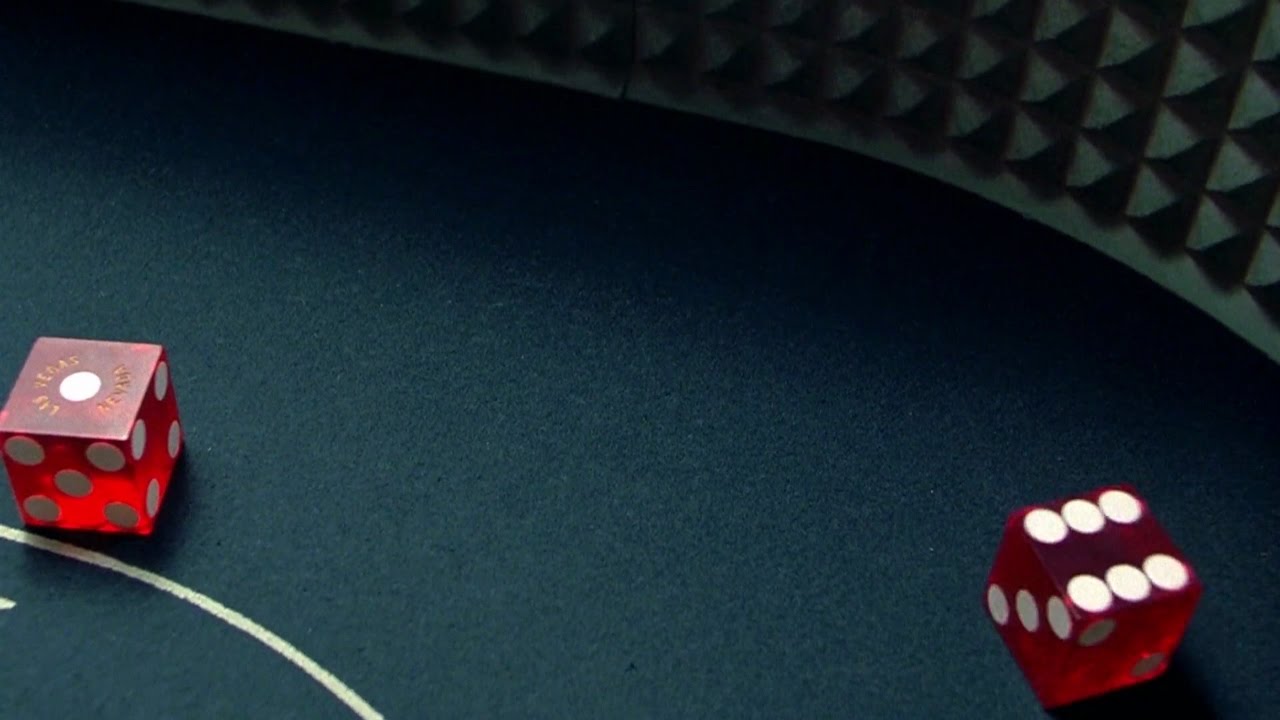
All footage from CASINO (1995), OCEAN'S 11 (2001), OCEAN's 12 (2004), OCEAN'S 13 (2007), THE COOLER (2003), INDECENT PROPOSAL (1993), DIAMONDS ARE FOREVER (1971). JUMANJI (1995).
"Regarding chance versus destiny, at least of human existence, there is a rather elegant philosophical concept called The Anthropic Principle. Quite simply, it explains away the astronomical chances that went into the just right ‘Goldilocks conditions’ that allowed conscious beings to evolve in the universe. This universe. Our universe. According to The Anthropic Principle, we could only be living in the kind of universe which is capable of giving rise to beings such as ourselves.
By the very fact that we are here to observe anything at all, means that we are in a cosmologically friendly universe, capable of producing conscious beings capable of asking questions about its own place in that universe. Each & every member of our species can look up into the infinite depths of space and quite rightly wonder “What are the chances?” That the laws of physics would be so finely tuned. That stars would form. That life would evolve. That such life would grow so complex it could step outside to look back onto itself, and onto the infinite out there… But the fact of the matter is that whatever the chances are, they happened, as proven by our very act of asking.
In fact, the evolutionary biologist Alfred Russel Wallace anticipated the anthropic principle as long ago as 1904:
"Such a vast and complex universe as that which we know exists around us, may have been absolutely required in order to produce a world that should be precisely adapted in every detail for the orderly development of life, culminating in man."
It is fitting that we bring up Russel Wallace when we discuss the chances of fate and destiny. Because while Wallace and Darwin both published their similar findings about the evolution of organisms at the same time, there is a reason we call it Darwinism, rather than Wallace-ism. And it is for the simple fact that Darwin was destined to discover natural selection. If you read his earlier Voyage of the Beagle journal entries, discussing the slight differences in finch beaks between Galapogas islands, you can hear it on the tip of his tongue.
Even before Charles Darwin’s birth, his grandfather, an esteemed poet named Erasmus Darwin, anticipated Survival of the Fittest in his Zoonomia epic poem, a half century before his grandson would scientifically articulate the idea. Erasmus wrote that the strongest and most active animal should propagate the species, which should thence become improved. He spoke of the “three great objects of desire” for every organism:
“Lust, hunger, and security,” and that through these factors interacting with each other, all the varied forms of the world could be explained, from the smallest insect to the human animal itself.
The Zoomania poem:
Hence without parent by spontaneous birth
Rise the first specks of animated Earth;
From Nature's womb the plant or insect swims,
And buds or breathes, with microscopic limbs.
Organic Life beneath the shoreless waves
Was born and nurs'd in Ocean's pearly caves
First forms minute, unseen by spheric glass,
Move on the mud, or pierce the watery mass;
These, as successive generations bloom,
New powers acquire, and larger limbs assume;
Whence countless groups of vegetation spring,
And breathing realms of fin, and feet, and wing."
Speaking about his poem, he asked,
“Would it be too bold to imagine, that in the great length of time, since the earth began to exist, perhaps millions of ages before the commencement of the history of mankind, would it be too bold to imagine, that all warm-blooded animals have arisen from one living filament, which The First Great Cause endued with animality, with the power of acquiring new parts, attended with new propensities, directed by irritations, sensations, volitions, and associations; and thus possessing the faculty of continuing to improve by its own inherent activity, and of delivering down those improvements by generation to its posterity, world without end!”
Many modern physicists who abide by The Anthropic Principle, they do so with a Darwinian twist via the Multiverse Theory. Basically, there’s a countless number of universes, each with their physical laws tuned slightly differently. We’re simply in one of the ones that survived long enough to produce life on at least one planet, as well as making a bunch of black holes to start other, smaller, pocket universes. So if Multiverse Theory is true, that means that right now, somewhere in a galaxy far, far away… Star Wars is actually happening."
Повторяем попытку...
Доступные форматы для скачивания:
Скачать видео
-
Информация по загрузке: