How Stock Buybacks Created Modern Inequality
Автор: System Thinker
Загружено: 2026-01-16
Просмотров: 21
Описание:
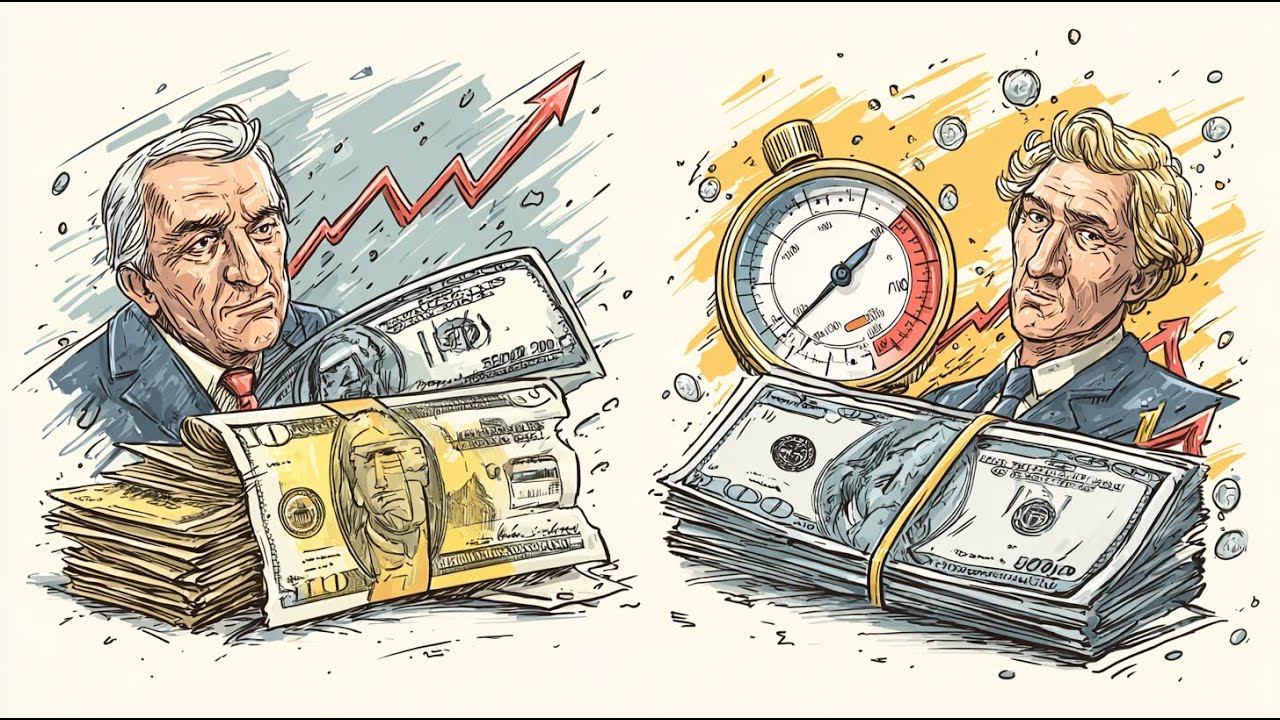
An examination of the structural and philosophical changes that legalized stock buybacks, transforming them from a felony into a corporate imperative.
Core Thesis:
The 1982 SEC Rule 10b-18 was a pivotal policy change, driven by neoliberal ideology, that decoupled stock market performance from the real economy, fueling systemic wealth inequality.
Chronological Analysis:
1. Ideological Shift: Neoliberalism prioritizes capital accumulation over societal benefit.
2. Political Action: Business interests in the 1970s push for deregulation.
3. Policy Implementation (1980s):
SEC Rule 10b-18 provides a legal safe harbor for stock buybacks.
Shift from defined-benefit pensions (corporate risk) to 401(k)s (individual risk).
4. Economic Consequence:
Engineered a massive upward transfer of wealth.
Increased financial risk for the general population.
Data Point:
The income ratio between the top
0.1% and the bottom 90% exploded from ~35:1 in the 1970s to over 150:1 by the 2010s.
Summarizes the structural and philosophical transition that allowed stock buybacks, once considered market manipulation, to become a celebrated corporate mandate, leading to systemic wealth inequality. The main claim is that a series of quiet institutional changes, primarily the 1982 SEC Rule 10b18, fundamentally decoupled stock market performance from the real economy, driven by a shift from classical liberalism to neoliberal hegemony. The logic is a chronological tracing of cause and effect: the ideological shift (neoliberalism) created the environment where capital accumulation became the goal rather than a means to societal improvement; this environment enabled a strategic political push by the business community in the 1970s; this political power led to key policy changes in the 1980s (Rule 10b18 legalizing buybacks, the shift from pensions to 401ks, and the Secondary Mortgage Market Enhancement Act); these policies engineered a massive upward transfer of wealth and risk, resulting in an explosion of economic inequality not seen since the 1920s. The video uses the contrast between the pre-1982 legal status of buybacks (a felony) and the post-1982 status (a safe harbor) to illustrate the core policy change. It also uses the difference between defined benefit pensions (company risk) and 401ks (individual risk) to demonstrate the transfer of financial burden from corporations to workers. The resulting data shows the income ratio between the top 0.1% and the bottom 90% increased from approximately 35:1 in the mid-1970s to 150-200:1 by the early 2010s.
Повторяем попытку...
Доступные форматы для скачивания:
Скачать видео
-
Информация по загрузке: