Plato (HINDI/हिंदी में)
Автор: SyllabuswithRohit
Загружено: 2025-05-07
Просмотров: 86819
Описание:
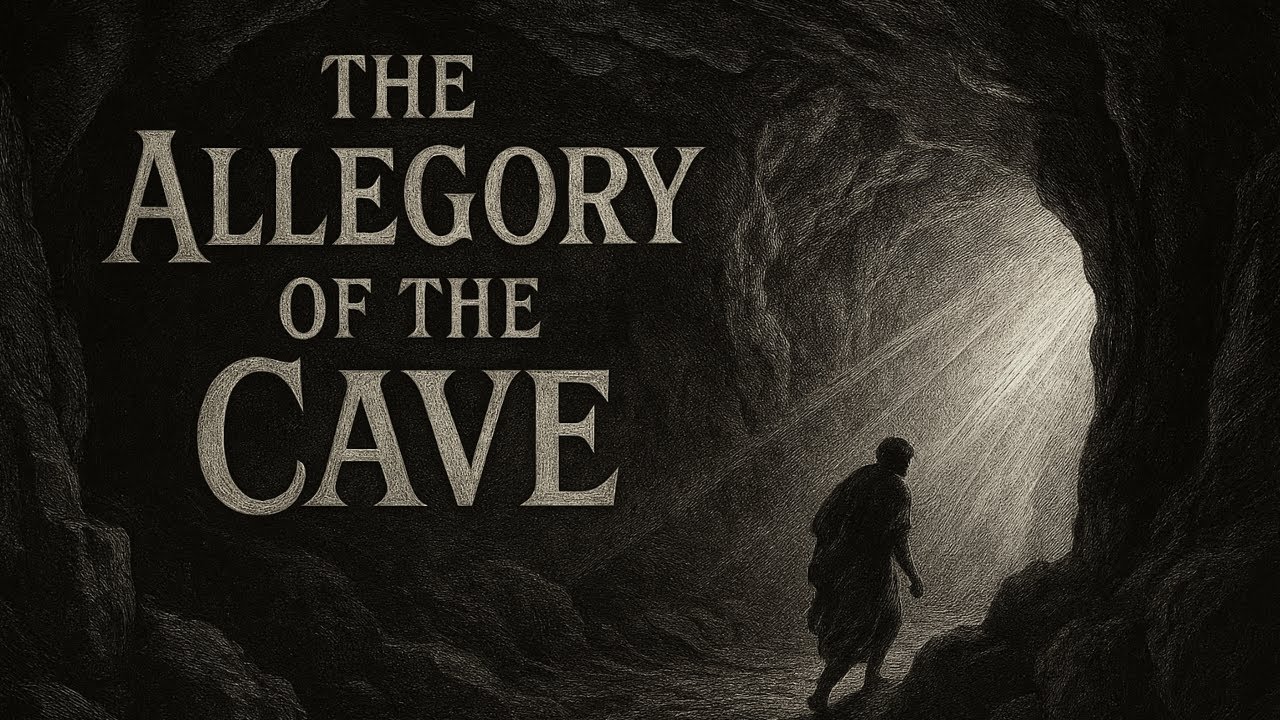
Stone walls shut out the sun. A line of people sits on the cold floor. Each person wears heavy chains on the neck and feet. No one can turn the head. All eyes look at one flat wall. A bright fire burns behind them. The fire is the only light in the cave.
Between the fire and the prisoners lies a low walkway. On it other people carry small wooden shapes. They hold up a horse, a tree, a child, and a cup. Firelight hits the shapes. Dark shadows dance across the wall. Echoes of steps and voices fill the air.
The chained people watch these shadows day after day. They play games. They guess which shadow will appear next. They clap for the best guesses. They give names to the shapes. For them the moving shadows are the only real things. They have never seen the wood, the walkway, or the fire.
One day the lock on one prisoner’s chain snaps. The metal drops with a loud ring. The freed man stands. His legs shake because they are weak. He turns toward the light behind him. The flames burn his eyes. He feels pain and wants to sit again. Yet he keeps looking.
He sees the wooden horse that makes the horse shadow. He sees the hands that carry the horse. Shock races through him. The wall show was only a copy. The real items were behind him the whole time. A helper pulls his arm and leads him up a rough tunnel.
The tunnel climbs steeply. Stones cut his feet. Air grows cooler. A white glow shines at the far end. He steps into the open. Sunlight floods his face. It blinds him harder than the fire did. He falls and closes his eyes. Minutes pass before he dares to peek.
First he sees bright lines on a pool. Then he sees the water itself. Next he sees grass, birds, and trees. At last he lifts his head and looks at the round sun. He understands a chain: the sun makes daylight, daylight shows real objects, objects cast reflections, reflections explain the shadows.
Memory pulls him back to his friends. They still sit in chains. They still think shadows are real. He feels he must help them. He walks down the tunnel. After strong sunlight, the cave seems black. He stumbles and loses balance. The seated people laugh.
He tells them about the fire, the toys, and the sky. His words sound strange. He says “green leaves” and “blue sky,” but they know only gray. Some think the climb hurt his mind. A few grow angry. They say their game is the truth. They threaten to strike him if he does not stop.
Each part of the story has a lesson. The cave stands for the world of sight and sound. The shadows stand for quick images and rumors. The wooden shapes stand for facts. The fire stands for plain reason that still leans on senses. The steep tunnel stands for hard study. The bright world outside stands for ideas that never break. The sun stands for the highest good that lights every mind.
The freed man’s trip shows four steps of knowing. First is guessing from shapes on a wall. Second is trusting facts about those shapes. Third is linking facts with clear rules like math. Fourth is seeing the first cause that makes every rule work. Most people stay on the lower steps. A few climb all the way and come back to guide.
Truth can hurt the eyes. Pride can crack. Friends can mock. Even so the new sight is worth the pain. The learner shares the light because the climb gave it.
Today the cave looks like screens that flash news and ads. Tiny shadows move on glass. Code picks which shape you see. To break new chains, read slowly, ask deep questions, and spend time outside. When you find brighter light, return and teach with care. Old shadows fade when real light fills the space.
Plato leaves the ending open. No guard locks the door. No hero saves the crowd. The choice to rise belongs to every watcher. The climb starts with one step: turn and look behind the fire. --------
🙏 Support the Channel:
🔸 Support via UPI: syllabuswithrohit@upi
🔸 Buy Me A Coffee: buymeacoffee.com/SyllabuswithRohit
Повторяем попытку...
Доступные форматы для скачивания:
Скачать видео
-
Информация по загрузке: