Molecular Orbitals of the Azide Anion (Physical Chemistry)
Автор: Casual Chemistry
Загружено: 2021-04-15
Просмотров: 7997
Описание:
A way of thinking about constructing a qualitative MO diagram for the azide anion.
#chemistry #physicalchemistry #physics #pchem #quantum #orbitals #electrons #symmetry
----------
When considering the molecular orbitals of a polyatomic system, it is usually easiest when there is a lot of symmetry. To illustrate these ideas, I have picked the azide anion as it only contains atoms of one element and it has a simple linear geometry. This means that there are only two types of environment that a nitrogen is in, and each one has valence s orbitals and p orbitals.
The equivalent terminal nitrogen atoms can be considered together to help simplify this problem by forming a linear combination of their atomic orbitals. This model is is often called the Linear Combination of Atomic Orbitals, or the LCAO, method. The combinations are called either symmetry orbitals, or ligand group orbitals (LGO), or symmetry-adapted linear combinations (SALCs), often just based on the context or preferences of the author or scientist. These symmetry orbitals (SALCs/LGOs) can then be used as a group to combine with the central nitrogen, and this minimises the number of possible total overlaps that need to be considered by the theoretical chemist. This is a very common technique in chemistry, and is particularly effective when considering transition metal complexes and so-called "hypervalent" structures.
Formally, symmetry orbitals (SALCs/LGOs) are the results of Group Theory, a mathematical way of formalising symmetry. A molecule is assigned to a point group, and a representation of the property being studied is determined. This representation is then "reduced" to its individual irreducible representations (irrep) of the point group which highlight the simplest way to work through a consideration of e.g. orbital overlaps or vibrational normal modes. This is very similar to the ideas of using eigenvectors in maths for simplifying algebraic problems including those involving matrix manipulation but also differential equations. The reducing of the representation can be done using a "projection operator" as an algorithm, but can frequently be done by inspection of character tables for the point group.
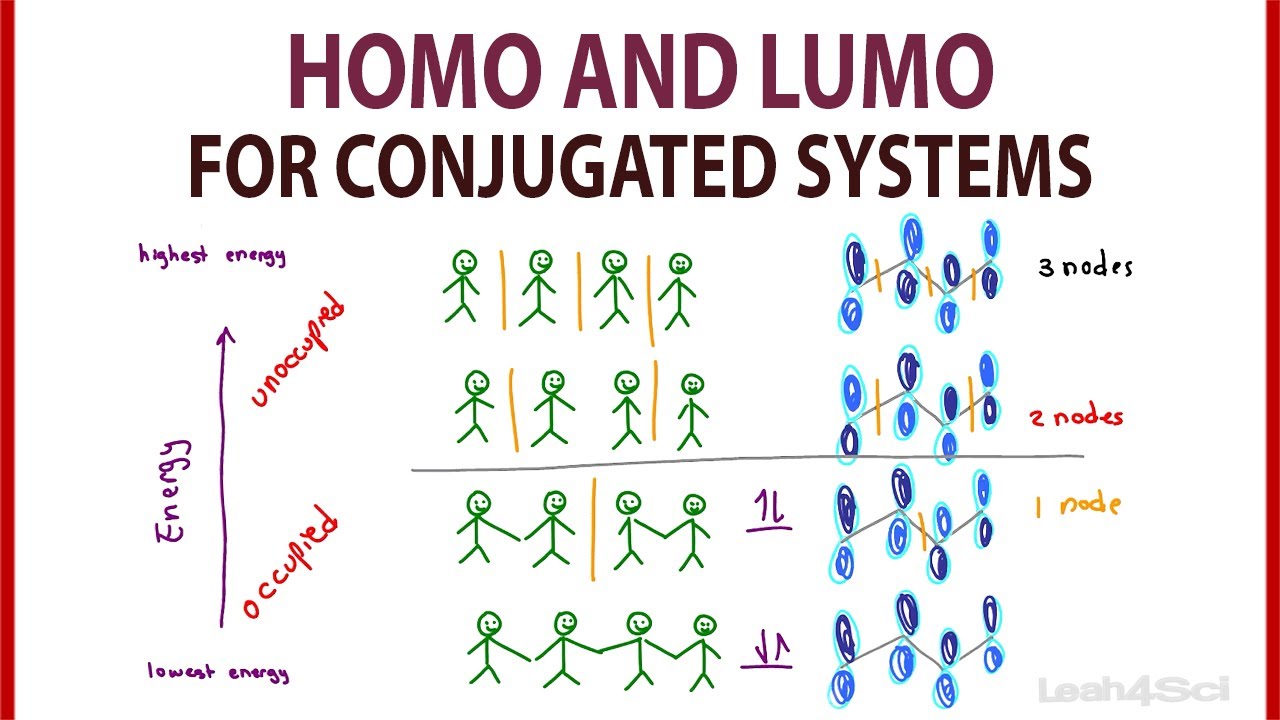
An alternative way of formulating this molecular orbital problem that is useful from an educational point of view is to consider all of the nitrogens as bring sp hybridised as ro quickly represent the linear structure predicted by VSEPR. This way of modelling gives the same conclusions but is hard to extrapolate to bigger molecular systems. This modelling separates this molecular orbital consideration into a different kind of simplification with a sigma system being considered first, and a pi system being layered on top. This pi system can be alternatively be considered as a particle-in-a-box model (or sometimes referred to as a "sine wave model") in one dimension. This modelling can be useful for quickly predicting the electronic properties of some simple chemical systems, but unfortunately is not based on physical evidence from, for example, photoelectron spectroscopy. It can be a useful model for educational purposes for new chemists however, and has a lot of merit in engaging students with these aspects of chemistry.
Повторяем попытку...

Доступные форматы для скачивания:
Скачать видео
-
Информация по загрузке: