Uncover the secrets of National Taiwan Museum’s main building
Автор: Formosa News (民視英語新聞)
Загружено: 2020-11-10
Просмотров: 1692
Описание:
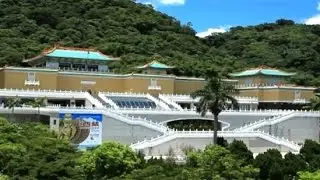
There are of course plenty of museums with exhibits on Taiwan''s past. But at National Taiwan Museum, not all the history is on display behind glass. Here, the museum building itself offers visitors a firsthand look into the past. Founded in 1908, it is Taiwan''s oldest museum. And its main building, built in 1915, hides plenty of interesting quirks. Formosa News takes you to uncover some of the secrets of the museum.
Stephany Yang
Formosa News reporter
We are currently at National Taiwan Museum, the oldest museum still operating in Taiwan. Today, our tour guide will share with us some of the secrets in the museum.
National Taiwan Museum was founded during the Japanese colonial era. It''s the only museum to have remained open at its original site, despite wars and changes in Taiwan''s government. Its main building, which was designed in a neoclassical style, was built in memory of two important Japanese officials: Kodama Gentaro and Goto Shinpei. There are many symbols of the pair in the building. For example, the main hall has a niche at each side where their statues used to stand. After the Japanese rule ended, the statues were removed and replaced with two vases.
Phaedra Fang
National Taiwan Museum
We have two statues at each side of this lobby in Japanese period. They were people that were commemorated by the colonial government. The fourth government general Kodama Gentaro, and his partner, Goto Shinpei, the civil administrator. Most Taiwanese are quite familiar with Goto Shinpei, because he''s done a lot of scientific surveys and modernization policies. This is also why they were commemorated here, because by the end of their term, the Japanese government could eventually profit from colonizing Taiwan.
Look closely at the skylight and you''ll find symbols of the two officers in a form of their family crests. Goto''s is a vine crest, while Kodama''s is a war fan with bamboo leaves. These family crests are also hiding in plain sight elsewhere in the lobby.
Phaedra Fang
National Taiwan Museum
At two sides of the lamp, you can see the family emblems of the two Japanese officers. The one with wisteria vine is the one for Goto Shinpei. The other one you can see bamboo leaves and underneath is war fan, that''s the family emblem for Kodama Gentaro. In addition to this very subtle decoration, if you look up even you can see there are also family emblems on the skylight.
The museum is a National Historic Site. It was designed by Japanese architects Nomura Ichiro and Araki Eiichi. Their goal was to make a grand building with noble materials. For instance, the handrails at the stairs are made out of high-quality marble from Japan. It looks like the same "marble" that covers the wall at the back. But get close and give it a touch and you''ll notice something is off.
Phaedra Fang
National Taiwan Museum
During the construction of this museum, there was something very important happening in the world which was World War I. As you can imagine, the price of the raw materials was rising. Hence they actually did not have enough money to apply expensive marbles.It''s a very different material from marble. This is actual plaster. While you may think plaster walls are cheap. This building still cost a fortune.
Although the building was designed in a Western style, the architects incorporated many tropical elements. For instance, this bull''s-eye window, which is decorated with tropical Taiwanese fruits. In the West, the fruits would be things like apples and grapes, but here you''ll also find pineapples, star fruits, bananas, wax apples and more.
Phaedra Fang
National Taiwan Museum
If you look around this kind of bull''s-eye window, it''s usually decorated with flowers or plants. But if you look closely at this particular one, you''ll discover that it''s actually decorated with Taiwanese fruits. This is part of the tropical decoration of the museum.
National Taiwan Museum shows the secrets of the museum in free English tours every Sunday afternoon. There are also weekend tours in more than 20 Asian and European languages.
Повторяем попытку...

Доступные форматы для скачивания:
Скачать видео
-
Информация по загрузке: