Mozart, Piano Concerto No. 17 in G, K.453, mvt 1) (CC- Form Analysis-English)
Автор: TreyD Music & Media
Загружено: 2019-12-17
Просмотров: 804
Описание:
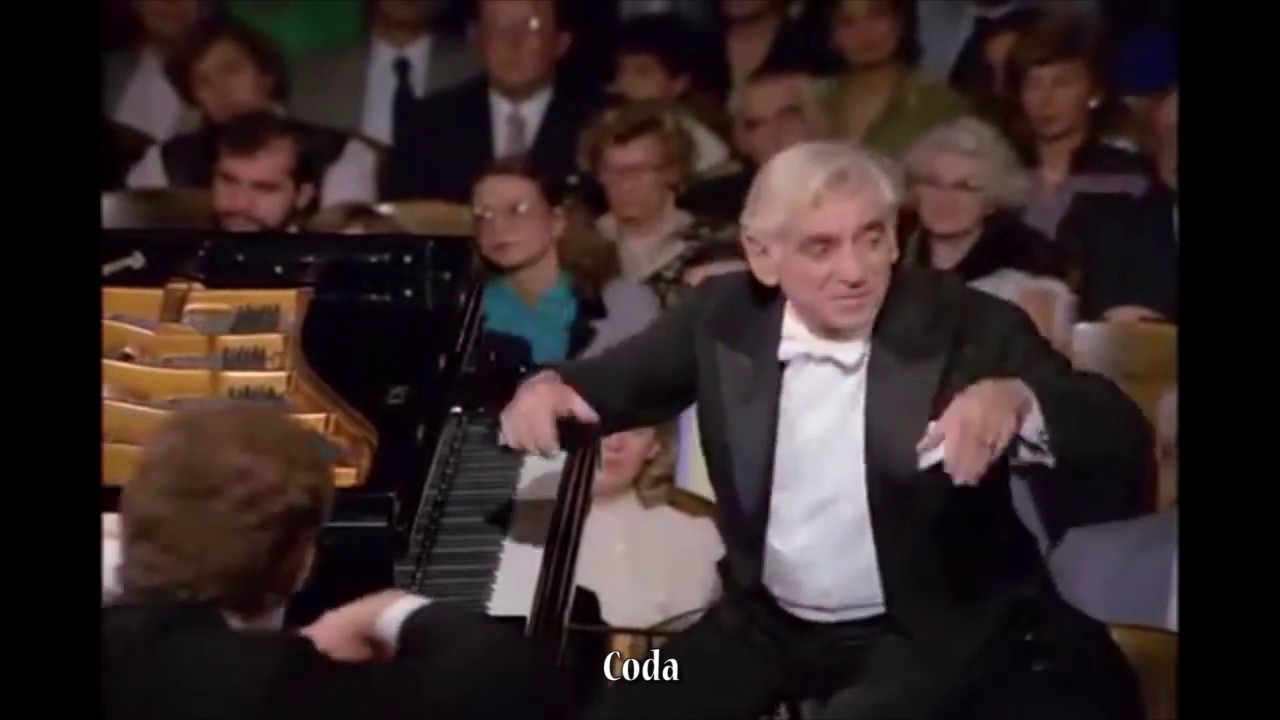
Performers: Vienna Philharmonic; Leonard Bernstein, conductor & soloist
"Fair Use Notice"
Copyright Disclaimer Under Section 107 of the Copyright Act 1976, allowance is made for "fair use" for purposes such as criticism, comment, news reporting, teaching, scholarship, and research. Fair use is a use permitted.
I have provided form analysis comments.
Mozart wrote 27 concertos for piano. He often was the featured soloist and all of them were major successes. The Classical era Sonata-Allegro form was treated differently in a solo concerto composition that it was in other genres (symphony, sonata). In non-concerto music, first movements’ sonata-allegro form had an Exposition that was repeated exactly (to aid memory). In the concerto, the featured soloist would not play during the first statement of the Exposition. At the repeat, it would enter and take possession of the melodies. This necessitated that the Exposition be a variation to accommodate the new instrument (i.e., no exact repeat).
Additionally, one often finds a third theme given to the piano during the Exposition repeat. One could argue that this “soloist’s theme” is an elaborate introduction/transition, but many times it’s just as long as themes A and B. It also returns regularly during the rest of the movement. So what does this do to the Sonata-Allegro Form? I favor taking a simpler approach and use the tried and true “Double Exposition” label and acknowledge that the Exposition repeat has a Theme C (soloist’s Theme).
Повторяем попытку...
Доступные форматы для скачивания:
Скачать видео
-
Информация по загрузке: