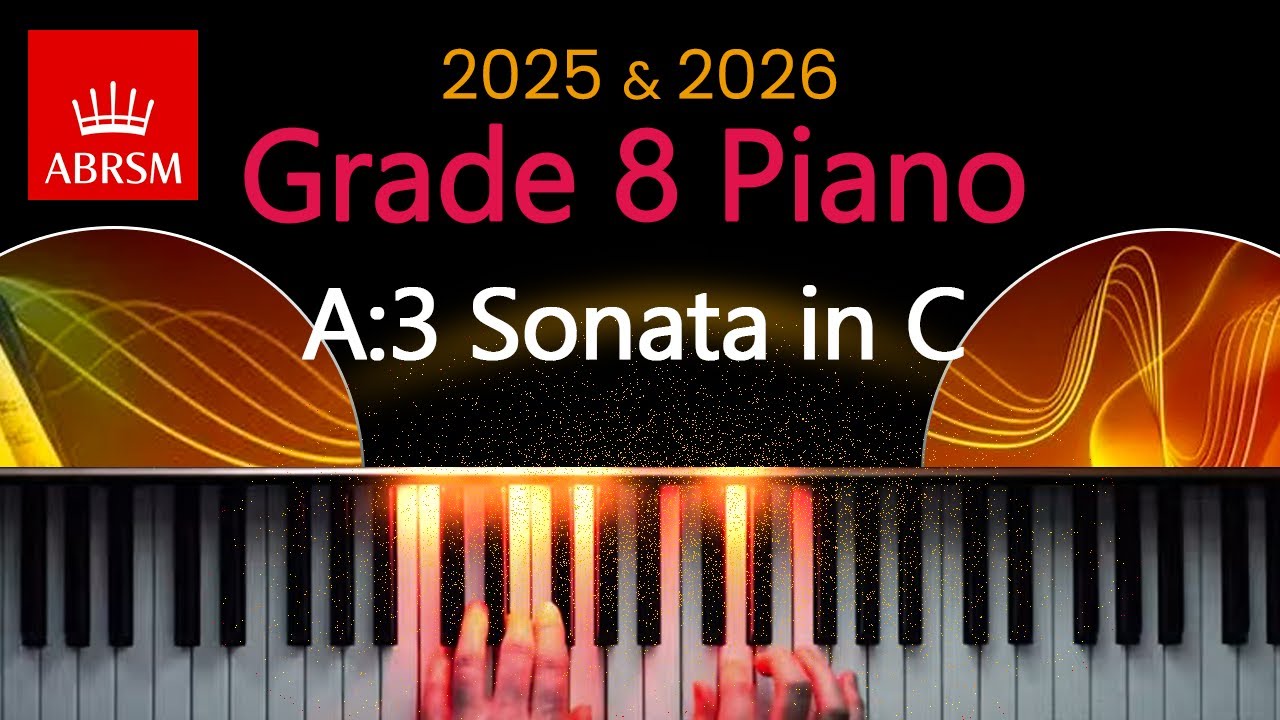
SONATA IN C K. 513 by Domenico Scarlatti | ABRSM 2025 & 2026 Grade 8 A3 Piano Tutorial
Автор: Путь по ступеням фортепиано
Загружено: 2025-07-12
Просмотров: 233
Описание:
A:3 – Sonata in C “Pastorale” K. 503 by Domenico Scarlatti (1685 – 1757)
Note from ABRSM
Most of Domenico Scarlatti's keyboard sonatas, over 500 in number, were composed after his emigration to the Iberian peninsula in 1719. In his Essercizi of 1738, he wrote of them: 'Do not expect any profound learning, but rather an ingenious jesting with art.'
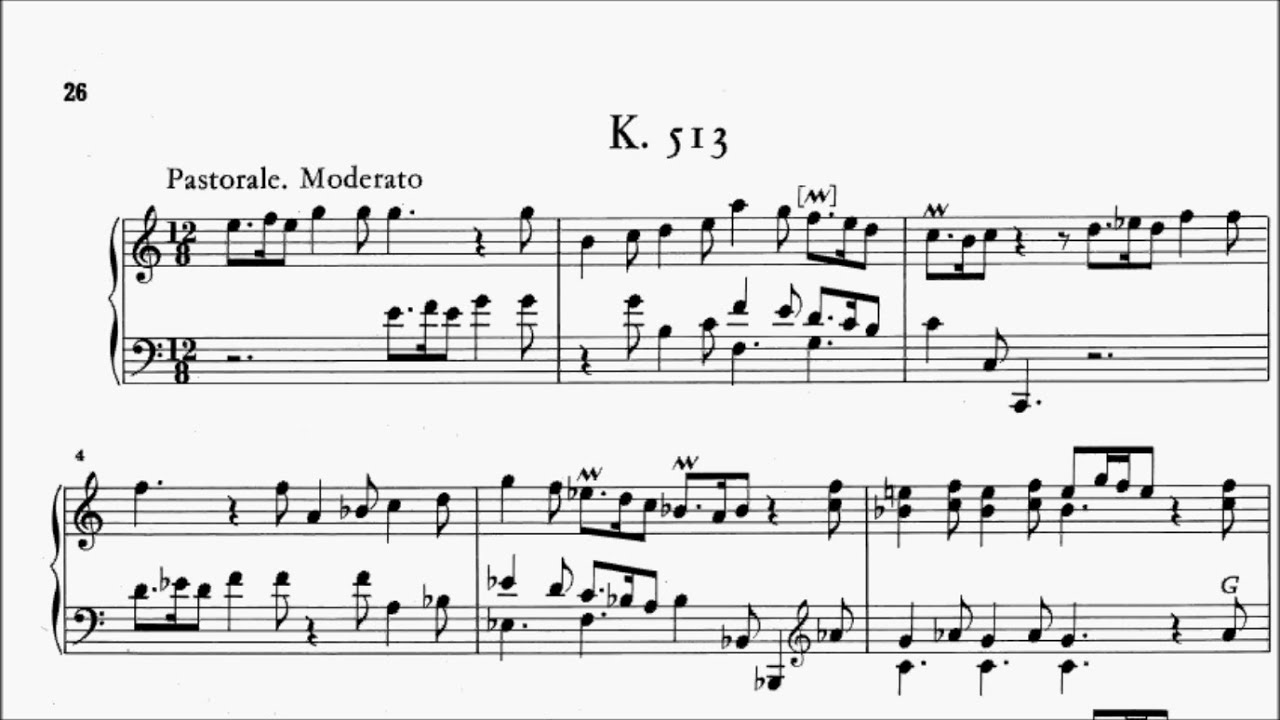
The subtitle of this piece indicates that it is a 'pastorale' - an idealised evocation of rural life. The music of a pastorale is characterised by a drone bass (see, for example, bars 17-19) and by dotted rhythms in a moderate 12/8 time. Scarlatti, however, builds up his tempo step by step: Moderato (bar 1) to Molto allegro (bar 17, second half) to Presto in 3/8 (bar 36). Dynamics are left to the player's discretion. RJ
Source: Parma MSS, Vol. XIV, No. 30. In bars 8 and 13, the middle part breaks off in the source. It is not clear whether this is intentional. An editorial crotchet in small print gives the player the option of completing the phrase. In bars 13-15, the groups of six, seven and eight demisemiquavers should each take up the time of one crotchet. At the third beat of bar 30, some editions have the RH chord d'+b. However, the chord in the source, b + g, may well be correct: the rising 3rds of bar 30, second half, recur in the following bar (second half), with the parts inverted to form rising 6ths. In bar 31, second beat (lower RH part), some editions have d' in place of c' to avoid doubling the note C. But the reading c' makes better sense in a context where all parts are moving by step.
Note from channel
Difficulty evaluation (for Grade 8): 8/10
This inventive and characterful sonata, subtitled Pastorale, is a vivid evocation of rural life, coloured by rhythmic drone figures, gently lilting compound meter, and lively leaps. Scarlatti’s distinctive musical language—rooted in Iberian folk idioms and virtuosic keyboard writing—is presented here through an evolving structure marked by three tempo indications: Moderato (bar 1), Molto allegro (bar 17, second half), and Presto (bar 36).
Before beginning technical work, it is advisable to select and stabilise an appropriate tempo for each of these three sections. Despite the rhythmic variety and frequent dotted figures, none of these should sound overly dramatic or heavy—this is a pastorale, not a toccata or dance of grandeur. The flow must remain natural and rustic, with an understated grace.
The sonata unfolds in a three-part texture. The opening section includes a light rhythmic pulse in 12/8, underpinned by subtle harmonic movement. Careful analysis of modulations (e.g., bar 5 to B♭ major, bar 8 to D minor, bar 11 to A minor) will guide the performer in applying effective tonal colouring. Since Scarlatti did not provide dynamic markings, players are encouraged to shape phrases with imaginative use of tonal contrast—articulation, touch, and balance become primary expressive tools.
From bars 14–15, the demisemiquaver figures should not sound metrical or forceful. Instead, they should convey a sense of fleeting improvisation, like an ornamented sigh or a spontaneous movement of birds or wind. Allow the fingers to flow with gentle fluidity, without accenting or over-articulating.
The Molto allegro section (from bar 17) introduces wider leaps and octaves, but these gestures should remain buoyant and light, never forced or aggressive. Think of them as carrying the energy of pastoral dance—joyful and bounding, yet unhurried.
The Presto section, in 3/8 time, demands agility and precision. The quick repeated notes and wide leaps can be physically challenging, but they mostly follow predictable patterns. Repetition becomes an asset in practice: once fingered securely and memorised, these sequences become easier to internalise. Practising hands separately with a metronome is highly recommended to build confidence and consistency before combining hands.
Throughout the sonata, it is essential to preserve a sense of spontaneity and lightness. The rustic character should never feel laboured or over-refined. Let the “pastoral” idea guide not just tempo and touch, but also mood: simple, clear, and full of natural charm.
#pianogradepathway #scarlatti #scarlatti555
Повторяем попытку...
Доступные форматы для скачивания:
Скачать видео
-
Информация по загрузке: