hearing Intervals
Автор: Music Theory: The Language of Sound
Загружено: 2024-09-26
Просмотров: 66
Описание:
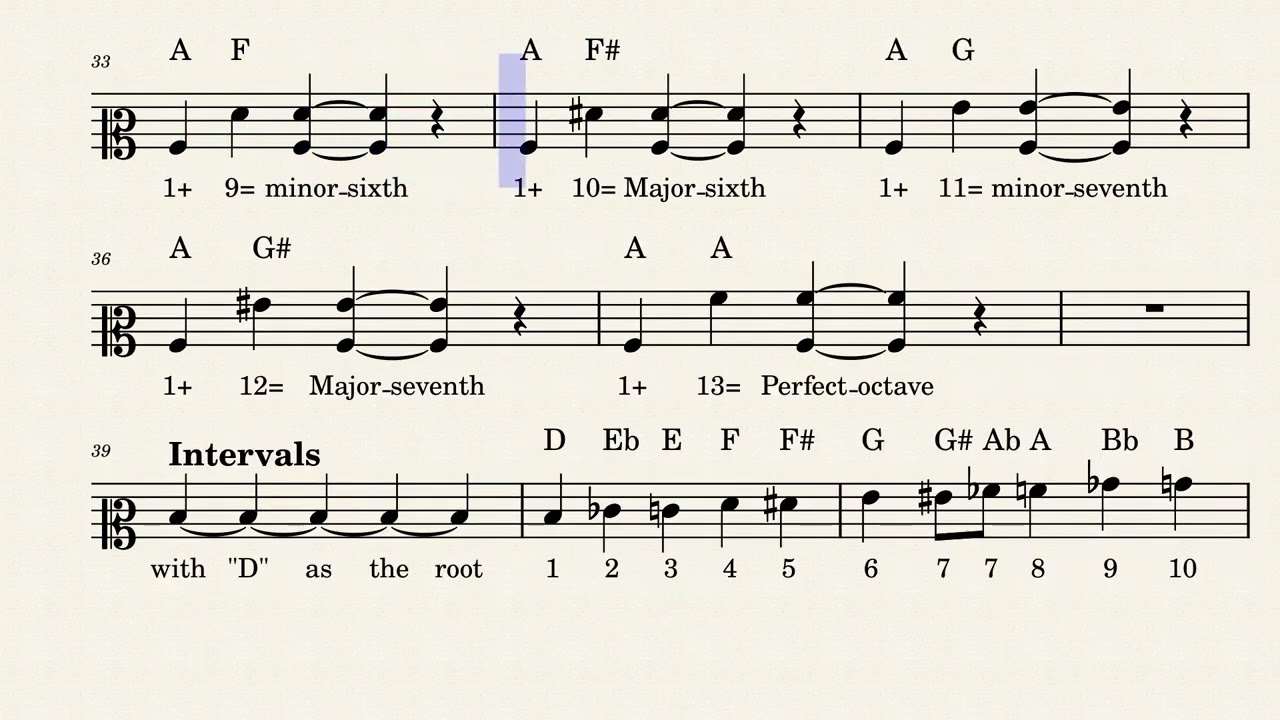
A two-note combination is called an interval. Each interval is given a name, based on its relationship with the tonic of the scale we build them from.
The combinations we are looking at are: tonic & tonic (Perfect unison), tonic & 1st half-step (minor second), tonic & 2nd half-step (Major second with 2nd scale degree), tonic & 3rd half-step (minor third), tonic & 4th half-step (Major third with 3rd scale degree), tonic & 5th half-step (Perfect fourth with 4th scale degree), tonic & 6th half-step (tritone), tonic & 7th half-step (Perfect fifth with 5th scale degree), tonic & 8th half-step (minor sixth), tonic & 9th half-step (Major sixth with sixth scale degree), tonic & 10th half-step (minor seventh), tonic & 11th half-step (Major seventh with 7th scale degree), and finally tonic & 12th half-step (Perfect octave).
The tonic from the scale becomes the root note of the interval. First we hear Intervals with a C note as tonic/root. Then we hear Intervals built from an A note as tonic/root and a D note as tonic/root. Intervals can be built from any note we can play.
Повторяем попытку...
Доступные форматы для скачивания:
Скачать видео
-
Информация по загрузке:




![Explaining Musical Intervals As CLEARLY As I Possibly Can [MUSIC THEORY FUNDAMENTALS]](https://image.4k-video.ru/id-video/m9GlB8tanNE)