AC Capacitors Explained: Phase Shift & Reactance in 6 Minutes
Автор: Electro knowledge
Загружено: 2026-03-01
Просмотров: 14
Описание:
In just 6 minutes, we break down how capacitors function in alternating current (AC) systems. Unlike DC, where a capacitor eventually blocks current, AC causes continuous charging and discharging cycles.
What you will learn:
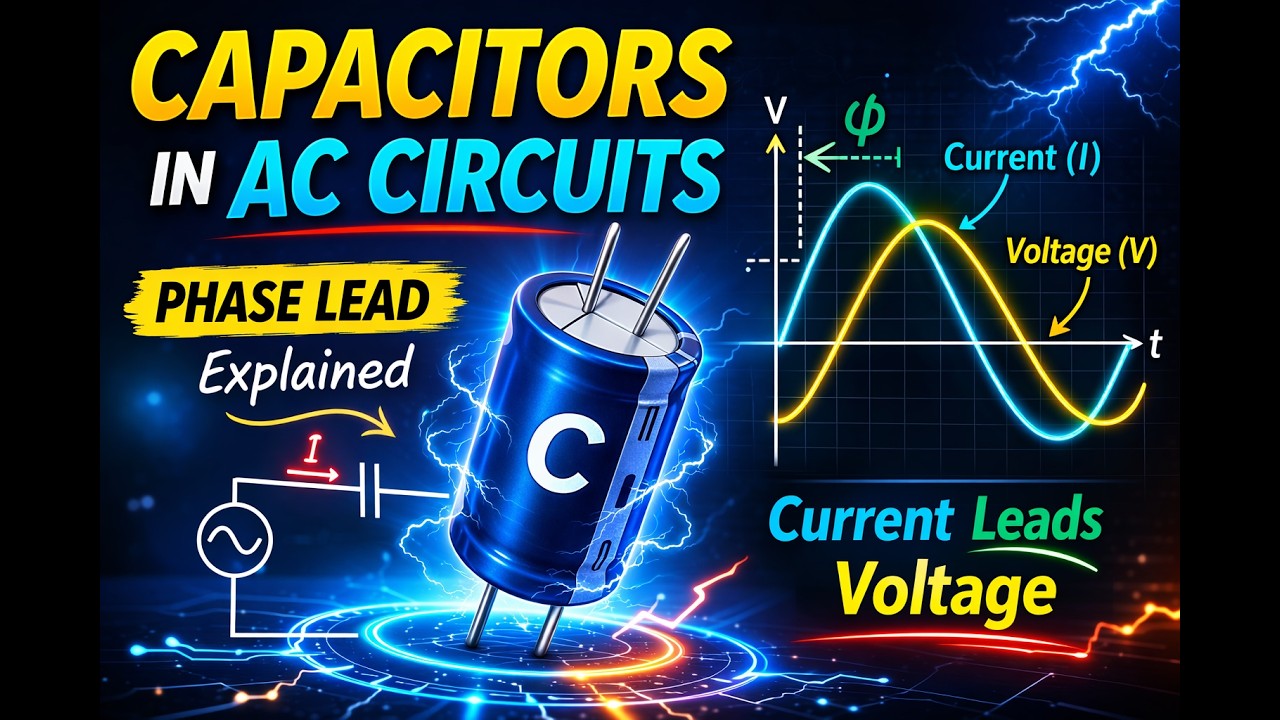
The Phase Shift (ICE): Why current leads voltage by exactly 90° in a purely capacitive circuit.
Understanding the "complex impedance" that opposes current based on frequency and capacitance.
Learn why higher frequencies mean lower reactance.
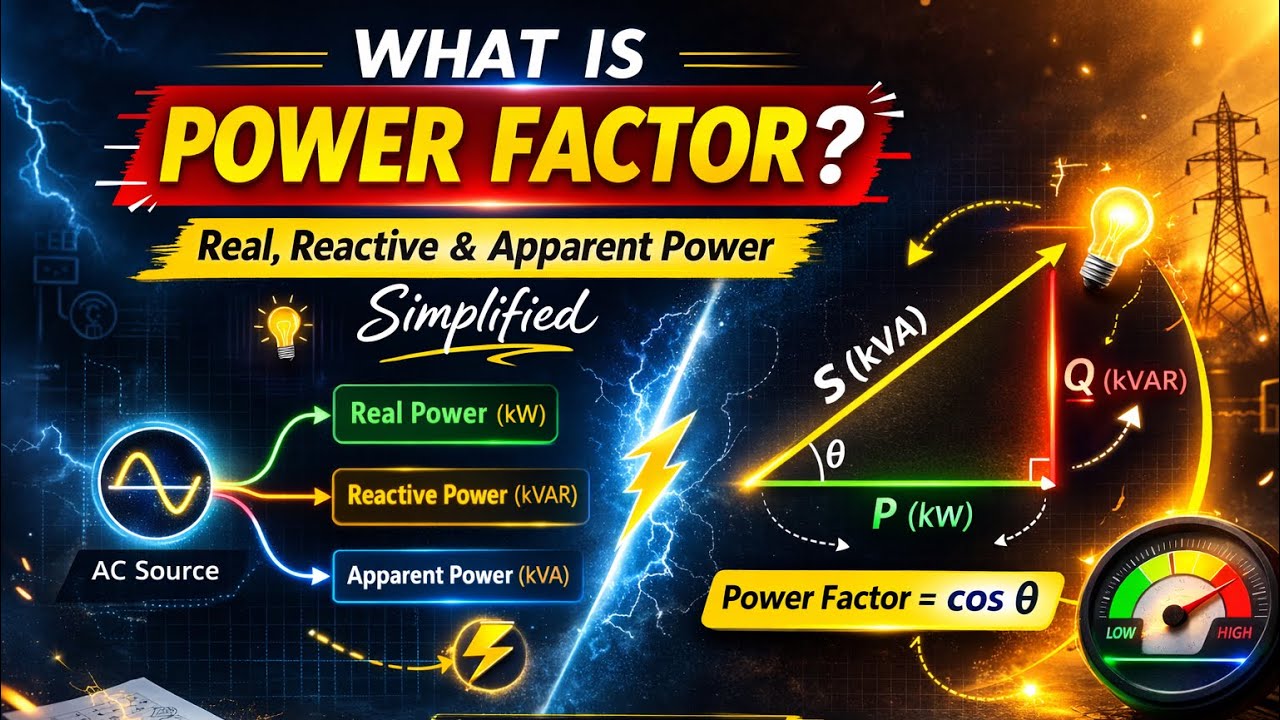
Real vs. Reactive Power: Why an ideal capacitor consumes zero average power, merely absorbing and releasing energy back into the circuit.
--------------------------------------------------------------------------------
Tailored Timestamps (6-Minute Timeline)
0:00 – How Capacitors React to AC vs. DC
1:15 – The 90° Phase Shift Explained (Current Leads Voltage)
2:30 – Calculating Capacitive Reactance
3:45 – Frequency Dependency: High vs. Low Frequency Behavior
4:30 – Power in Capacitive Circuits: Why Real Power is 0W
5:15 – Quick Summary & Practical Applications (Filters & PFC)
--------------------------------------------------------------------------------
Search-Optimized Tags
AC Capacitor, Capacitive Reactance, Phase Shift, Current Leads Voltage, AC Circuit Analysis, Impedance Z, RC Series Circuit, Electrical Engineering, Physics of Capacitors, Power Factor, Reactive Power, Electronics Tutorial.
Key Insights for your 6-Minute Script
The "ICE" Mnemonic: Use the mnemonic "ICE" to help viewers remember: in a Capacitor, I (current) leads E (voltage).
Rate of Change: Emphasize that current is proportional to the rate of change of voltage (i=C⋅dv/dt), which is why current is at its maximum when voltage crosses zero (steepest slope).
Frequency Hook: Mention that as frequency increases, a capacitor behaves more like a short circuit, and as it approaches 0 Hz (DC), it acts like an open circuitIn just 6 minutes, we break down how capacitors function in alternating current (AC) systems. Unlike DC, where a capacitor eventually blocks current, AC causes continuous charging and discharging cycles.
What you will learn:
The Phase Shift (ICE): Why current leads voltage by exactly 90° in a purely capacitive circuit.
Understanding the "complex impedance" that opposes current based on frequency and capacitance.
. Learn why higher frequencies mean lower reactance.
Real vs. Reactive Power: Why an ideal capacitor consumes zero average power, merely absorbing and releasing energy back into the circuit.
--------------------------------------------------------------------------------
Tailored Timestamps (6-Minute Timeline)
0:00 – How Capacitors React to AC vs. DC
1:15 – The 90° Phase Shift Explained (Current Leads Voltage)
2:30 – Calculating Capacitive Reactance
3:45 – Frequency Dependency: High vs. Low Frequency Behavior
4:30 – Power in Capacitive Circuits: Why Real Power is 0W
5:15 – Quick Summary & Practical Applications (Filters & PFC)
--------------------------------------------------------------------------------
Search-Optimized Tags
AC Capacitor, Capacitive Reactance, Phase Shift, Current Leads Voltage, AC Circuit Analysis, Impedance Z, RC Series Circuit, Electrical Engineering, Physics of Capacitors, Power Factor, Reactive Power, Electronics Tutorial.
Key Insights for your 6-Minute Script
The "ICE" Mnemonic: Use the mnemonic "ICE" to help viewers remember: in a Capacitor, I (current) leads E (voltage).
Rate of Change: Emphasize that current is proportional to the rate of change of voltage (i=C⋅dv/dt), which is why current is at its maximum when voltage crosses zero (steepest slope).
Frequency Hook: Mention that as frequency increases, a capacitor behaves more like a short circuit, and as it approaches 0 Hz (DC), it acts like an open circuit
Повторяем попытку...
Доступные форматы для скачивания:
Скачать видео
-
Информация по загрузке: